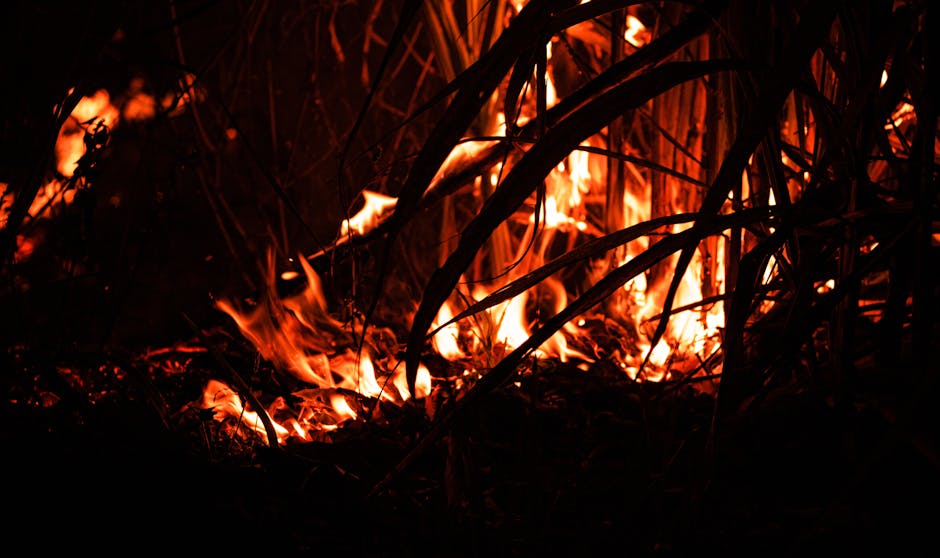
- A drone crash ignited a 12-square-kilometer wildfire in the Chernobyl exclusion zone, fueled by strong winds and dry conditions.
- The fire poses environmental concerns due to the combustion of highly contaminated vegetation, potentially releasing radioactive particles.
- Ground-based firefighting operations are hindered by unmarked land mines within the restricted zone.
- Satellite data confirms active fire hotspots and elevated particulate matter levels downwind of the Chernobyl exclusion zone.
- Initial radiation monitoring has not detected significant spikes, but experts remain cautious given past environmental hazards in the region.
Executive summary — a drone crash has ignited a significant wildfire in the Chernobyl exclusion zone, burning approximately 12 square kilometers of forested and highly contaminated land. Unfavorable weather conditions, including strong winds and prolonged dry spells, are accelerating the fire’s spread, while the presence of unmarked land mines severely limits ground-based firefighting operations. Although authorities have not yet detected a significant rise in radiation levels, the combustion of contaminated vegetation raises concerns about the potential release of radioactive particles into the atmosphere, echoing past environmental hazards observed during similar incidents in the region.
Extent and Environmental Impact of the Fire

According to official reports from Ukraine’s State Emergency Service, the fire began after an unmanned aerial vehicle (UAV) crashed in the northern section of the Chernobyl exclusion zone, likely due to mechanical failure or pilot error. The impact ignited dry grass and pine litter, which rapidly engulfed 12 square kilometers of forest — an area roughly equivalent to 1,700 football fields. Satellite data from the European Union’s Copernicus Atmosphere Monitoring Service (CAMS) confirmed active fire hotspots and elevated particulate matter levels downwind of the zone. While initial radiation monitoring stations near the fire have not registered spikes above baseline levels, experts caution that burning biomass in contaminated soil can resuspend radionuclides like cesium-137 and strontium-90 into the air. A 2020 study published in Nature Climate Change found that wildfires in the exclusion zone can increase airborne radioactivity by up to 10 times normal levels, posing respiratory risks even outside the immediate area.
Key Actors and Response Efforts

The primary responders include Ukraine’s State Emergency Service, the Chernobyl Radiation and Ecological Biosphere Reserve personnel, and specialized radiological monitoring units. Due to the high risk of land mine detonation — remnants from military activity during Russia’s occupation of the zone in 2022 — firefighters have been restricted to aerial suppression using helicopters and drones equipped with water-dropping systems. Ground crews are operating only in pre-cleared zones, drastically limiting containment effectiveness. The Ukrainian military has confirmed that parts of the exclusion zone remain uncharted minefields, complicating navigation and emergency planning. International support has been limited to remote satellite monitoring, with agencies like the International Atomic Energy Agency (IAEA) offering technical consultation but no on-site personnel. The incident has reignited debate over the long-term security and environmental governance of the exclusion zone, especially as drone traffic — both civilian and military — increases in northern Ukraine.
Trade-offs Between Safety, Environment, and Security

Efforts to extinguish the fire are constrained by a dangerous trade-off between human safety and environmental protection. Deploying ground teams would speed containment but risks triggering land mines or exposing personnel to elevated radiation from burning materials. Aerial methods, while safer, are less effective in dense forest canopies and cannot prevent underground peat fires, which can smolder for weeks and re-ignite surface flames. On the environmental side, suppressing the fire quickly reduces the chance of radioactive plume dispersion, but the use of chemical retardants is discouraged due to contamination risks in an already fragile ecosystem. Moreover, the political sensitivity of the zone — a legacy of both the 1986 nuclear disaster and recent military conflict — limits transparency and coordination with international partners. Any misstep could trigger public panic or diplomatic friction, particularly with neighboring countries like Belarus and Poland, which closely monitor air quality.
Why This Incident Is Happening Now

This fire occurs amid a broader pattern of increasing wildfire frequency in the Chernobyl exclusion zone, driven by climate change and human activity. Spring 2024 has been exceptionally dry, with precipitation levels 40% below the 30-year average, according to Ukraine’s Hydrometeorological Institute. Combined with rising temperatures and strong easterly winds, these conditions have created ideal fire weather. At the same time, the ongoing war in Ukraine has led to a surge in drone operations across the north, including reconnaissance and supply missions near restricted areas. The crash that sparked this blaze underscores the unintended consequences of militarized airspace in ecologically sensitive zones. Unlike in peacetime, when access to the exclusion zone was tightly controlled, current conditions allow for greater human and technological intrusion, increasing the likelihood of accidents with cascading environmental impacts.
Where We Go From Here
In the next 6 to 12 months, three scenarios could unfold. First, if weather conditions improve and rains return, the immediate fire threat may subside, but long-term monitoring will be needed to assess radiation resuspension and ecosystem damage. Second, repeated drone incidents or military activity could spark additional fires, overwhelming emergency response capabilities and potentially leading to transboundary air pollution. Third, the crisis could catalyze international cooperation on securing the exclusion zone, including mine clearance initiatives, drone traffic regulations, and enhanced radiological surveillance. Such efforts would require coordination between Ukraine, the IAEA, and European environmental agencies, but geopolitical tensions may hinder progress. Regardless of the path, the incident highlights the growing convergence of environmental, technological, and security risks in post-disaster landscapes.
Bottom line — the drone-induced fire in the Chernobyl exclusion zone is a stark reminder that technological advancement and conflict intersect with fragile ecosystems in unpredictable and dangerous ways, demanding integrated strategies that prioritize both environmental safety and human security.
Source: New Scientist