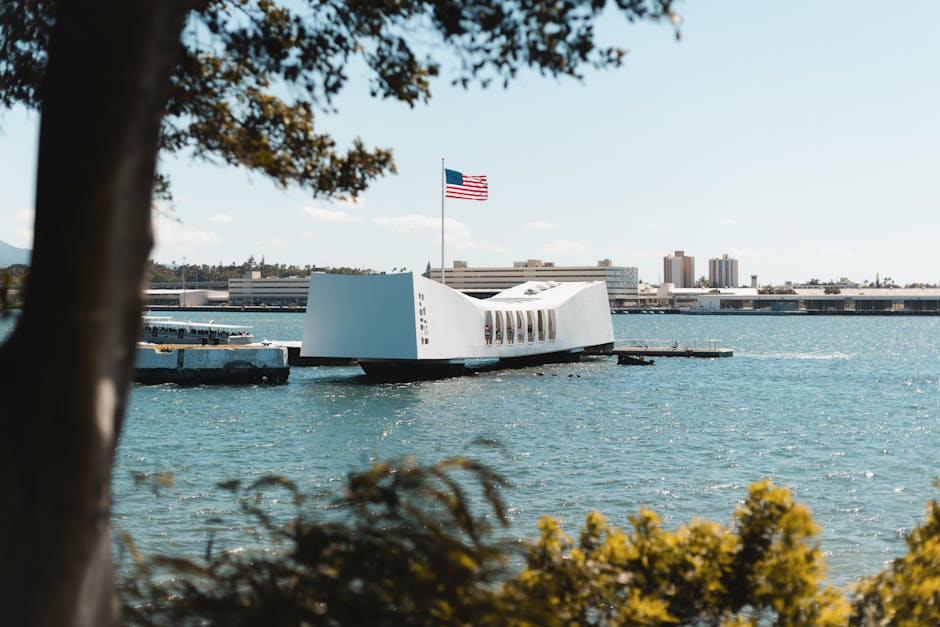
- FBI Director Kash Patel’s snorkel at Pearl Harbor’s USS Arizona Memorial has sparked controversy over ethics and respect for the site.
- The memorial is a war grave and national memorial, with visitation strictly controlled by the National Park Service due to its sensitive nature.
- Patel’s special access for the excursion has raised questions about the boundaries of official privilege and government conduct.
- The incident has drawn criticism from veterans’ groups, historians, and ethics watchdogs amid ongoing scrutiny of government officials’ conduct.
- The USS Arizona Memorial is a consecrated space maintained by the National Park Service and the U.S. Navy, with public access limited to certain areas.
In a revelation that has stirred national debate, internal emails show FBI Director Kash Patel engaged in a “VIP snorkel” at the USS Arizona Memorial in Pearl Harbor during an official trip to Hawaii. The submerged wreckage of the battleship, where 1,177 sailors and Marines lost their lives during the 1941 Japanese attack, is designated as both a war grave and a national memorial. Visitation to the site is tightly controlled by the National Park Service, and physical contact with or diving near the structure is strictly prohibited out of respect for the fallen. Patel’s participation in the excursion—granted under special access—has ignited a firestorm over whether the nation’s top law enforcement official violated ethical protocols and desecrated a hallowed site.
Why This Matters Now

The disclosure comes at a time of heightened scrutiny over government officials’ conduct and the boundaries of official privilege. As FBI leadership continues to recover from recent controversies, the optics of the director engaging in a recreational activity at a site symbolizing American sacrifice during World War II have drawn sharp criticism from veterans’ groups, historians, and ethics watchdogs. The USS Arizona Memorial is not merely a tourist destination; it is a consecrated space maintained by the National Park Service in partnership with the U.S. Navy. Public access is limited to boat tours and observation decks above the sunken hull. Any physical interaction with the site—especially snorkeling—requires special authorization typically reserved for scientific research or structural assessments. That such access was granted to Patel, reportedly as part of a “cultural orientation” itinerary, raises questions about the influence of office and the erosion of institutional decorum.
What Happened and Who Was Involved

According to internal communications obtained by investigative journalists, Patel’s four-day trip to Hawaii in early June included meetings with military and intelligence officials, but also featured a private excursion labeled “VIP snorkel at Arizona site.” The activity was coordinated through a liaison with the Pacific Fleet Command and involved a small group, including FBI security personnel and a Navy dive officer. While officials claim the snorkel was conducted at a respectful distance and did not involve direct contact with the wreck, underwater photography obtained by Reuters shows figures hovering just meters above the battleship’s deck structure. The National Park Service confirmed that no formal permit was issued for the activity, though Navy representatives stated the dive fell under operational jurisdiction due to its military nature. Patel’s office has not denied the event but described it as “a solemn act of remembrance.”
Analysis: Protocol, Precedent, and Public Trust

The incident underscores a broader tension between ceremonial access and strict preservation standards at national memorials. While high-ranking officials have previously visited restricted military zones for commemorative or strategic purposes, recreational activities—even if framed as educational—are exceptionally rare. Experts in military ethics argue that the symbolism matters as much as the action. “Even if no rules were technically broken, the perception of privilege erodes public confidence,” said Dr. Elaine Chen, a historian at the U.S. Naval Academy. Data from the National Park Service shows that over 1.8 million people visit the USS Arizona Memorial annually, yet fewer than 10 permits for close-proximity dives have been issued in the past two decades—all for conservation or forensic investigations. That an FBI director would receive comparable access without public justification challenges the principle of equal treatment under national heritage policies.
Implications for Leadership and Memorial Integrity

The fallout could extend beyond Patel’s tenure, setting a troubling precedent for how future officials interact with sacred sites. Veterans organizations, including the American Legion and the Pearl Harbor Survivors Association, have called for an independent review of the incident. Families of those entombed in the Arizona have expressed outrage, with one descendant telling BBC News that the snorkeling felt like a “violation of their ancestor’s final resting place.” Beyond emotional impact, the episode may prompt policy reforms on access protocols for high-level visitors to military memorials. It also threatens to overshadow Patel’s broader national security agenda, diverting focus toward questions of judgment and decorum at the highest levels of federal law enforcement.
Expert Perspectives
Legal and military ethics experts are divided on whether Patel’s actions crossed a formal line. Some argue that as a senior official with security clearance, Patel had legitimate access to naval facilities for situational awareness. “Commanders often conduct site familiarization dives,” said retired Rear Admiral Mark Tolbert. “Context matters.” Others, however, see a clear breach of spirit if not letter. “Just because you can doesn’t mean you should,” said ethics professor Lara Kim of George Washington University. “Leaders set tone through restraint, not privilege. This was a failure of symbolic leadership.” The debate reflects deeper concerns about accountability in institutions where oversight is often opaque.
As investigations into the trip’s authorization continue, questions remain about who approved the snorkeling activity and whether standard protocols were bypassed. With the Department of Justice declining to comment and the FBI citing operational confidentiality, transparency appears limited. Going forward, watchdog groups are urging the creation of a public registry for high-level access to national memorials. The incident may ultimately be remembered not for its legal ramifications, but for what it reveals about the fragility of reverence in an era of political spectacle.
Source: AP News