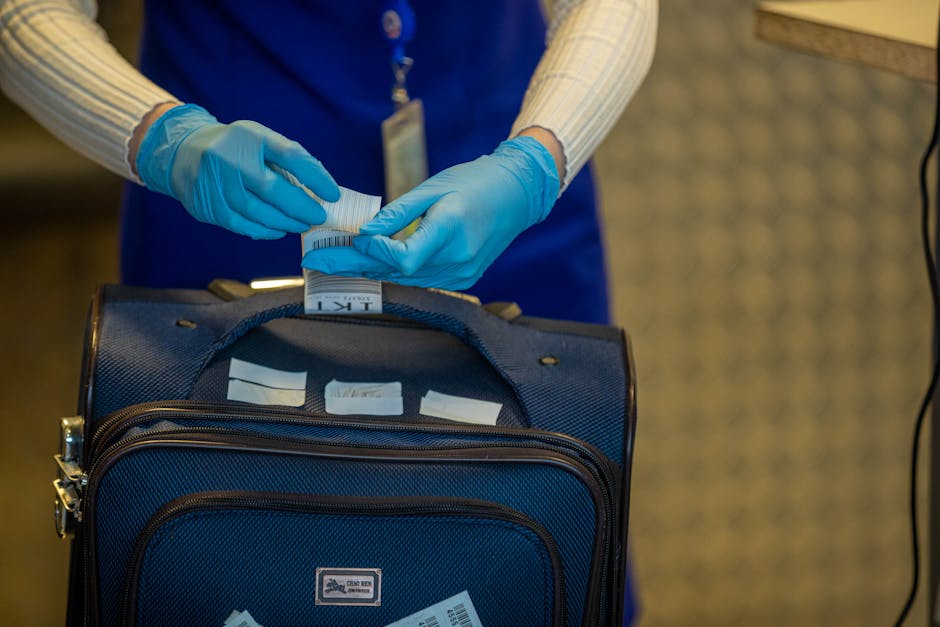
- US health officials are monitoring 16 air passengers who were on a flight from Amsterdam to Johannesburg that carried a hantavirus-infected passenger.
- Hantavirus is a rare and lethal infection that can be spread from person to person in some strains, prompting caution among US health officials.
- The Centers for Disease Control and Prevention have initiated contact tracing, symptom checks, and serological testing for all identified passengers.
- The infected passenger, a 42-year-old Dutch woman, fell ill mid-flight and died days after arrival, sparking a surveillance operation to track down American passengers.
- The US public health officials are racing to contain the ripple effects of the single journey and prevent potential human-to-human transmission of the virus.
Inside the sterile quiet of an Atlanta airport quarantine room, a flight attendant sits under observation, her breathing monitored, her movements limited. Outside, in homes scattered across four states, 15 other Americans await test results, their daily routines shadowed by a silent, invisible threat. All were passengers on KLM Flight 588, a transatlantic journey from Amsterdam to Johannesburg that unknowingly carried a deadly stowaway: hantavirus. The infection, rare and lethal, had taken hold in a 42-year-old Dutch woman who fell ill mid-flight and died just days after arrival. Now, U.S. public health officials are racing to contain the ripple effects of that single journey, deploying a quiet but urgent surveillance operation to track down every American who shared the cabin’s air with her.
Current Surveillance Efforts Underway

The Centers for Disease Control and Prevention (CDC) confirmed it is monitoring 16 U.S. residents who were aboard the March 23 flight alongside the infected woman. Though hantavirus is not typically spread from person to person in most strains, the Sin Nombre virus and others found in the Americas can, in rare cases, transmit between humans—prompting caution. The CDC, in coordination with state health departments in California, Minnesota, Illinois, and Georgia, has initiated contact tracing, symptom checks, and serological testing for all identified passengers. None have developed symptoms as of the latest update, but the incubation period for hantavirus pulmonary syndrome (HPS) can stretch up to six weeks, meaning the window for detection remains open. The agency has also issued a health alert to clinicians, urging them to consider hantavirus in patients with recent travel history and unexplained febrile respiratory illness.
How Hantavirus Emerged Into the Spotlight

Hantavirus is not new, but its appearance on an international flight marks a shift in how public health officials must respond to zoonotic threats. First identified during the Korean War, the virus gained wider recognition in the U.S. in 1993 when a cluster of young, otherwise healthy people in the Four Corners region died of sudden respiratory failure. The pathogen was traced to deer mice, which shed the virus in urine, droppings, and saliva. Infection occurs when humans inhale aerosolized particles from contaminated rodent waste, typically in rural cabins, sheds, or poorly ventilated spaces. Person-to-person transmission has been documented only in outbreaks involving the Andes virus in Argentina and Chile. The current case involving the Dutch woman does not yet confirm human-to-human spread, but the mere possibility has triggered an elevated response, reflecting lessons learned from recent pandemics.
The People Behind the Response

At the CDC’s Division of Vector-Borne Diseases, epidemiologists and field investigators are working around the clock to map exposure risks and communicate with local health departments. Dr. Nina Marano, a leading expert on hantavirus, emphasized the importance of vigilance without alarm: “We’re dealing with a rare pathogen, but one with a high fatality rate—up to 40% in some outbreaks. Our job is to ensure no case slips through.” On the ground, state health officers are conducting daily check-ins with the monitored individuals, many of whom are unaware of hantavirus beyond headlines. One passenger, a Minnesota-based ecologist returning from fieldwork, told local media they had never considered the risk of rodent-borne illness on an airplane. “I’ve cleaned mouse-infested cabins before,” they said, “but I never thought a flight could be a vector.”
Consequences for Travel and Public Health

While the risk of transmission on the flight remains considered low, the incident underscores the vulnerability of global air travel to emerging infectious diseases. Airplanes are enclosed environments with recirculated air, but hantavirus is fragile outside a host and unlikely to persist on surfaces or in ventilation systems. Still, the CDC’s proactive stance reflects a broader shift in post-pandemic health policy: assume potential spread until proven otherwise. For the 16 individuals under monitoring, the psychological toll is tangible—sleepless nights, anxiety over minor coughs, and isolation from family. For public health systems, the event is a stress test of contact tracing capabilities across international borders and a reminder that even obscure pathogens can trigger domestic alerts.
The Bigger Picture
This case is more than an isolated medical anomaly—it’s a signal of how interconnected our world remains in the face of zoonotic threats. As climate change alters rodent habitats and human encroachment into wild areas increases, the frequency of spillover events may rise. The World Health Organization and the CDC have both identified hantaviruses as pathogens with pandemic potential, particularly if strains emerge that are more easily transmissible between humans. While this incident likely won’t escalate into an outbreak, it serves as a rehearsal for future scenarios where speed, coordination, and public trust will be critical. The global health infrastructure is now calibrated to respond not just to known threats like influenza or coronavirus, but to the long tail of obscure viruses lurking in the shadows.
What comes next is a period of watchful waiting. The 16 passengers will remain under surveillance for the full incubation window, with regular follow-ups and testing. The Dutch woman’s case is under further investigation by South African and European health authorities to determine the specific strain and possible exposure sources. For now, the CDC advises travelers to avoid rodent-infested areas and to take precautions when cleaning enclosed spaces. But beyond individual actions, this event reinforces a larger truth: in the age of global mobility, public health borders are as porous as airport terminals—and vigilance must be constant.
Source: The New York Times