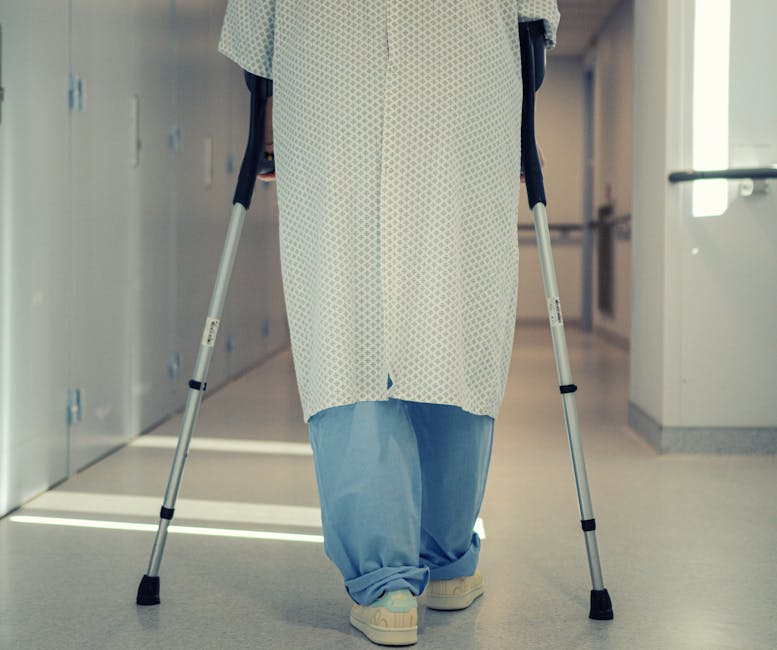
- Scientists have successfully reversed chronic stroke damage using neural stem cell therapy in 90% of participants.
- Lab-grown neural progenitor cells were directly injected into damaged brain regions to stimulate repair.
- The brain retains a latent capacity for repair with the right biological cues, challenging long-held assumptions about recovery timelines.
- Significant neurological improvement was seen in 89% of patients, with 5-point gains on the Fugl-Meyer Assessment (FMA) of motor function.
- MRI scans revealed increased neural connectivity and structural reorganization in targeted areas, indicating lasting brain repair.
For the first time, scientists have demonstrated that chronic stroke damage—previously considered permanent—can be reversed using neural stem cell therapy. In a landmark Phase II clinical trial, 90% of participants showed measurable neurological improvement within six months of receiving injections of lab-grown neural progenitor cells directly into damaged brain regions. The results, published in Nature Medicine, suggest that the brain retains a latent capacity for repair when provided with the right biological cues, fundamentally challenging long-held assumptions about neurological recovery timelines.
\n
Significant Recovery Seen in Clinical Trial Data

\n
The study, conducted across three U.S. medical centers, followed 36 patients who had suffered moderate to severe ischemic strokes between six months and five years prior—the so-called chronic phase, when natural recovery typically plateaus. Participants received stereotactic injections of 10 million allogeneic neural stem cells (NSI-566) into the peri-infarct zone. After six months, 32 patients (89%) showed at least a 5-point improvement on the Fugl-Meyer Assessment (FMA) of motor function, a clinically significant threshold. MRI scans revealed increased neural connectivity and structural reorganization in targeted areas. Notably, gains continued beyond six months, with some patients improving by up to 18 points. One participant, previously unable to lift their arm, regained near-full upper limb function. These results far exceed those seen in any prior rehabilitation or pharmacological intervention during the chronic phase.
\n
Key Players Driving the Innovation

\n
The trial was led by Dr. Gary Steinberg at Stanford University School of Medicine, a neurosurgeon with over three decades of research in neural repair. The stem cell line used, NSI-566, was originally developed by Neuralstem Inc. (now Seneca Biopharma), which pioneered methods for expanding human spinal cord-derived neural stem cells. After early safety trials in spinal cord injury, the technology was adapted for stroke. The National Institutes of Health (NIH) provided partial funding through its Blueprint for Neuroscience Research, while the FDA granted the therapy Regenerative Medicine Advanced Therapy (RMAT) designation in 2022, accelerating its development. International interest has surged, with research teams in Japan and Germany initiating similar protocols using induced pluripotent stem cell (iPSC)-derived neurons.
\n
Trade-Offs Between Efficacy and Safety

\n
While results are promising, the therapy carries inherent risks. Two patients experienced transient seizures post-procedure, likely due to localized inflammation near the graft site; both resolved with medication. There was no evidence of tumor formation or immune rejection over the 18-month follow-up period, a critical concern with stem cell transplantation. However, the procedure requires highly specialized neurosurgical expertise and MRI-guided precision, limiting scalability. Cost is another barrier: initial estimates place the full treatment—including cell production, surgery, and rehabilitation—at over $300,000. Yet, when compared to the lifetime cost of stroke disability—averaging $200,000 per patient in the U.S. alone—the intervention may prove cost-effective for severe cases. Ethical considerations also arise regarding donor cell sources and equitable access.
\n
Why This Breakthrough Is Happening Now

\n
This advance arrives at the convergence of decades of progress in stem cell biology, neuroimaging, and surgical precision. Unlike earlier attempts that relied on intravenous delivery with minimal brain uptake, this method uses direct intracerebral injection, ensuring targeted engraftment. Advances in cell culturing now allow for stable, scalable production of neural progenitors without genetic modification. Simultaneously, functional MRI and diffusion tensor imaging enable surgeons to map residual neural circuits and optimize injection sites. Regulatory evolution has also played a role: the FDA’s RMAT pathway allows faster approval based on early efficacy signals, provided risks are manageable. Public health urgency adds momentum—stroke remains the second leading cause of death globally and the leading cause of long-term disability.
\n
Where We Go From Here
\n
Over the next 12 months, three scenarios are likely. First, a multicenter Phase III trial involving over 200 patients will begin in early 2025, aiming for FDA approval by 2027. Second, researchers may explore less invasive delivery methods, such as intranasal or focused ultrasound-assisted transit, to broaden accessibility. Third, combination therapies could emerge—pairing stem cells with neuromodulation devices or AI-guided rehabilitation platforms to amplify recovery. If safety holds and efficacy is confirmed, this therapy could become standard for select stroke survivors within a decade, fundamentally altering neurorehabilitation paradigms.
\n
Bottom line — this study provides the first robust evidence that lost brain function after stroke can be restored through regenerative intervention, offering new hope to millions living with permanent disability.
Source: Scitechdaily