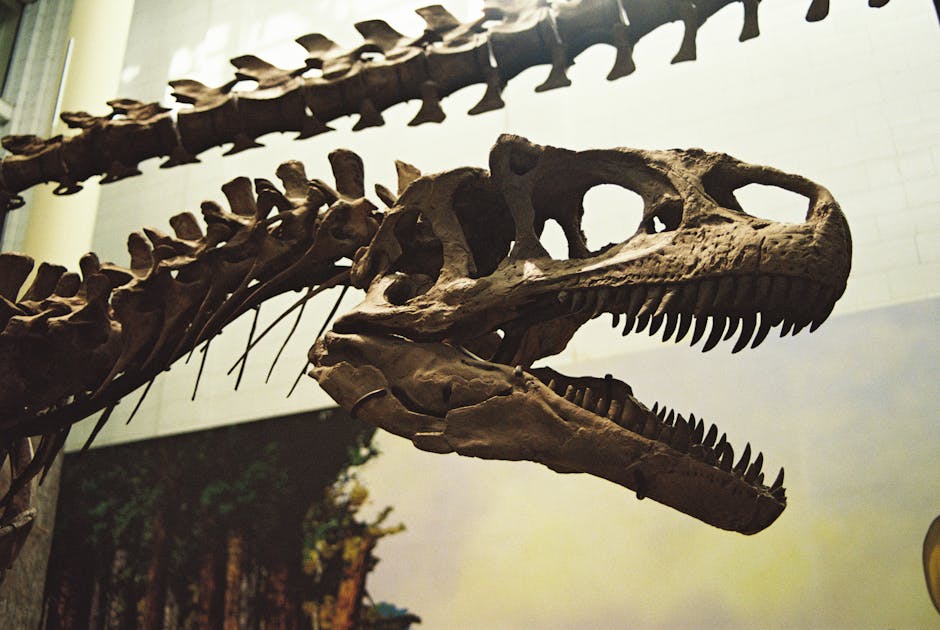
- Scientists in Thailand have discovered a massive new dinosaur species, Nagatitan chaiyaphumensis, in the Phu Wiang Mountains.
- The dinosaur is a long-necked, plant-eating titan that measured over 15 meters in length and weighed up to 10 metric tons.
- Nagatitan chaiyaphumensis is a titanosaurian sauropod with unique anatomical features, including elongated neural spines and specially oriented laminae.
- The fossilized remains were unearthed from the Sao Khua Formation, a geological layer dating back to the Early Cretaceous period, around 130 to 110 million years ago.
- The discovery highlights the importance of continued paleontological research in uncovering the secrets of prehistoric life.
In the arid badlands of northeastern Thailand’s Phu Wiang Mountains, where sunbaked soil cracks under the weight of time, a quiet revolution began with a single bone. Dust-coated paleontologists knelt in the red earth, brushing away layers of sediment to reveal vertebrae the size of tractor tires. What emerged over weeks of meticulous excavation was not just another fragment of prehistoric life, but the skeletal remains of a previously unknown giant—a long-necked, plant-eating titan that once roamed a forgotten world. The discovery, years in the making, culminated in the formal identification of a new dinosaur species, Nagatitan chaiyaphumensis, a name that echoes both myth and geography, honoring the region’s ancient serpent legends and its modern province of Chaiyaphum.
Discovery of a Prehistoric Colossus

Nagatitan chaiyaphumensis, a titanosaurian sauropod, is estimated to have measured over 15 meters in length and weighed upwards of 10 metric tons. The fossilized remains—comprising dorsal vertebrae, ribs, pelvic fragments, and part of the shoulder girdle—were unearthed from the Sao Khua Formation, a geological layer dating to the Early Cretaceous period, roughly 130 to 110 million years ago. What sets Nagatitan apart from known titanosaur relatives are subtle yet definitive anatomical distinctions, particularly in the shape of its vertebrae, which feature elongated neural spines and uniquely oriented laminae. These features, documented in a peer-reviewed study published in a recent paleontological journal, confirm its status as a distinct genus. The find marks only the second definitive titanosaur species described from Thailand, underscoring the region’s growing importance in understanding dinosaur evolution across Gondwanan fragments.
Tracing the Path of Ancient Giants

The emergence of Nagatitan chaiyaphumensis offers crucial clues about how sauropods dispersed across the fractured supercontinent of Gondwana. During the Early Cretaceous, Southeast Asia was part of a complex mosaic of microcontinents drifting northward after the breakup of Pangaea. While titanosaurs flourished in South America, Africa, and India, their presence in Southeast Asia has long puzzled scientists due to scarce fossil records. The Sao Khua Formation, rich in fluvial sediments, suggests a lush, river-dominated environment—ideal for large herbivores. Prior discoveries, such as Phuwiangosaurus sirindhornae in the 1990s, hinted at regional sauropod diversity, but Nagatitan’s more derived skeletal traits suggest a later evolutionary stage, possibly indicating multiple waves of migration or localized adaptation. This challenges earlier assumptions that Asian titanosaurs were isolated or evolutionarily stagnant.
The Minds Behind the Bones

The discovery is the result of decades of collaboration between Thai geologists and international paleontologists, led by Dr. Elen Shishkin of the Sirindhorn Museum and Dr. Masateru Shibata of the Fukui Prefectural Dinosaur Museum. Their team has conducted systematic surveys in Phu Wiang since the 2000s, driven by a mission to decolonize paleontology by centering regional expertise. Local villagers, trained in excavation techniques, played a vital role in spotting and preserving fragile fossils. For the researchers, Nagatitan is not merely a scientific milestone but a symbol of national pride and scientific sovereignty. As Dr. Shishkin noted, “Every bone tells a story—not just of extinction, but of resilience and rediscovery in a region long overlooked by Western-led paleontology.”
Implications for Evolutionary Biology

The identification of Nagatitan chaiyaphumensis reshapes our understanding of sauropod biogeography. Its morphological similarities to titanosaurs from China and Japan suggest a previously underestimated connectivity across ancient East Asia. This could imply land bridges or island-hopping dispersal routes that allowed sauropods to migrate despite rising sea levels. For conservationists, the find also highlights the urgency of protecting fossil sites from illegal excavation and urban development. In Thailand, paleontological heritage is legally protected, yet enforcement remains patchy. Moreover, the discovery fuels interest in underexplored regions of Southeast Asia, where sedimentary basins may hold further secrets about dinosaur diversity during one of Earth’s most dynamic geological periods.
The Bigger Picture
Nagatitan chaiyaphumensis is more than a new entry in the fossil record—it’s a testament to the incomplete nature of evolutionary history. Each discovery recalibrates our timeline, revealing that biodiversity in the Mesozoic was far more geographically nuanced than once believed. As climate change alters landscapes and exposes new fossil beds, scientists anticipate more finds in tropical and subtropical zones, historically underrepresented in paleontology. The rise of regional research hubs in countries like Thailand, Vietnam, and Malaysia is shifting the epicenter of dinosaur science, democratizing a field long dominated by North American and European institutions.
What comes next for Nagatitan may be even more revealing. Ongoing excavations at the original site suggest additional skeletal elements remain buried. Advanced imaging and isotopic analysis could soon unveil details about its diet, growth rate, and environment. As museums prepare casts for public display, the story of this gentle giant—once lost to time, now resurrected through science—continues to unfold, reminding us that even in the 21st century, Earth still guards its oldest secrets.
Source: Al Jazeera