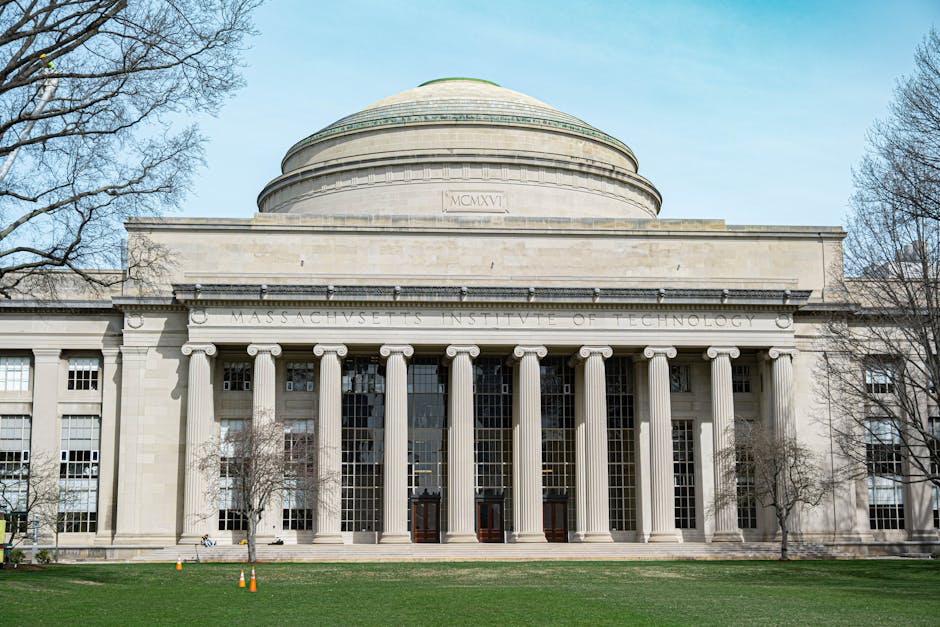
- MIT has seen a 20% drop in incoming graduate students, threatening its research trajectory.
- The decline is not isolated, but part of a broader crisis in U.S. higher education and research.
- International students, historically a significant backbone of MIT’s graduate programs, are declining sharply.
- Applications from international students fell by nearly 25% year-over-year, with steepest declines from China, India, and Iran.
- This decline threatens the nation’s competitive edge in science and engineering.
In the quiet corridors of Building 10, beneath the vaulted ceiling of MIT’s iconic dome, a different kind of silence has begun to take hold—one of absence. Classrooms that once buzzed with the accents of Seoul, Bangalore, and Tehran now echo with fewer voices. Labs that thrived on the relentless curiosity of international graduate researchers sit partially dormant. The air hums not with discovery, but with foreboding. At the epicenter of American technological ambition, a warning has sounded: the pipeline of global scientific talent is drying up. In a recent message to the MIT community, President Sally Kornbluth revealed a startling statistic—this year’s incoming cohort of graduate students has shrunk by 20%, a drop so steep it threatens to alter the institute’s research trajectory and, by extension, the nation’s competitive edge in science and engineering.
Enrollment Crisis at the Nation’s Innovation Engine

The 20% decline in incoming graduate students at MIT is not an isolated anomaly but a symptom of a broader crisis in U.S. higher education and research. The drop, confirmed in President Kornbluth’s public address, affects both domestic and international applicants, though the steepest falls are among foreign nationals—historically the backbone of MIT’s graduate programs. According to internal data, applications from international students fell by nearly 25% year-over-year, with particularly sharp declines from China, India, and Iran. Kornbluth cited a combination of restrictive visa policies, geopolitical tensions, and the rising allure of research opportunities abroad, including in Canada, Germany, and Singapore. Federal funding stagnation has compounded the problem, limiting the number of research assistantships and teaching positions that make graduate study financially viable. Without these supports, even the most talented applicants are forced to reconsider.
How We Got Here: The Erosion of the Talent Pipeline

The decline in graduate enrollment did not happen overnight. For decades, the United States attracted the world’s best and brightest through a combination of academic excellence, research freedom, and robust federal investment in science. From the post-Sputnik expansion of the National Science Foundation to the tech booms of the 1990s and 2000s, American universities became global magnets for innovation. But since the early 2010s, that pipeline has faced growing strain. The Trump administration’s tightening of H-1B and F-1 visa rules, continued in modified form under subsequent administrations, has made it harder for international students to study and remain in the U.S. after graduation. At the same time, countries like Canada and Australia have aggressively marketed streamlined immigration pathways for skilled workers. Meanwhile, federal R&D spending as a share of GDP has remained flat, while China’s has surged. According to Nature, China now produces more STEM doctorates annually than the U.S., and its investment in artificial intelligence and quantum computing is rapidly closing the gap.
The People Shaping the Future of Research

Behind the numbers are individuals whose ambitions are being rerouted. Take Arjun Patel, a top engineering student from Mumbai, who was accepted to MIT’s robotics program but ultimately chose ETH Zurich after months of visa uncertainty. Or Li Wei, a Chinese researcher in quantum materials who opted for the University of Toronto, citing clearer post-graduation work prospects. These decisions are not made lightly—they reflect a recalibration of risk and opportunity. At MIT, faculty members are feeling the impact firsthand. Professors in aerospace, AI, and biomedical engineering report difficulty staffing labs, delaying projects, and scaling back grant proposals. Some have begun collaborating more with institutions abroad, not by choice but necessity. Yet there remains a quiet determination among administrators and scientists to reverse the trend. Kornbluth has called for a national strategy to restore the U.S. as a destination of choice, urging Congress to modernize immigration policy and increase science funding.
Consequences for Science, Industry, and National Security

The ripple effects of MIT’s enrollment drop extend far beyond Cambridge. Graduate students are the engine of discovery in American research universities, contributing to breakthroughs in medicine, computing, and energy. A sustained decline threatens not only academic output but also the tech sector, which relies on university labs as talent pipelines. Silicon Valley startups, many founded by former MIT grad students, may find fewer co-founders and engineers in the years ahead. National security could also be at risk—advanced defense technologies increasingly depend on AI, hypersonics, and quantum systems, all areas where international talent plays a critical role. If the U.S. cedes leadership in training and retaining scientists, it risks falling behind in the very fields that define 21st-century power.
The Bigger Picture
This moment is not just about enrollment numbers—it’s about the future of American innovation. The United States built its postwar dominance not by hoarding talent, but by attracting it. MIT’s warning is a mirror held up to a nation that risks complacency. Other countries are not waiting; they are investing, recruiting, and building ecosystems designed to outcompete the U.S. model. If America wants to remain at the forefront of science and technology, it must recommit to openness, investment, and ambition. The decline in graduate students is not irreversible, but reversing it will require more than rhetoric—it will demand policy, funding, and a renewed belief in the value of global collaboration.
What comes next will depend on choices made in Washington, state capitals, and university boardrooms. Will the U.S. streamline visas for STEM graduates? Will Congress pass a new science funding bill on par with the CHIPS and Science Act’s promises? Or will institutions like MIT continue to sound the alarm as the talent pipeline narrows? The answers will shape not only the future of higher education, but the trajectory of American progress in the decades to come.
Source: Reddit