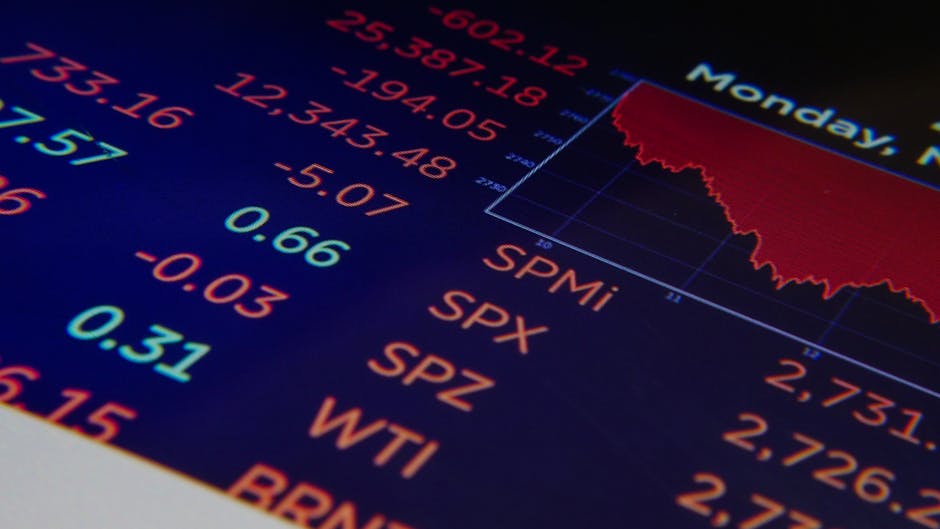
- 72% of Americans view the economy negatively, despite robust macroeconomic indicators.
- Consumer sentiment lags behind tangible improvements in economic fundamentals.
- Real GDP grew at a 3.1% annual rate in Q1 2026, but household ratings of economic conditions remain low.
- Financial stress and uneven income growth contribute to lingering skepticism about the economy.
- Geopolitical uncertainty surrounding energy markets and trade disruptions further erode confidence.
Despite robust macroeconomic indicators pointing to recovery, American consumers remain deeply skeptical about the state of the economy. Real GDP grew at a 3.1% annual rate in Q1 2026, inflation has cooled to 2.8% year-over-year, and unemployment stands at 3.9%, yet only 28% of households rate economic conditions as ‘good’—a figure nearly unchanged since late 2025. This disconnect reflects lingering financial stress from prior inflation spikes, uneven income growth, and geopolitical uncertainty, particularly surrounding energy markets and trade disruptions. As policymakers celebrate statistical wins, the emotional and financial reality for many households has not kept pace, suggesting that confidence may be the last metric to recover—even after tangible improvements.
Hard Data Contradicts Consumer Sentiment

Economic fundamentals in the first half of 2026 paint a picture of resilience. According to the U.S. Bureau of Economic Analysis, real disposable personal income rose by 4.3% in Q1, the highest quarterly increase since 2023, while the personal consumption expenditures (PCE) price index— the Federal Reserve’s preferred inflation gauge—fell to 2.8%, down from 3.7% in Q4 2025. The labor market remains tight, with 189,000 jobs added in April and initial jobless claims hovering near historic lows. Industrial production has rebounded, growing 2.4% year-to-date, and retail sales are up 5.1% compared to the same period last year. Yet, the University of Michigan’s Consumer Sentiment Index remains mired at 61.3 in May 2026, just above its 2023 crisis-era lows. This divergence is not unprecedented—similar gaps emerged in the early 1980s and post-2009 recovery—but the current chasm is wider than average, suggesting perception is being shaped by factors beyond headline statistics. A Reuters analysis from May 10 found that 68% of respondents cited ‘past financial pain’ as a key reason for continued pessimism, indicating a lag effect in sentiment adjustment.
Key Players Shape the Narrative

The Federal Reserve, the Biden administration, and major financial institutions have all attempted to recalibrate public perception. Federal Reserve Chair Jerome Powell has repeatedly emphasized that ‘the economy is on a sustainable path,’ pointing to inflation’s return toward target and stable labor markets. The White House has launched a public messaging campaign highlighting falling grocery and energy prices, while the Treasury Department has released data showing median household income growth outpacing inflation for the first time since 2021. Meanwhile, private sector actors like Walmart and Target have reported stronger-than-expected earnings, citing increased consumer spending on essentials—a sign of regained stability. However, critics argue that political messaging has failed to resonate, especially in rural and industrial regions where wage growth has lagged. Economists at the Brookings Institution note that trust in institutions remains below pre-pandemic levels, which undermines the credibility of positive economic updates. As a result, even favorable data is often met with skepticism, particularly among lower- and middle-income households still adjusting budgets after years of volatility.
Trade-Offs: Growth Versus Perception

The current economic environment presents a paradox: sustained growth coexists with stagnant confidence, creating policy trade-offs. On one hand, strong labor and output data give the Federal Reserve room to consider rate cuts in mid-2026, which could further stimulate investment and housing markets. On the other, premature easing risks reigniting inflation if supply chains face new shocks—particularly given ongoing tensions in the Persian Gulf, which have kept oil prices above $90 per barrel. Conversely, maintaining restrictive monetary policy may dampen business sentiment and delay wage growth in sectors still recovering, prolonging public dissatisfaction. There is also a political cost: low consumer sentiment historically correlates with electoral challenges for incumbent parties. While the economy may be objectively improving, the subjective experience of affordability—especially for housing, healthcare, and education—remains strained. Bridging this gap requires not just sound policy but effective communication and targeted support for households still feeling the aftershocks of prior economic turbulence.
Why Sentiment Hasn’t Caught Up Yet

The delay in consumer sentiment recovery stems from structural and psychological factors that outlast quarterly data shifts. Inflation’s impact on household budgets between 2022 and 2024 eroded savings and increased debt, particularly through credit card usage, which now carries an average interest rate above 27%. This financial scarring has led to enduring caution, even as prices stabilize. Additionally, the benefits of economic growth have not been evenly distributed—urban tech hubs and asset owners have seen significant gains, while manufacturing and service workers in smaller markets report minimal improvement. Social media and 24-hour news cycles amplify negative anecdotes, reinforcing a perception of crisis despite aggregate gains. Finally, the resolution of the Iran-U.S. trade standoff in early 2026 reduced supply chain risks but did not instantly restore consumer trust. These factors combined mean that confidence is recovering slower than output, employment, or inflation metrics would suggest.
Where We Go From Here
Over the next 6 to 12 months, three scenarios could unfold. In the baseline scenario, gradual rate cuts and continued job growth slowly improve sentiment, bringing the Consumer Sentiment Index to the mid-70s by early 2027. In an optimistic case, a significant drop in energy prices and bipartisan agreement on fiscal reforms could trigger a consumer spending surge, accelerating recovery in retail and housing sectors. However, a downside scenario remains possible: renewed geopolitical instability or a banking sector shock could reignite inflation fears and freeze credit markets, reversing recent gains. The path forward depends not only on economic performance but on whether institutions can rebuild credibility and ensure that growth feels tangible to the average household.
Bottom line — even as the U.S. economy demonstrates resilience through strong fundamentals, widespread consumer pessimism suggests that true recovery will be measured not just in GDP, but in restored public trust and lived financial security.
Source: Reddit