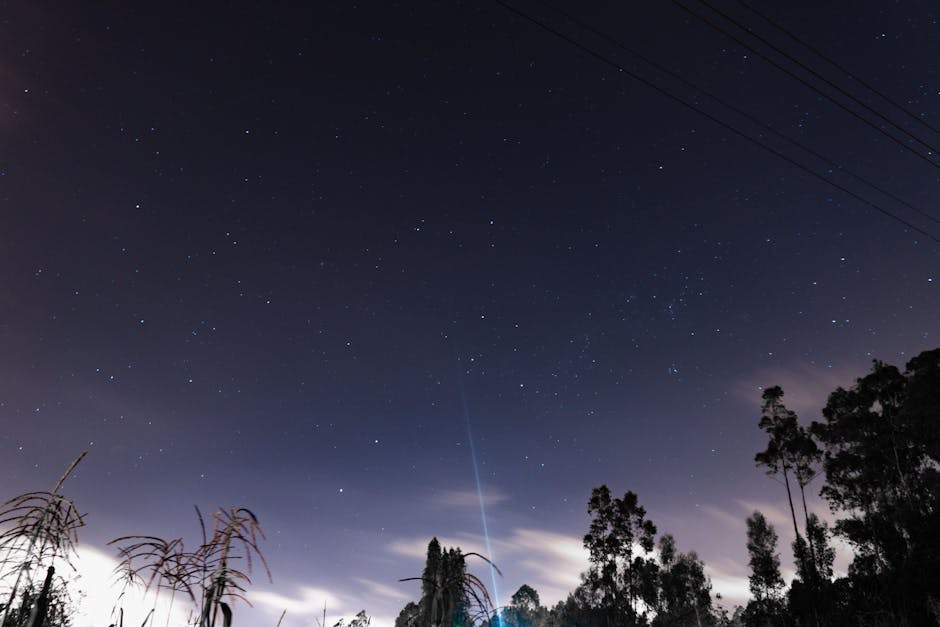
- Experience the Milky Way in vivid clarity through specially timed night journeys on dark-sky preserves.
- Over 200 locations worldwide have been designated as dark-sky preserves, accessible via unique rail routes.
- Astrotourism by train offers a new form of travel that combines comfort with cosmic wonder.
- The International Dark-Sky Association has recognized the importance of preserving dark skies for stargazing.
- Remote regions with minimal light pollution offer the best opportunities for stargazing by train.
Under the inky blackness of Earth’s most remote night skies, where light pollution is nearly nonexistent, a new form of astrotourism is gaining momentum: stargazing by train. In select regions—from the aurora-lit rails of northern Norway to the high desert clarity of Nevada—rail operators are capitalizing on geography and darkness to offer passengers an unrivaled celestial spectacle. The International Dark-Sky Association has designated over 200 locations worldwide as dark-sky preserves, many of which are now accessible via specially timed night journeys. On these slow-moving observatories on rails, all guests must do is recline, gaze upward through panoramic windows or open-air viewing cars, and witness the Milky Way stretch across the heavens in vivid clarity. For astronomy enthusiasts and leisure travelers alike, these journeys blend comfort with cosmic wonder, transforming rail travel into a portal to the universe.
Astro-Rail Adventures in a Light-Polluted World

As over 80% of the global population now lives under light-polluted skies, according to a 2016 study published in Scientific Reports, the ability to see the night sky in its full glory has become a rare luxury. This growing disconnect from the cosmos has fueled demand for immersive experiences that reconnect people with the stars. Trains, with their ability to traverse vast, remote regions where darkness prevails, have emerged as ideal platforms for astrotourism. Unlike static observatories or camping excursions, stargazing trains offer accessibility, comfort, and curated educational experiences. Operators are increasingly partnering with astronomers and dark-sky organizations to time departures with meteor showers, lunar phases, and auroral activity, making these trips both scenic and scientifically engaging. In an era when digital screens dominate attention, these journeys offer a rare chance to witness the universe in its unaltered splendor.
Top Nighttime Rail Routes for Celestial Viewing

Among the most renowned stargazing train experiences is Norway’s Bergen Railway, particularly during winter months when the train crosses the Hardangervidda plateau under the glow of the aurora borealis. The Flåm Railway, a UNESCO-listed route, also offers night excursions with expert narration on Norse star myths and atmospheric phenomena. In New Zealand, the TranzAlpine train journeys through the Southern Alps, emerging near the Aoraki Mackenzie International Dark Sky Reserve—the largest in the Southern Hemisphere. Nevada’s Virginia & Truckee Railroad runs seasonal “Starlight Specials” from Virginia City, departing deep into the night when the high-desert sky reaches peak transparency. Meanwhile, Canada’s Rocky Mountaineer includes astronomy-themed departures through Jasper National Park, another designated dark-sky preserve, where onboard telescopes and guest astrophysicists enhance the experience.
Engineering the Ultimate Night-Sky Journey

What sets these trains apart isn’t just their routes, but their design and operational planning. Many feature glass-domed observation cars, heated outdoor platforms, and blackout lighting to preserve night vision. Operators coordinate with local weather and astronomical services to optimize viewing conditions, sometimes even adjusting speeds to linger beneath particularly active auroral zones. The Aoraki Mackenzie reserve, for instance, enforces strict outdoor lighting regulations across the region, ensuring that ground-level interference remains minimal. Onboard, passengers receive real-time updates via tablet interfaces showing constellations, satellite passes, and meteor shower radiants. Some services, like those in Jasper, include infrared camera feeds that project live aurora footage onto interior screens, allowing guests to appreciate subtle atmospheric shifts invisible to the naked eye. These enhancements transform passive travel into an interactive celestial exploration.
Who Benefits from the Rise of Astro-Rail Tourism?

The expansion of stargazing train services benefits more than just tourists. Rural communities along these routes gain sustainable tourism revenue without requiring large-scale infrastructure. Dark-sky preservation efforts also receive renewed public attention, helping local governments justify lighting regulations. Educational institutions and space agencies, including NASA, have expressed interest in using such platforms for public outreach, seeing them as effective tools for inspiring interest in space science. For older travelers or those with mobility challenges, these rail journeys offer an accessible alternative to rugged astrotourism destinations. Moreover, the emphasis on low-impact travel aligns with global sustainability goals, positioning rail-based astrotourism as a model for eco-conscious adventure. As climate concerns reshape travel habits, these night trains present a compelling fusion of environmental stewardship and scientific wonder.
Expert Perspectives
“Rail-based stargazing democratizes access to the night sky,” says Dr. Elena Torres, an astrophysicist at the University of Oslo. “You don’t need a telescope or a hiking permit—just a ticket.” Others caution against over-commercialization, warning that increased traffic could compromise dark-sky integrity. “Preservation must come first,” argues Mark Thompson, a dark-sky advocate with the International Astronomical Union. “These experiences should educate, not exploit.” Still, most experts agree that when managed responsibly, astro-rail initiatives can foster deeper planetary awareness and inspire future generations of scientists.
Looking ahead, operators are exploring year-round schedules, hybrid solar-electric locomotives, and augmented reality displays to enrich the viewing experience. The possibility of lunar-eclipse special journeys or meteor-storm expeditions is also under discussion. As humanity reaches further into space, these terrestrial journeys remind us that wonder often begins just above our heads—visible not through a rocket, but through a train window.
Source: The New York Times