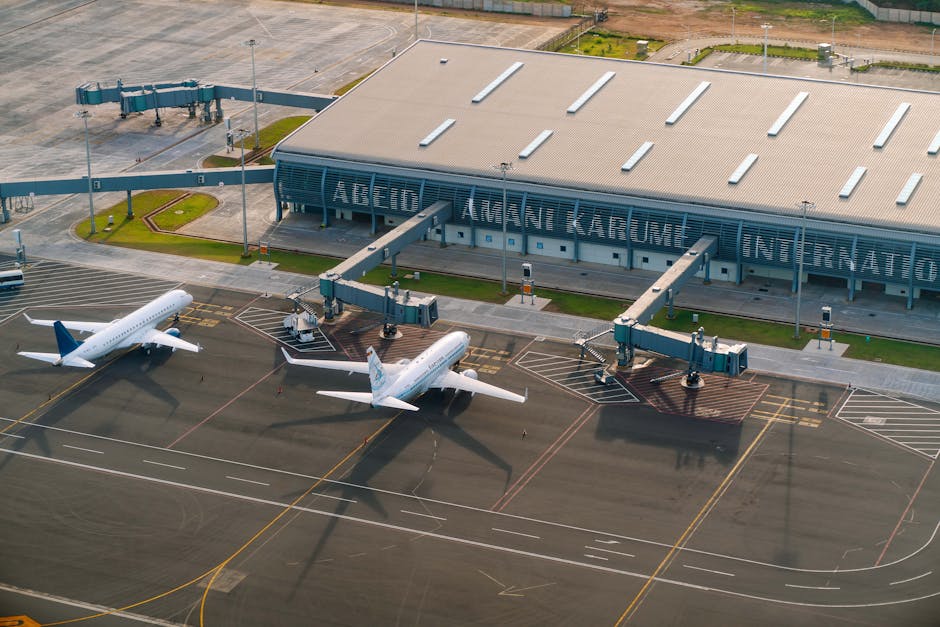
- Heathrow airport may not be the only option for air travel in the UK by 2040, with new regional airports emerging.
- A UK aviation watchdog review could redefine how airport growth is measured, funded, and justified, sparking competition.
- The proposed framework emphasizes network resilience, regional equity, and environmental accountability in airport expansion.
- Airlines may be incentivized or required to shift routes from Heathrow to underutilized regional airports.
- The UK’s busiest airport is at a crossroads, with a long-stalled third-runway project and a need for expansion alternatives.
Just beyond the smog-hazed skyline of West London, where the constant thrum of jet engines underscores daily life, a quiet revolution is brewing in British aviation. Heathrow, the nation’s busiest airport and a symbol of global connectivity, stands at a crossroads. For decades, it has operated at near-maximum capacity, its twin runways groaning under the weight of 80 million passengers a year. Yet, in boardrooms, government offices, and regional councils far from the M25, a different vision is taking shape—one where expansion doesn’t mean more concrete at Heathrow, but opportunities for cities like Birmingham, Manchester, and Edinburgh to emerge as formidable air travel hubs. The catalyst? A sweeping review by the UK’s aviation watchdog that could redefine how airport growth is measured, funded, and justified.
Regulatory Shift Sparks Airport Competition

The UK Civil Aviation Authority (CAA) has unveiled a draft framework that could fundamentally alter the economics of airport expansion. Rather than automatically favoring Heathrow’s long-stalled third-runway project, the new rules emphasize network resilience, regional equity, and environmental accountability. Under the proposed model, any expansion at Heathrow would be contingent on mitigating congestion and emissions through coordinated traffic redistribution. This means airlines may be incentivized—or even required—to shift a portion of long-haul and short-haul routes to underutilized regional airports. The CAA argues this approach would reduce pressure on London’s infrastructure while unlocking £5 billion in potential investment across the UK’s secondary aviation hubs. The document stops short of blocking Heathrow’s expansion but sets conditions that make it far more complex than previously assumed.
Decades of Gridlock and Delays

Heathrow’s expansion saga stretches back over half a century, a tale of political hesitation, legal challenges, and environmental opposition. Though the airport has expanded incrementally since opening in 1946, its geographic constraints—wedged between the M25 and residential zones—have made large-scale growth nearly impossible. In 2018, the UK government endorsed a third runway, estimating it would add £212 billion to the economy by 2050. But legal setbacks, including a 2020 Court of Appeal ruling that deemed the plan incompatible with climate goals, stalled progress. Since then, Heathrow has pivoted to efficiency upgrades—digital tower systems, optimized flight paths, and carbon offset programs—but physical expansion remains in limbo. Meanwhile, regional airports have quietly modernized terminals and extended runways, positioning themselves as viable alternatives should national policy shift.
The Players Reshaping UK Skies

Behind the regulatory debate are competing interests with deep economic stakes. Heathrow’s leadership, led by CEO Thomas Woldbye, argues that only a third runway can meet global demand and maintain the UK’s status as an international hub. Yet regional airport authorities see an opening: Andy Street, former mayor of the West Midlands, calls the CAA’s review a “once-in-a-generation chance” to rebalance the UK’s lopsided transport infrastructure. Airlines, too, are divided—while British Airways, deeply entrenched at Heathrow, resists change, carriers like easyJet and Jet2 have already begun expanding operations in Manchester and Leeds. The Department for Transport remains officially neutral, though leaked briefing notes suggest senior officials favor a “polycentric” aviation model to support the government’s levelling-up agenda. Each player brings data, lobbying power, and political connections to the table, turning what seems like a technical review into a high-stakes economic negotiation.
Consequences for Travelers and Trade

If the CAA’s framework becomes policy, the impact will ripple across the UK economy. Passengers may face longer domestic transfers but benefit from reduced delays and competitive pricing. Regional economies stand to gain thousands of jobs in logistics, hospitality, and aviation services. Exporters in the Midlands and North could see faster air freight connections, reducing reliance on congested southern ports. However, Heathrow-dependent businesses—particularly in luxury retail and international finance—warn of diminished global connectivity. Environmental groups, while welcoming emissions scrutiny, caution that spreading flights across more airports could increase overall aviation pollution unless strict green standards are enforced. The final decision will balance regional equity against efficiency, sustainability against growth.
The Bigger Picture
This debate transcends airport runways—it’s about how the UK allocates economic opportunity in a post-Brexit, climate-conscious era. For too long, infrastructure investment has been concentrated in the southeast, reinforcing geographic inequalities. The CAA’s proposal reflects a broader rethinking of what national resilience means: not just more capacity in one place, but a distributed, adaptable network that serves the whole country. Similar shifts are underway in Germany and the Netherlands, where multimodal hubs reduce reliance on single mega-airports. The UK now has a chance to lead—or risk falling behind.
What comes next hinges on the CAA’s final ruling, expected by early 2025. Public consultation is open, and parliamentary committees are preparing hearings. Heathrow vows to fight for its runway, but the tide may have turned. Whether through regulation, innovation, or political will, the UK’s aviation future is no longer written solely in the contrails above London. It’s being drafted in boardrooms, town halls, and policy papers across the nation—with implications far beyond takeoff and landing.
Source: BBC