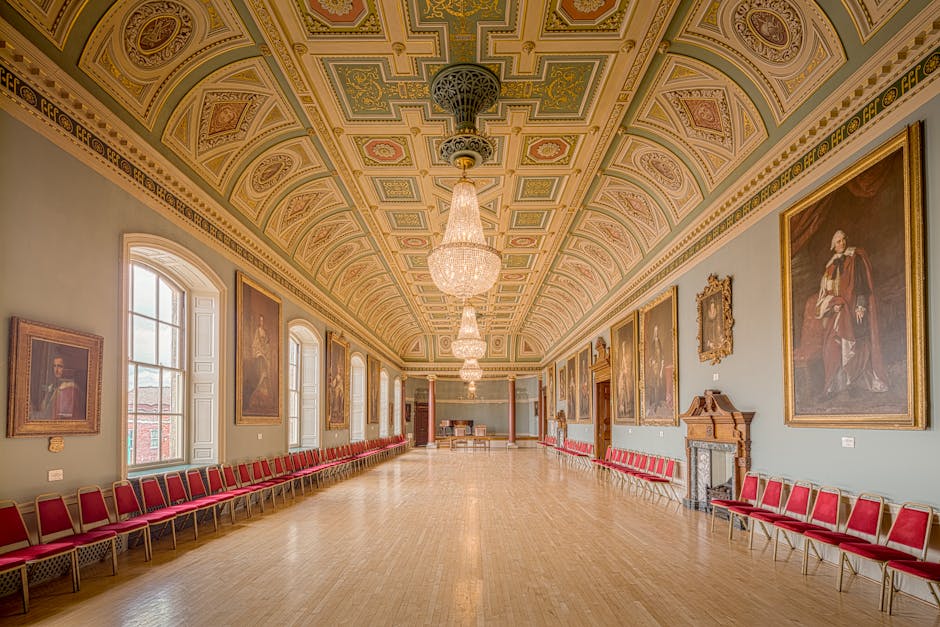
- York’s 18th-century Assembly Rooms are in urgent need of repair due to structural decline and water infiltration.
- The historic building, a Grade I-listed landmark, risks losing irreplaceable architectural features unless immediate repairs are made.
- The York Conservation Trust has confirmed that key structural supports are weakened, putting original plasterwork and timber elements at risk.
- Limited heritage funding and increasing climate pressures on historic infrastructure have sparked a citywide conversation about preserving history.
- The Assembly Rooms are one of the few surviving examples of early 18th-century assembly architecture in the UK, highlighting their cultural significance.
The Assembly Rooms in York, one of England’s most treasured 18th-century social landmarks, is on the brink of structural decline, with its roof and portico suffering from decades of exposure to the elements. Built in 1732 as a hub for elite gatherings, dances, and civic events, the Grade I-listed building now faces a race against time as conservationists warn that without immediate repairs, irreplaceable architectural features could be lost forever. The York Conservation Trust has confirmed that water infiltration has weakened key structural supports, particularly beneath the grand portico and within the roof trusses, risking long-term damage to original plasterwork and timber elements. This revelation has sparked a citywide conversation about the cost of preserving history in an era of limited heritage funding and increasing climate pressures on historic infrastructure.
A Legacy at Risk

The Assembly Rooms were once the epicenter of Georgian high society in northern England, designed by local architect Richard Boyle to rival the grandeur of Bath and London’s social venues. Hosting masked balls, card games, and political assemblies, the building played a central role in shaping York’s cultural identity. Today, it stands as one of the few surviving examples of early 18th-century assembly architecture in the UK, recognized not only for its aesthetic elegance but also for its social significance. The urgency of the current restoration stems from a growing awareness that climate change is accelerating the deterioration of historic masonry and timber structures. With increased rainfall and fluctuating temperatures in northern England, buildings like the Assembly Rooms are experiencing more frequent freeze-thaw cycles, which erode mortar and compromise structural integrity. The York Conservation Trust has emphasized that delaying repairs could lead to irreversible damage, potentially costing millions more in the future.
Scope of the Restoration

The project, spearheaded by the York Conservation Trust in partnership with Historic England, will focus on two critical areas: the lead-covered roof and the iconic Tuscan portico at the building’s entrance. Engineers have identified significant corrosion in the roof’s flashing and gutter systems, allowing water to seep into the attic space and damage original timber beams. Meanwhile, the portico—a defining architectural feature supported by six stone columns—has developed hairline cracks in its pediment and base, likely due to subsidence and prolonged moisture exposure. Specialist stonemasons and conservation architects will use traditional materials and techniques to ensure authenticity, including lime-based mortars and hand-cut stone replacements. The estimated cost of the restoration is £2.5 million, with funding drawn from a combination of private donors, heritage grants, and a public appeal launched by the Trust. Work is expected to commence in early 2025 and last up to 18 months, during which the building will remain closed to the public.
Engineering and Historical Challenges

Restoring a structure of this age and significance presents unique technical and ethical challenges. Modern building codes must be balanced with the need to preserve historical accuracy, particularly when reinforcing load-bearing elements without introducing incompatible materials. For instance, using Portland cement in place of traditional lime mortar can trap moisture and cause further decay—a lesson learned from past restoration errors across the UK. Experts from Historic England are advising on best practices, emphasizing minimal intervention and reversibility in conservation work. Additionally, archaeologists will conduct surveys beneath floorboards and within wall cavities to document any hidden features, such as original paint layers or 18th-century graffiti, which could offer new insights into the building’s social history. The project also includes upgrading drainage systems and installing discreet moisture sensors to monitor conditions in real time, helping prevent future deterioration.
Impact on Heritage and Community

The restoration of the Assembly Rooms will have far-reaching implications for York’s cultural landscape and local economy. As a major tourist destination, the building contributes to the city’s £1.2 billion annual heritage tourism sector. Its closure during repairs may affect guided tours and cultural events, but the long-term benefits of stabilization far outweigh short-term disruptions. Moreover, the project is expected to create skilled jobs in traditional craftsmanship, from stonemasonry to decorative plasterwork, helping sustain rare artisanal trades. For residents, the effort symbolizes a commitment to preserving communal identity in the face of modern pressures. Once completed, the restored Assembly Rooms could reopen as a multi-use heritage venue, hosting exhibitions, lectures, and period reenactments, ensuring its relevance for future generations.
Expert Perspectives
Dr. Eleanor Hart, architectural historian at the University of York, supports the restoration, stating, “The Assembly Rooms are not just a building—they’re a narrative of social evolution in provincial England.” However, some critics argue that limited public funds should prioritize housing or climate resilience over historic preservation. Dr. Marcus Lin, urban policy analyst at Leeds Metropolitan, cautions, “While heritage matters, we must ensure conservation doesn’t become a luxury at the expense of urgent social needs.” The Trust maintains that heritage and progress are not mutually exclusive, citing studies showing that every £1 invested in heritage restoration generates up to £3 in economic return through tourism and employment.
As work on the Assembly Rooms progresses, attention will turn to other aging landmarks across the UK facing similar threats. The success of this project could set a precedent for integrating traditional craftsmanship with modern monitoring technologies in heritage conservation. One key question remains: how can cities balance the preservation of the past with the demands of a rapidly changing future? The answer may lie in adaptive reuse and sustainable stewardship—principles that the York Assembly Rooms restoration aims to embody.
Source: BBC