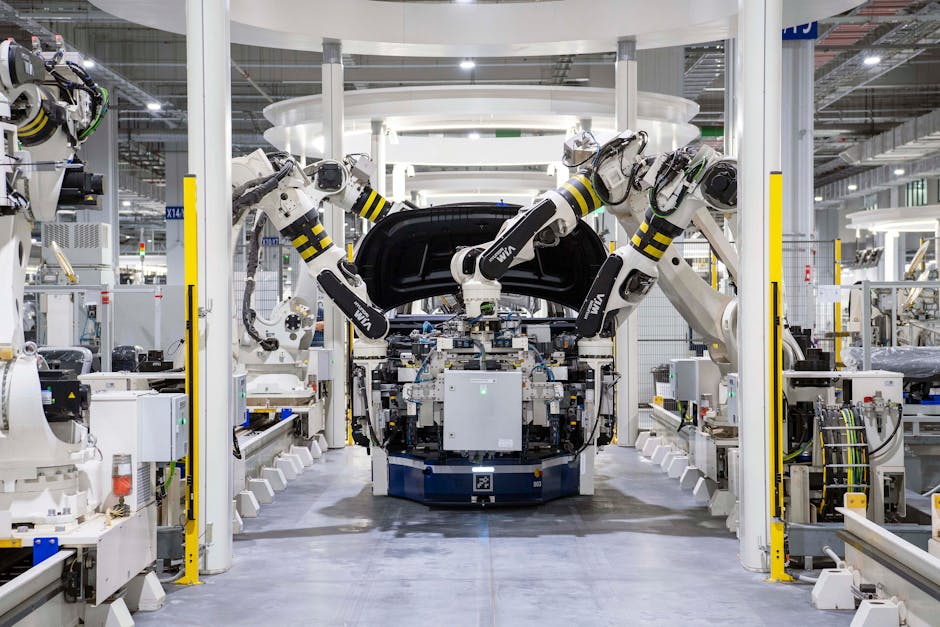
- Congress is targeting Chinese vehicle imports due to concerns over national security and trade competition.
- A newly introduced bipartisan bill proposes to ban all Chinese-made vehicles from being sold or operated in the US.
- The bill frames the ban as a national security imperative, citing potential surveillance risks from embedded technology.
- The legislation reflects deeper anxiety about China’s state-subsidized manufacturing model and its impact on US automakers.
- The ban could trigger retaliatory actions, further destabilizing U.S.-China trade relations.
More than 20% of all electric vehicles sold worldwide in 2023 were manufactured in China, a dominance that has now triggered a seismic policy response in Washington. A newly introduced bipartisan bill in the U.S. Congress proposes to permanently ban all vehicles made in China from being sold or operated in the United States. Framed as a national security imperative, the legislation directly targets not only electric vehicles but internal combustion engine models as well, threatening to sever one of the last major consumer-goods trade channels between the world’s two largest economies. If passed, the ban would mark the most aggressive automotive protection measure in decades and could trigger retaliatory actions, further destabilizing U.S.-China trade relations.
Escalating Trade Tensions in the Automotive Sector

The bill, formally titled the ‘Protecting American Transportation Security and Innovation Act,’ arrives amid rising bipartisan concern over China’s expanding footprint in critical infrastructure and technology supply chains. Lawmakers argue that Chinese-made vehicles could pose surveillance risks through embedded technology capable of data collection on American drivers and infrastructure. Beyond security, the legislation reflects deeper anxiety about China’s state-subsidized manufacturing model, which has enabled its automakers to undercut global prices and dominate emerging EV markets. With U.S. automakers struggling to compete on cost and scale, the bill positions itself as both a defense of national sovereignty and a strategic intervention to preserve domestic manufacturing jobs in an industry long central to the American economy.
Key Provisions and Political Backing

Authored by Senators Joe Manchin (D-WV) and Todd Young (R-IN), the bill would empower the Department of Transportation and the Office of the U.S. Trade Representative to designate Chinese vehicles as a threat to national security, effectively barring their import under the International Emergency Economic Powers Act (IEEPA). The legislation explicitly prohibits not only new sales but also the operation of Chinese-made vehicles on federal land and in government fleets. While no Chinese automaker currently holds a significant presence in the U.S. retail market, companies like BYD and Geely have expanded aggressively in Europe and Latin America, raising fears they may soon target the U.S. The bill enjoys support from both labor unions, including the United Auto Workers, and national security hawks, signaling a rare convergence of economic and defense interests in Congress.
Global Supply Chains at Risk

China’s automotive industry has grown exponentially over the past decade, supported by massive government investment, control over key battery minerals, and a domestic market of over 25 million annual vehicle sales. According to Reuters, Chinese automakers exported 5.2 million vehicles in 2023, surpassing Japan to become the world’s largest exporter. While most of these exports go to Southeast Asia, Africa, and Latin America, the technological sophistication of Chinese EVs has increased rapidly, narrowing the performance gap with Western counterparts. Analysts warn that a U.S. ban could accelerate decoupling in the global auto industry, forcing other nations to choose between Chinese affordability and Western security standards, particularly as EV adoption becomes central to climate and energy policy.
Implications for Consumers and Automakers

If enacted, the legislation would have immediate repercussions for American consumers, manufacturers, and foreign policy. While no Chinese brand currently sells directly to U.S. customers, components from Chinese suppliers are embedded in nearly all modern vehicles, complicating enforcement. The ban could also delay the U.S. transition to electric vehicles by limiting access to lower-cost models, potentially slowing adoption among price-sensitive buyers. For Detroit automakers, the bill offers temporary relief from a formidable competitor but risks inviting retaliatory tariffs on U.S. exports to China. Moreover, allies like Germany and South Korea may view the measure as protectionist, straining diplomatic coordination on broader trade and technology issues.
Expert Perspectives
Opinions among policy experts are deeply divided. Some, like Dr. Emily Carter of the Peterson Institute, argue the bill is a necessary firewall: ‘Chinese vehicles could become rolling surveillance platforms, feeding data back to an adversarial state.’ Others, such as MIT transportation economist David Sandalow, call the move disproportionate: ‘Blocking an entire nation’s vehicles ignores supply chain interdependence and could backfire economically.’ Legal scholars also question the constitutionality of blanket bans on goods from a single country, noting potential violations of World Trade Organization rules. The debate underscores a broader struggle to balance innovation, security, and free trade in an era of strategic competition.
Looking ahead, the bill’s fate in a closely divided Congress remains uncertain. While it has gained momentum in committee hearings, it may face resistance from moderates concerned about inflation and consumer choice. Simultaneously, Chinese automakers are expected to challenge any ban through international trade bodies. As the 2024 election cycle unfolds, the legislation may become a litmus test for economic nationalism versus global engagement. Regardless of its immediate passage, the bill signals a turning point: the automotive industry is no longer just an economic battleground, but a frontline in the broader U.S.-China technological and geopolitical rivalry.
Source: Caranddriver