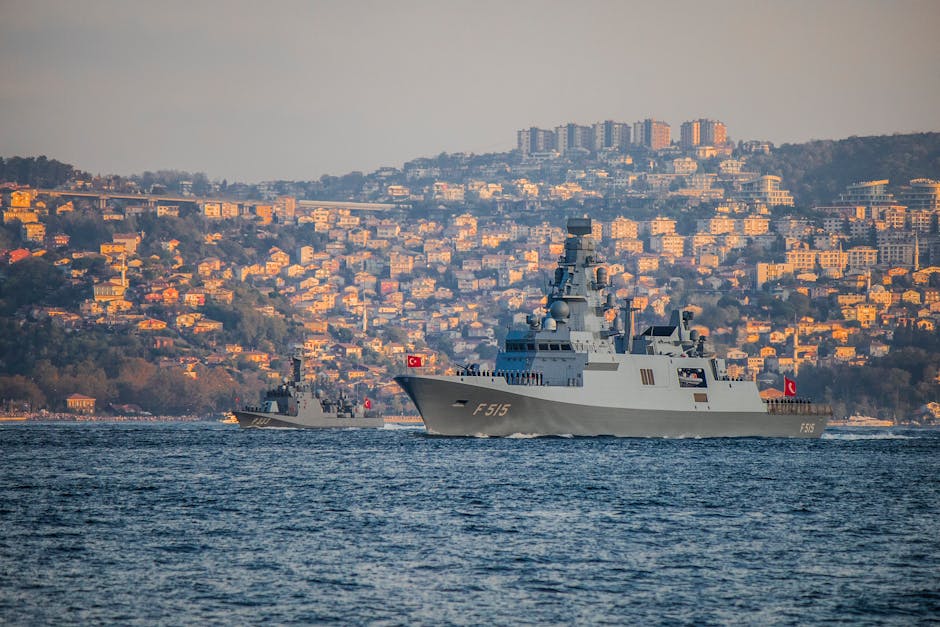
- The Strait of Hormuz has become a hotspot for tensions between the US and Iran, threatening global oil markets and security.
- Escalating strikes and military presence have raised concerns that a fragile cease-fire may break down, plunging the region into chaos.
- The conflict stems from the US withdrawal from the Iran nuclear deal and reimposition of economic sanctions on Iran.
- Regional players like Saudi Arabia and the UAE have their own interests and agendas in the conflict, complicating the situation.
- A wider conflict in the Strait of Hormuz could have devastating consequences for global oil markets and regional security.
The Strait of Hormuz, a critical waterway for international oil trade, has witnessed a significant escalation in tensions between the United States and Iran. Recent strikes exchanged between the two nations have raised concerns that the fragile cease-fire could break down, plunging the region into chaos. According to reports, the U.S. has conducted airstrikes against Iranian-backed militia groups in response to attacks on American interests in the region. This development has sparked fears of a wider conflict, with potentially devastating consequences for global oil markets and security.
Rising Tensions in the Region

The current situation in the Strait of Hormuz is a culmination of months of rising tensions between the U.S. and Iran. The conflict has its roots in the U.S. withdrawal from the Joint Comprehensive Plan of Action (JCPOA), also known as the Iran nuclear deal, and the subsequent reimposition of economic sanctions on Iran. These actions have led to a significant deterioration in relations between the two countries, with Iran responding by increasing its military presence in the region and attacking American interests. The situation has been further complicated by the involvement of other regional players, including Saudi Arabia and the United Arab Emirates, which have their own interests and agendas in the conflict.
Key Players and Interests

The conflict in the Strait of Hormuz involves a complex array of players and interests. The U.S. has a significant military presence in the region, with bases in countries such as Bahrain and Qatar, and has been conducting patrols in the Strait to ensure the free flow of oil. Iran, on the other hand, has been seeking to exert its influence in the region and has been supporting various militia groups in countries such as Iraq and Yemen. Other regional players, including Saudi Arabia and the United Arab Emirates, have their own interests and agendas in the conflict, with some seeking to counter Iranian influence and others seeking to protect their own oil interests. For more information on the region’s geopolitics, see the Strait of Hormuz Wikipedia page.
Analysis and Implications

The current conflict in the Strait of Hormuz has significant implications for global security and oil markets. The region is home to some of the world’s most important oil-producing countries, and any disruption to oil supplies could have a major impact on the global economy. According to a report by the Reuters news agency, the conflict could lead to a significant increase in oil prices, with some analysts predicting a rise of up to 10%. This would have a major impact on countries that rely heavily on oil imports, including the U.S., China, and India.
Humanitarian Concerns

The conflict in the Strait of Hormuz also raises significant humanitarian concerns. The region is home to some of the world’s most vulnerable populations, including refugees and migrants, and any escalation in the conflict could lead to a major humanitarian crisis. The World Health Organization (WHO) has warned of the potential for a major health crisis in the region, with the conflict disrupting access to medical supplies and other essential services.
Expert Perspectives
Experts are divided on the potential outcome of the conflict in the Strait of Hormuz. Some, such as Dr. Sanam Vakil, a Middle East expert at the Chatham House think tank, believe that the conflict could escalate into a full-scale war, with potentially devastating consequences for the region and the world. Others, such as Dr. Trita Parsi, the founder of the National Iranian American Council, believe that a diplomatic solution is still possible, with the U.S. and Iran able to negotiate a new agreement that addresses the concerns of both sides.
As the situation in the Strait of Hormuz continues to unfold, it is clear that the conflict has significant implications for global security and oil markets. The international community will be watching the situation closely, with many calling for a diplomatic solution to the conflict. However, with tensions running high and the potential for miscalculation or accident, the situation remains highly volatile, and the world waits with bated breath to see what will happen next.
Source: The New York Times