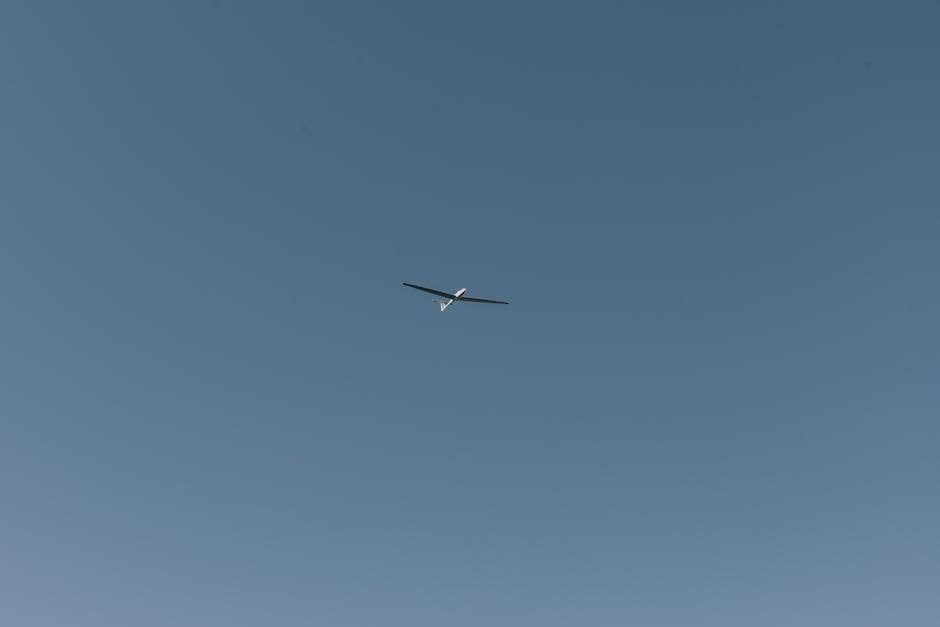
- The SkySailor X97 solar drone achieved an unofficial record for uncrewed, solar-electric aircraft with 600 hours of continuous flight.
- The drone was powered entirely by solar energy stored in advanced lithium-sulfur batteries and flew at altitudes above 65,000 feet.
- The solar drone was designed to function as a pseudo-satellite for persistent surveillance, atmospheric monitoring, or broadband coverage.
- The aircraft’s carbon-fiber skeleton melted in the sun during its fatal crash, indicating extreme temperatures.
- The cause of the crash remains unknown, but it is suspected to be related to a gust, sensor error, or delayed response.
High above the Arizona desert, beneath a sky bleached white by the midday sun, the silhouette of a ghostly aircraft glided silently through the stratosphere. Its wings—longer than those of a jumbo jet—soaked in sunlight, powering motors that hummed almost imperceptibly. For 25 days, the solar drone known as SkySailor X97 circled Earth’s upper atmosphere, a marvel of engineering and ambition. It cast no shadow on the ground, left no contrail in the sky, and burned no fossil fuel. Engineers on the ground monitored its progress with a mix of pride and anxiety. Then, on the 26th day, as it descended toward a dry lake bed for a planned landing, something went wrong. A gust, a sensor error, a delayed response—no one yet knows for sure. But within seconds, the aircraft veered off course, clipped the ground, and erupted into flames, its carbon-fiber skeleton melting like wax in the sun.
Solar Drone Achieves Record Flight Before Crash

SkySailor X97, developed by the aerospace firm Aether Dynamics, completed 600 hours of continuous solar-powered flight—an unofficial endurance record for uncrewed, solar-electric aircraft. Flying at altitudes above 65,000 feet, it remained above the weather and most air traffic, sustained entirely by energy collected during daylight and stored in advanced lithium-sulfur batteries. The drone was designed to function as a pseudo-satellite, capable of providing persistent surveillance, atmospheric monitoring, or broadband coverage without the cost of orbital launch. Telemetry data showed stable performance throughout the flight, with battery cycles aligning perfectly with solar exposure. But during its final descent sequence, communication was lost abruptly. Recovery teams reached the crash site within hours, finding only charred debris scattered across miles of desert floor. No injuries were reported, as the landing zone was remote and uninhabited. Aether Dynamics has launched an internal investigation, with support from the National Transportation Safety Board, to determine the cause.
The Decades-Long Quest for Solar Flight

The dream of solar-powered flight stretches back to the 1970s, when experimental aircraft like the Solar Challenger crossed the English Channel on sunlight alone. But progress was slow—limited by the inefficiency of early photovoltaics and the weight of batteries. The turning point came in the 2010s, with the success of projects like Solar Impulse, which circumnavigated the globe in 2016 using only solar energy. That mission, while crewed and symbolic, proved long-duration solar flight was feasible. It inspired a new generation of aerospace startups to pursue uncrewed, high-altitude platforms. SkySailor X97 emerged from this lineage, combining ultra-light composites, high-efficiency gallium-arsenide solar cells, and AI-driven flight controls. At 240 feet, its wingspan exceeded that of a Boeing 747, yet the entire aircraft weighed less than a compact car. This delicate balance of scale and fragility defined both its potential and its vulnerability.
The Engineers Behind the Solar Drone

Led by Dr. Elena Ruiz, a former NASA aerodynamicist, the Aether Dynamics team operated out of a hangar in Tucson, Arizona, driven by a vision of sustainable aerospace. They rejected the traditional satellite model as costly and environmentally taxing, instead championing a fleet of solar drones that could loiter for months above disaster zones, conflict areas, or remote communities. Ruiz often described the SkySailor as “a satellite with a soul”—retrievable, upgradable, and carbon-neutral. The team worked in near-obscurity for seven years, funded by a mix of venture capital and defense research grants. Their culture blended Silicon Valley agility with aerospace rigor, iterating through 14 prototypes before X97. For them, the crash was not just a technical failure but a personal loss. Ruiz called it “a heartbreak wrapped in data,” yet added: “Every Wright brother wiped out before takeoff.”
What the Crash Means for Solar Aviation

The destruction of SkySailor X97 delivers a sobering message: even with breakthroughs in materials and energy storage, operating at the edge of the atmosphere remains perilous. Investors may hesitate, and regulators could impose stricter safety protocols for high-altitude platforms. Yet the data harvested during the 25-day flight could prove invaluable, offering insights into battery degradation, aerodynamic stress, and autonomous navigation in thin air. Companies like Airbus and Google parent Alphabet, which previously shelved solar drone projects, may revisit the technology with renewed interest. For now, the dream of solar-powered persistent flight endures, tempered by the reality of engineering limits. The crash doesn’t end the mission—it refines it.
The Bigger Picture
SkySailor’s legacy extends beyond aerospace. It represents a broader shift toward energy-autonomous systems, where machines sustain themselves on ambient power, whether solar, thermal, or kinetic. As climate pressures grow, the demand for low-carbon alternatives to satellites and aircraft will intensify. Solar drones could one day monitor Arctic ice, track illegal fishing, or restore internet access after hurricanes—all without emitting a gram of CO₂. The crash is a setback, but not a verdict. Like early space missions that exploded on the pad, it offers lessons that future designs will inherit. The sky, it turns out, is not the limit—it’s the proving ground.
What comes next? Aether Dynamics has already announced plans for SkySailor X98, incorporating reinforced landing systems and redundant flight computers. The desert will see another giant-winged silhouette soon, quieter and wiser. The dream of silent, sun-powered flight endures—not because it’s easy, but because it must be possible.
Source: Ars Technica