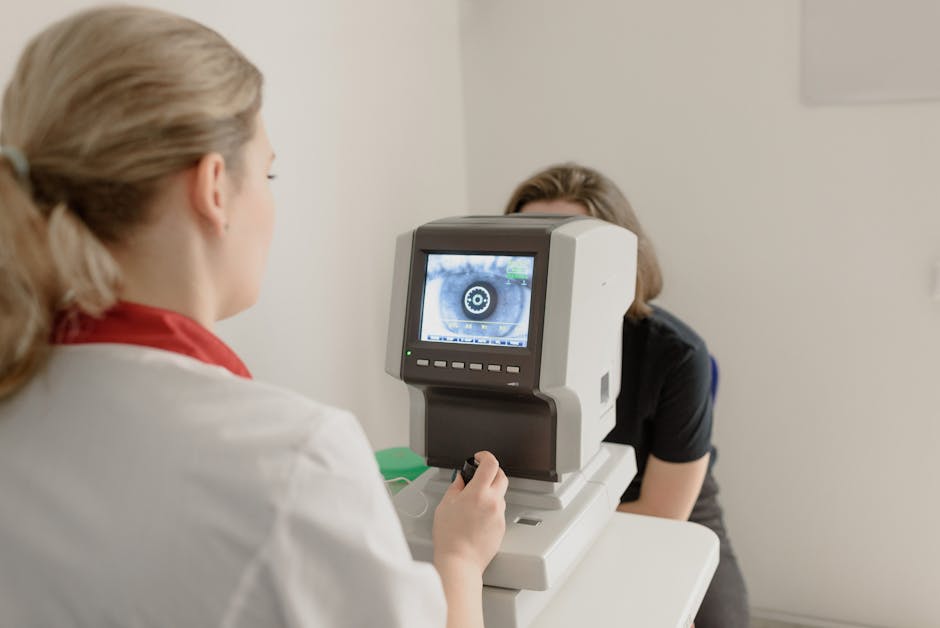
- A 5-minute eye scan may predict Alzheimer’s disease up to 15 years before cognitive symptoms appear with over 90% accuracy.
- The non-invasive retinal imaging technique detects subtle changes in the eye’s neural layers mirroring early neurodegeneration in the brain.
- This innovation could shift the paradigm from reactive treatment to proactive prevention for conditions like Alzheimer’s, Parkinson’s, and multiple sclerosis.
- The technology has the potential to revolutionize early disease detection, replacing costly and invasive procedures with a simple eye scan.
- The number of people living with dementia is projected to rise to 139 million by 2050, emphasizing the need for proactive prevention.
A single five-minute eye scan may soon predict the onset of Alzheimer’s disease up to 15 years before cognitive symptoms appear. Developed by Professor Khalid Al-Khalifa at Hamad Bin Khalifa University in Qatar, this non-invasive retinal imaging technique detects subtle changes in the eye’s neural layers that mirror early neurodegeneration in the brain. In clinical trials, the technology demonstrated over 90% accuracy in identifying biomarkers linked to Alzheimer’s, Parkinson’s, and multiple sclerosis—conditions that currently rely on costly, invasive procedures and late-stage symptom recognition for diagnosis. With over 55 million people globally living with dementia—a number projected to rise to 139 million by 2050, according to the World Health Organization—this innovation could shift the paradigm from reactive treatment to proactive prevention.
The Science Behind the Retinal-Brain Connection

For decades, researchers have suspected that the retina—the light-sensitive tissue at the back of the eye—is an extension of the central nervous system, sharing embryological origin and structural similarities with the brain. Recent advances in optical coherence tomography (OCT), a high-resolution imaging method, have made it possible to visualize microscopic changes in retinal thickness and blood vessel patterns. Professor Al-Khalifa’s team enhanced OCT with proprietary artificial intelligence algorithms trained on thousands of retinal scans from patients with confirmed neurodegenerative diseases. The AI identifies patterns invisible to the human eye, such as thinning of the retinal nerve fiber layer or microvascular anomalies, which correlate strongly with amyloid plaque buildup and neuronal loss in the brain. This convergence of ophthalmology and neuroscience has turned the eye into a ‘window to the brain,’ enabling earlier detection than MRI or PET scans, which are expensive and less accessible.
From Lab to Clinic: The Qatar Breakthrough

The breakthrough emerged from a six-year collaboration between Hamad Medical Corporation, Weill Cornell Medicine-Qatar, and the Qatar Biomedical Research Institute. In a landmark 2023 study published in Scientific Reports, the team analyzed retinal scans from 1,200 participants, including asymptomatic individuals with genetic risk factors for Alzheimer’s. The AI-powered system detected retinal abnormalities in 88% of those who later developed mild cognitive impairment within five years. The test, which requires no dyes, radiation, or lumbar punctures, can be administered in routine eye exams. Unlike cerebrospinal fluid analysis or amyloid PET imaging—which can cost upwards of $5,000—the retinal scan costs less than $200 and delivers results in minutes. Health authorities in Qatar are now piloting integration of the scan into national screening programs for adults over 50.
Why Early Detection Changes Everything

Neurodegenerative diseases progress silently for years, often causing irreversible damage before diagnosis. For Alzheimer’s, by the time memory loss becomes apparent, up to 50% of neurons in key brain regions may already be lost. Early detection allows for timely enrollment in clinical trials, lifestyle interventions, and emerging disease-modifying therapies like lecanemab, which work best in preclinical stages. The retinal scan also offers a scalable solution for low- and middle-income countries where neurological care is scarce. According to Dr. Lena Okafor, a neurologist at the African Dementia Consortium, ‘If we can deploy a $200 eye test instead of a $5,000 brain scan, we close a massive equity gap in global brain health.’ Moreover, the ability to monitor disease progression through serial scans could accelerate drug development by providing rapid, objective biomarkers.
Challenges and Ethical Considerations

Despite its promise, the technology raises ethical questions. Detecting disease risk years in advance without definitive cures could cause psychological distress or insurance discrimination. There is also the risk of false positives or overdiagnosis, particularly in populations with other eye conditions like glaucoma or diabetic retinopathy. Regulatory bodies, including the U.S. Food and Drug Administration and the European Medicines Agency, are reviewing the technology, with emphasis on validation across diverse ethnic and age groups. While initial trials showed high accuracy in Arab and South Asian populations, further studies are needed to confirm efficacy in African and European cohorts. Additionally, integrating AI into medical diagnostics demands transparency in algorithmic decision-making and robust data privacy safeguards, especially when handling sensitive health data.
Expert Perspectives
Opinions among neuroscientists are cautiously optimistic. Dr. Rebecca Stern, a neuroimaging specialist at Harvard Medical School, calls the technology ‘a game-changer,’ noting that ‘the retina offers a unique, real-time view of neurodegeneration.’ However, Dr. Michael Chen of the University of California, San Francisco, urges caution: ‘We must ensure that early detection translates to meaningful clinical outcomes, not just longer pre-symptomatic diagnoses.’ Some experts also emphasize the need for multidisciplinary follow-up—genetic counseling, mental health support, and neurology referrals—to accompany widespread screening.
As clinical validation expands, the next frontier is making the scan accessible through portable devices and telemedicine platforms. Trials are underway in rural India and sub-Saharan Africa to test low-cost handheld OCT scanners paired with cloud-based AI analysis. If successful, this could democratize early neurological screening on a global scale. The key question now is not whether the eye can reveal brain disease—but how soon healthcare systems can adopt this tool to prevent, rather than merely manage, neurodegeneration.
Source: Al Jazeera