- Data centers in Texas could consume up to 9% of the state’s publicly supplied water by 2040.
- Current water usage by Texas data centers is around 14 million gallons per day.
- Water demand is driven by the growth of AI computing and cloud infrastructure.
- Data centers rely on evaporative cooling towers, which contribute to their high water consumption.
- The data center water crisis poses a significant burden on Texas’ fragile water resources.
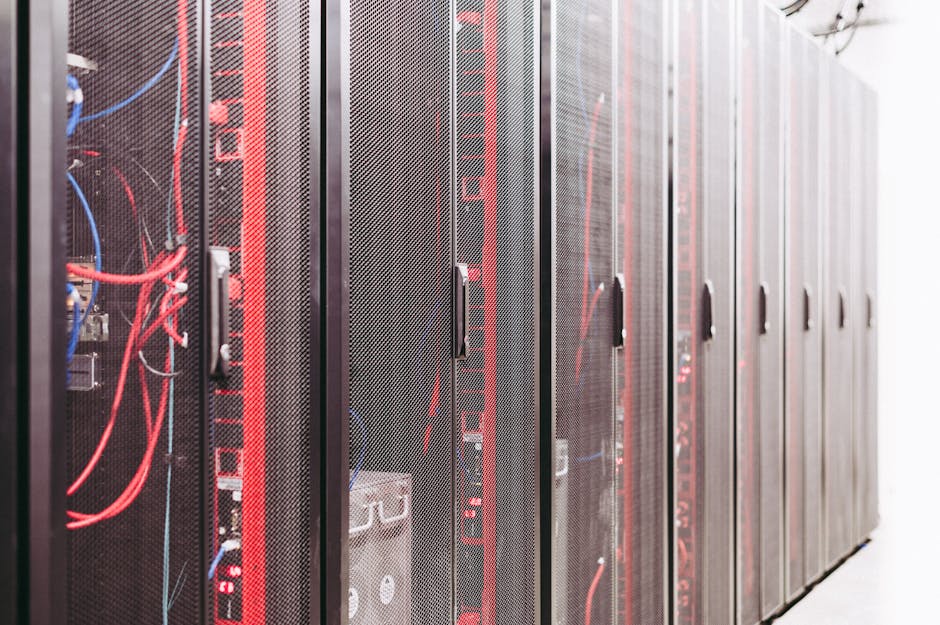
In the flat, sunbaked expanse west of Austin, where mesquite trees cling to cracked soil and wind turbines spin lazily above brown fields, a different kind of heat is rising—not from the sun, but from thousands of humming servers stacked in vast, windowless warehouses. These data centers, the unseen engines powering everything from cloud storage to artificial intelligence, are now drawing not just gigawatts of electricity but millions of gallons of water. As Texas booms with tech investment, a new report from the University of Texas at Austin warns of a quiet crisis: by 2040, data centers could consume up to 9% of the state’s publicly supplied water, transforming digital progress into a growing burden on one of the region’s most fragile resources.
Data Centers’ Rising Water Demand

The University of Texas at Austin’s 2024 Energy Institute report projects that Texas data centers, which currently use about 14 million gallons of water per day, could increase consumption to as much as 170 million gallons daily by 2040—equivalent to the current usage of a city the size of El Paso. This surge is driven by the exponential growth in AI computing and cloud infrastructure, with companies like Amazon, Google, and Microsoft rapidly expanding server farms across Central and North Texas. Unlike residential or agricultural use, data center water demand is concentrated and constant, primarily for cooling systems that rely on evaporative cooling towers. In drought-prone regions already grappling with population growth and climate stress, this level of industrial water use raises urgent questions about long-term sustainability. The report emphasizes that while data centers contribute less than 1% of Texas’s electricity use, their water footprint is disproportionately high—especially during heat waves, when cooling needs peak just as water supplies dwindle.
The Digital Thirst: How We Got Here

The convergence of AI expansion and Texas’s business-friendly climate has created a perfect storm for data center proliferation. Since 2010, the state has attracted over $50 billion in data center investments, lured by low taxes, minimal regulation, and abundant land. But the rise of generative AI models—such as those behind ChatGPT and image synthesis tools—has dramatically increased computational demands. These models require massive training runs across thousands of processors, generating intense heat that must be cooled continuously. Most data centers use water-intensive cooling systems because they are cheaper and more efficient than air-based alternatives. According to research published in ScienceDaily, a single large AI query can consume up to 500 milliliters of water when accounting for cooling—making routine digital interactions far more resource-heavy than previously understood. This hidden cost of digital convenience has largely escaped public scrutiny until now.
The Players Behind the Servers

The race to build bigger, faster data centers is being led by tech giants and private equity firms, often operating through opaque real estate investment trusts. Companies like Digital Realty and Equinix have acquired thousands of acres in fast-growing Texas counties, while subsidiaries of Amazon Web Services and Microsoft Azure negotiate direct water rights with local utility districts. Municipalities, eager for tax revenue and jobs, frequently approve these projects with minimal environmental review. Meanwhile, engineers and sustainability officers within these firms are under increasing pressure to reduce water use, but face conflicting priorities: performance, cost, and uptime often outweigh conservation goals. Some, like Google, have pledged to use recycled water or deploy adiabatic cooling systems, but adoption remains uneven. As one infrastructure planner at a major tech firm told the UT researchers anonymously, “We’re building for reliability first. Water efficiency comes second—unless regulators force it.”
Consequences for Communities and Ecosystems

The implications extend far beyond server rooms. Rural communities, already vulnerable to groundwater depletion, may face stricter water rationing as data centers draw from shared aquifers. In places like Taylor and Lockhart, rapid data center development has outpaced local water infrastructure, prompting emergency well drilling and rate hikes. Environmental groups warn that increased water withdrawal could harm riparian ecosystems and reduce streamflow in the Colorado and Guadalupe rivers. Farmers, too, are concerned: agriculture uses about 60% of Texas’s water, and any shift in allocation could affect crop yields during drought. The UT report recommends immediate action—such as requiring water use disclosures, incentivizing dry cooling technologies, and updating state water planning models to include digital infrastructure.
The Bigger Picture
This isn’t just a Texas problem—it’s a preview of a global dilemma. As AI becomes embedded in daily life, the environmental cost of digital infrastructure will become harder to ignore. Other arid regions, from Arizona to the Middle East, are seeing similar trends. The UT study contributes to a growing body of research, including a 2023 analysis in Nature, showing that the carbon and water footprints of AI are rising faster than efficiency gains. Without systemic changes, the digital revolution may be built on increasingly scarce natural resources, forcing a reckoning between technological ambition and planetary limits.
What comes next will depend on policy, innovation, and public awareness. Texas lawmakers are considering legislation to mandate water reporting for large data centers, while some tech firms experiment with liquid cooling and AI workload scheduling to reduce peak demand. But as the state braces for a hotter, drier future, the question remains: can the cloud remain weightless when it’s anchored in water, land, and energy?
Source: Kut