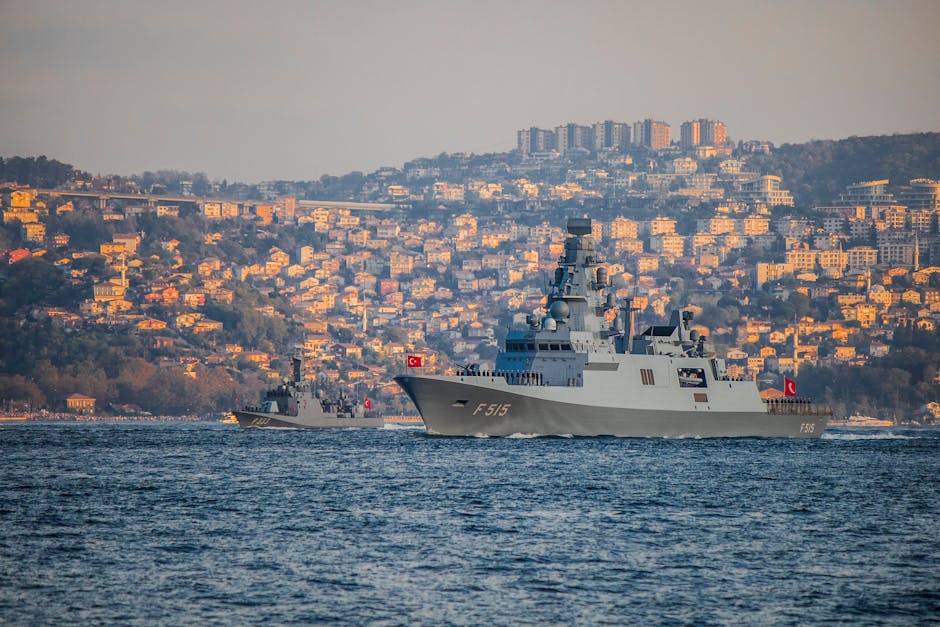
- A Chinese supertanker broke through the US-Iran war blockade in the Strait of Hormuz, carrying over 2 million barrels of crude oil.
- The incident escalated tensions between the US and Iran, raising concerns about maritime trade safety and potential conflict in the region.
- The US withdrawal from the JCPOA in 2018 exacerbated the conflict, leading to crippling sanctions on Iran and increased uranium enrichment.
- The Strait of Hormuz has become a flashpoint in the conflict, with both countries accusing each other of disrupting maritime trade.
- China’s presence in the region adds a new dimension to the conflict, given its significant economic interests in the global oil market.
The Strait of Hormuz, a critical waterway connecting the Persian Gulf to the Gulf of Oman, has witnessed a daring move by a Chinese supertanker, which broke through the US-Iran war blockade. This development has sent shockwaves across the globe, as it is seen as a significant escalation in the ongoing tensions between the US and Iran. The Chinese tanker, carrying over 2 million barrels of crude oil, successfully navigated through the narrow strait, despite the presence of US and Iranian warships. This incident has raised concerns about the safety of maritime trade and the potential for further conflict in the region.
Background and Tensions

The US-Iran conflict has been simmering for years, with both countries engaging in a war of words and proxy battles. The situation took a turn for the worse in 2018, when the US withdrew from the Joint Comprehensive Plan of Action (JCPOA), also known as the Iran nuclear deal. Since then, the US has imposed crippling sanctions on Iran, which has responded by increasing its uranium enrichment program. The Strait of Hormuz has become a flashpoint, with both countries accusing each other of attempting to disrupt maritime trade. The presence of Chinese ships in the region has added a new dimension to the conflict, as China is a key player in the global oil market and has significant economic interests in the region.
The Blockade and Its Consequences

The US-Iran war blockade in the Strait of Hormuz has had significant consequences for global oil prices and maritime trade. The blockade has restricted the flow of oil from the Persian Gulf, leading to a surge in prices and concerns about supply chain disruptions. The International Maritime Organization (IMO) has warned of the risks of a prolonged blockade, citing the potential for accidents, environmental damage, and loss of life. The Chinese supertanker’s successful passage through the blockade has raised hopes that the situation may be easing, but experts warn that the conflict is far from over. As reported by Reuters, the US has vowed to continue its maximum pressure campaign against Iran, while Iran has threatened to respond to any further provocations.
Analysis and Implications

The Chinese supertanker’s breakthrough has significant implications for the global oil market and the balance of power in the region. China’s move is seen as a bold statement of its intentions to protect its economic interests and ensure the free flow of oil. The US has responded by warning China of the risks of engaging with Iran, citing the country’s support for terrorism and its nuclear program. The incident has also raised questions about the effectiveness of the US blockade and the ability of the international community to enforce sanctions on Iran. According to a report by the BBC, the EU has called for a de-escalation of tensions and a return to the negotiating table, while Russia has warned of the dangers of a prolonged conflict.
Humanitarian Concerns

The conflict in the Strait of Hormuz has significant humanitarian implications, as it affects the livelihoods of millions of people in the region. The blockade has restricted the flow of food, medicine, and other essential supplies, leading to concerns about the welfare of civilians. The World Health Organization (WHO) has warned of the risks of a humanitarian crisis, citing the potential for the spread of diseases and the disruption of healthcare services. The international community has called for a ceasefire and a negotiated settlement to the conflict, citing the need to protect civilians and prevent further suffering.
Expert Perspectives
Experts have differing views on the implications of the Chinese supertanker’s breakthrough. Some see it as a significant escalation of the conflict, while others believe it may be a turning point in the negotiations. Dr. Sanam Vakil, a specialist in Middle East politics at Chatham House, believes that the incident may lead to a re-evaluation of the US strategy in the region. “The Chinese move has exposed the weaknesses of the US blockade and raised questions about the effectiveness of the sanctions regime,” she said. “It may be an opportunity for the US to reconsider its approach and engage in diplomatic efforts to resolve the conflict.”
As the situation continues to unfold, experts warn that the conflict is far from over. The US and Iran remain at loggerheads, and the presence of Chinese ships in the region has added a new dimension to the conflict. The international community will be watching closely to see how the situation develops, and whether the parties involved can find a way to resolve their differences peacefully. One thing is certain, however: the Chinese supertanker’s breakthrough has marked a significant turning point in the conflict, and its implications will be felt for a long time to come.
Source: Jpost