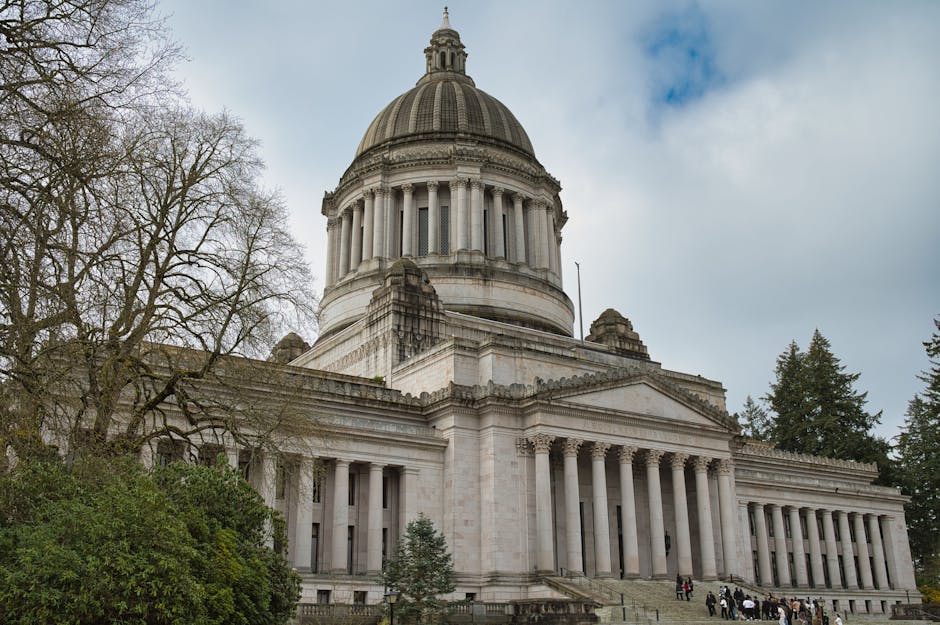
- A.I giants OpenAI and Anthropic are increasing their lobbying efforts in Washington, D.C. to shape national AI policy.
- The companies are spending millions to engage lawmakers and influence regulatory frameworks that balance innovation with safety.
- OpenAI spent over $1.3 million on federal lobbying in 2023, more than doubling its 2022 total.
- Anthropic reported nearly $700,000 in lobbying expenses during the same period, marking a significant escalation in AI industry engagement.
- The future of artificial intelligence will be determined not only in labs but in legislative chambers, according to industry leaders.
OpenAI and Anthropic are accelerating their influence campaigns in Washington, D.C., as the battle to shape national AI policy enters a critical phase. Both companies have opened offices near Capitol Hill, hired former congressional staffers and federal regulators as lobbyists, and significantly increased spending to engage lawmakers. Their goal: to position themselves as trusted partners in crafting regulatory frameworks that balance innovation with safety, all while outmaneuvering rivals in a rapidly consolidating industry. This strategic pivot reflects a growing recognition that the future of artificial intelligence will be determined not only in labs but in legislative chambers.
AI Lobbying Expenditures Hit Record Levels

Federal lobbying disclosures reveal that OpenAI spent over $1.3 million on federal lobbying in 2023, more than doubling its 2022 total, while Anthropic reported nearly $700,000 in lobbying expenses during the same period. These figures, filed with the Senate Office of Public Records, mark a dramatic escalation in AI industry engagement with federal policymakers. According to data compiled by the Center for Responsive Politics, OpenAI’s lobbying blitz targeted 47 congressional offices and multiple executive agencies, including the National Institute of Standards and Technology (NIST) and the White House Office of Science and Technology Policy. A significant portion of the outreach focused on the proposed AI Risk Management Framework and pending legislation like the AI Accountability Act. OpenAI’s filings indicate it discussed “transparency in AI development” and “standards for high-risk systems” in at least 18 formal meetings with Senate staff.
Key Players Reshaping the AI Policy Landscape

OpenAI has appointed Sarah Zhang, a former policy advisor to Senator Maria Cantwell, as its head of government affairs, while Anthropic brought on Michael Kratsios, who served as the U.S. Chief Technology Officer under President Trump. These hires signal a strategic effort to embed experienced Washington insiders within their leadership teams. Meanwhile, Sam Altman, CEO of OpenAI, has testified twice before the Senate Judiciary Committee, advocating for a new federal agency to oversee advanced AI systems. Dario Amodei, Anthropic’s CEO, has made similar appearances, emphasizing the need for “proactive risk assessment” and “international coordination.” Notably, both companies have aligned with the Biden administration’s voluntary AI Safety Commitments, though critics argue their influence may dilute stronger regulatory proposals. Their growing presence has also drawn scrutiny from watchdog groups concerned about regulatory capture in emerging tech sectors.
Regulatory Trade-Offs: Innovation vs. Oversight

The intensified lobbying raises critical questions about the balance between fostering innovation and ensuring public accountability. On one hand, OpenAI and Anthropic argue that early engagement helps prevent poorly designed regulations that could stifle breakthroughs in healthcare, climate modeling, and education. They point to their investments in AI safety research and alignment techniques as evidence of responsible stewardship. On the other hand, consumer advocacy groups warn that allowing dominant firms to shape rules could entrench their market power and sideline smaller competitors. According to a Reuters investigation, proposed certification systems for AI models could inadvertently favor well-funded firms with the resources to comply. The challenge lies in crafting guardrails that mitigate existential and societal risks without enabling regulatory capture.
Why the Timing Matters Now

The urgency stems from a confluence of technological, political, and global factors. The public release of generative AI models like ChatGPT and Claude in 2022-2023 triggered widespread concern among lawmakers about disinformation, job displacement, and autonomous weapons. Internationally, the European Union’s AI Act and China’s algorithmic governance rules have pressured the U.S. to clarify its stance. Domestically, the 2024 election cycle has elevated AI policy as a bipartisan issue, with both parties seeking to appear proactive. Furthermore, the National Security Commission on Artificial Intelligence has warned that leadership in AI is a strategic imperative for national security. These forces have created a narrow policy window in which OpenAI and Anthropic are positioning themselves as indispensable guides, leveraging their technical expertise to shape regulations before they are codified.
Where We Go From Here
In the next 6 to 12 months, three scenarios could unfold. First, Congress may pass a framework establishing a new AI oversight body, heavily influenced by OpenAI and Anthropic’s proposals, focusing on risk tiers and third-party audits. Second, regulatory fragmentation could occur if federal action stalls, prompting states like California and New York to enact their own rules, creating compliance chaos. Third, international agreements—such as those discussed at the recent AI Safety Summit in Seoul—could set de facto global standards, reducing the impact of unilateral U.S. legislation. Each path will test whether corporate self-interest and public interest can be reconciled in the governance of transformative technologies.
Bottom line — the lobbying surge by OpenAI and Anthropic underscores a pivotal shift: the most powerful AI companies are no longer content to innovate in isolation but are now actively shaping the rules that will define the industry’s future.
Source: The New York Times