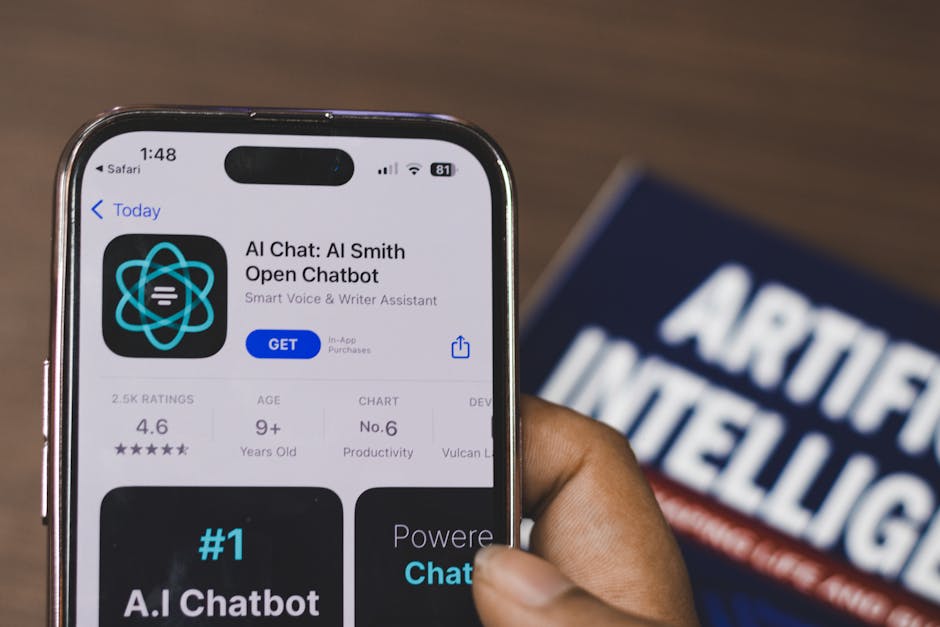
- AI chatbots are gaining popularity in the UK as a convenient alternative to traditional medical consultations.
- A recent poll reveals 15% of adults have used AI-powered chatbots for medical advice, citing long NHS waiting times and convenience as reasons.
- Platforms like Ada and K Health are increasingly used for diagnostic guidance, but experts caution against relying solely on AI for medical decisions.
- The UK’s overburdened healthcare system is driving patients to seek instant answers from AI chatbots, highlighting a need for more accessible medical services.
- While AI chatbots can provide valuable insights, they are not a replacement for human medical professionals and nuanced medical care.
On a chilly Tuesday evening in Sheffield, Sarah Thompson, 34, sat on her couch with her phone in hand, not scrolling through social media, but typing a carefully worded message into an AI health app: ‘I’ve had a dull ache in my lower abdomen for three weeks, worse after eating. No fever. What could this be?’ Within seconds, the chatbot responded with a list of possibilities—irritable bowel syndrome, ovarian cyst, even early appendicitis—each ranked by likelihood. She didn’t book a GP appointment. Instead, she followed the bot’s suggestion to adjust her diet and monitor symptoms. Sarah is not alone. Across the UK, thousands like her are quietly bypassing traditional medical consultations, not out of defiance, but out of necessity and the quiet allure of instant answers in an overburdened healthcare system.
AI Health Advice Now Mainstream

A recent nationwide poll of over 2,000 adults reveals that 15%—roughly one in seven people—have turned to AI-powered chatbots for medical advice instead of visiting their general practitioner. Of those, 25% cited long NHS waiting times as the primary reason, while others pointed to convenience, anonymity, and the immediacy of responses. The study, conducted by a public health research consortium, underscores a quiet but significant shift in patient behavior. Platforms like Ada, K Health, and symptom-checker features embedded in search engines are increasingly used not just for reassurance, but for diagnostic guidance. While some responses are benign, experts warn of the dangers when AI misinterprets symptoms or fails to recognize red-flag conditions like cancer, deep vein thrombosis, or heart disease. The Royal College of General Practitioners has labeled the trend ‘highly concerning,’ emphasizing that algorithms lack clinical judgment, empathy, and the ability to perform physical exams.
From Novelty to Necessity

AI’s infiltration into healthcare didn’t happen overnight. For years, digital health tools have promised faster, cheaper, and more accessible care. The pandemic accelerated adoption, as telehealth and online triage systems surged. But the real turning point came as NHS waiting lists ballooned past 7 million, with some patients waiting over a year for routine consultations. In that vacuum, AI stepped in. Early chatbots were rudimentary, often dismissing serious symptoms or overemphasizing rare conditions. But advances in natural language processing and machine learning—fueled by data from sources like the NHS’s own public symptom guides and global medical databases—have made modern AI far more convincing. By 2025, major tech companies began integrating medical-grade models trained on anonymized patient records, blurring the line between consumer tool and clinical aid. Yet, despite improvements, these systems remain unregulated as medical devices in most consumer applications, operating in a legal gray zone.
The Developers and the Doctors

Behind the rise of AI health chatbots are a mix of Silicon Valley startups and public-private partnerships aiming to democratize healthcare. Founders often cite personal experiences—missed diagnoses, bureaucratic delays—as motivation. One developer, speaking on background, said, ‘We’re not replacing doctors. We’re giving people answers while they wait months for an appointment.’ Yet, many frontline clinicians are alarmed. Dr. Amira Khan, a GP in East London, says she now sees patients who arrive with AI-generated symptom summaries, often convinced they have rare diseases. ‘It’s not just misinformation—it’s anxiety amplification,’ she says. ‘We spend half the consultation undoing the harm.’ Meanwhile, NHS leaders face a dilemma: integrate AI cautiously to improve access, or resist a tide that patients are already riding. Some pilot programs now use AI for initial triage, but with human oversight. The tension lies in balancing innovation with patient safety.
Risks and Ripple Effects

The consequences of self-diagnosing via AI are already emerging. Clinicians report cases where patients delayed urgent care based on reassuring chatbot responses—only to be hospitalized days later with advanced conditions. In one documented case, a man in Manchester was told his chest pain was ‘likely stress-related’ by an AI, but was later diagnosed with a 90% coronary blockage. Legal experts warn that liability remains murky: if an AI gives dangerous advice, who is responsible—the developer, the platform, or the user? Insurers are beginning to scrutinize whether AI consultations affect claims. More broadly, the trend risks deepening health inequities. Those with digital literacy, reliable internet, and smartphones are more likely to use these tools, while vulnerable populations—elderly, low-income, or those with limited tech access—remain reliant on an overstretched system. The NHS, already under strain, could face reduced early intervention rates if preventable conditions go undetected.
The Bigger Picture
This shift reflects a broader global transformation: the decentralization of expertise. Just as people now diagnose car troubles with YouTube or manage finances with apps, healthcare is being pulled into the DIY economy. But medicine is not a consumer product. Missteps can be irreversible. The UK’s experience serves as a cautionary tale for other nations grappling with healthcare access. While AI holds promise for scaling preventive care and easing clinician workloads, its unregulated use as a diagnostic tool risks normalizing a system where algorithms, not doctors, hold the first word on health. The question isn’t whether AI belongs in medicine—it’s how to ensure it serves patients without eroding trust in human care.
What comes next may hinge on regulation. The UK’s Medicines and Healthcare products Regulatory Agency (MHRA) is now reviewing how AI symptom checkers should be classified, with potential rules expected by 2027. Until then, millions will continue to turn to chatbots in moments of worry, searching for answers in a system that no longer has time to listen. The future of healthcare may be digital—but it must not be silent on safety.
Source: The Guardian