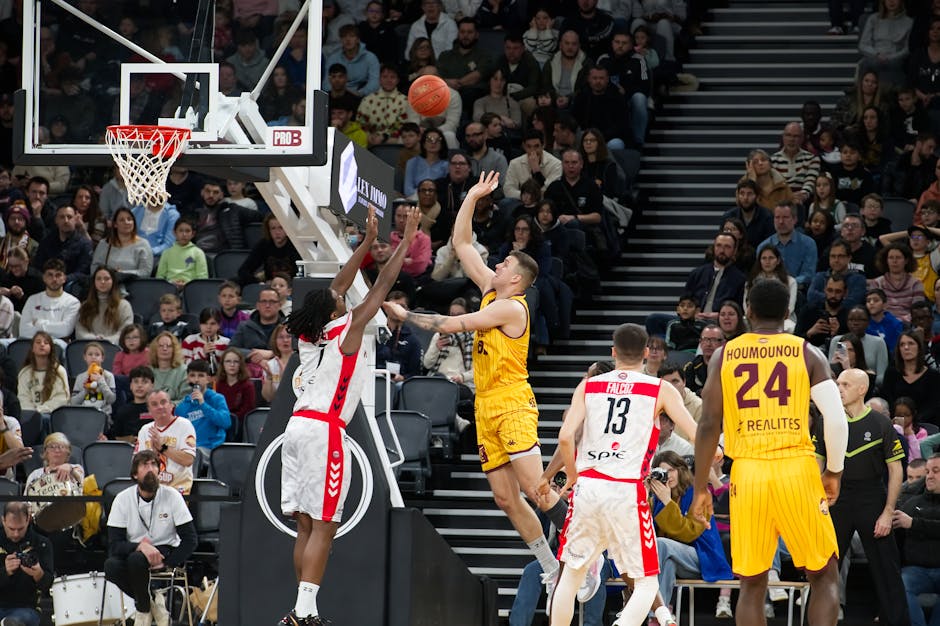
- Jason Collins broke barriers in the NBA as the first openly gay player in 2013, paving the way for greater LGBTQ+ representation in sports.
- Collins’ courage to come out publicly sparked a movement, inspiring others to be open about their identities and challenging traditional sports norms.
- The NBA community came together to pay tribute to Collins, acknowledging his trailblazing impact on the league and beyond.
- Collins’ legacy extends far beyond his basketball career, as he used his platform to advocate for LGBTQ+ rights and awareness.
- The loss of Jason Collins at 47 serves as a poignant reminder of the ongoing fight against pancreatic cancer and the importance of mental health support.
On a quiet Tuesday morning in Los Angeles, the sun rose over Staples Center—now Crypto.com Arena—where banners honoring Lakers and Clippers legends flutter across the rafters. But on this day, the echoes in the empty arena felt different. There was a hush, a reverence, as tributes began flooding social media for Jason Collins, the 7-foot center whose quiet strength off the court spoke louder than any dunk or block ever could. Once a defensive anchor for teams like the New Jersey Nets and Boston Celtics, Collins had become far more than a role player in basketball’s narrative. He was a symbol. A man who, in 2013, stepped into the blinding spotlight of public scrutiny, not for a championship or a record, but for saying four words that reverberated across locker rooms, living rooms, and legislatures: “I am gay.”
The Final Whistle

Jason Collins died at the age of 47 after a prolonged battle with pancreatic cancer, confirmed by his family in a statement released Tuesday. Diagnosed in late 2022, Collins had undergone aggressive treatment while maintaining a private but hopeful public presence, sharing updates through close friends and advocacy organizations. The NBA, in an official statement, called him “a trailblazer whose impact transcended basketball.” Tributes poured in from former teammates, league executives, and LGBTQ+ rights groups, many highlighting how his 2013 coming-out essay in Sports Illustrated marked a seismic shift in American sports culture. At a time when no active male player in the NBA, NFL, NHL, or MLB had ever come out, Collins’ decision changed the game before he even stepped back onto the court.
How the Silence Was Broken

For decades, professional basketball operated under an unspoken code—talent was rewarded, but identity was policed. LGBTQ+ athletes, particularly gay men, remained invisible in the hyper-masculine world of the NBA. That silence was shattered on April 29, 2013, when Collins, then a free agent, published a first-person essay titled “Why I’m Coming Out.” In it, he wrote: “I’m a 34-year-old NBA center. I’m black. And I’m gay.” The article became an instant cultural landmark, dissected by media outlets from ESPN to The New York Times. What made it revolutionary wasn’t just the revelation, but the timing—Collins was still an active player, still capable, still seeking a contract. Within days, he signed with the Brooklyn Nets, making his historic return to the court in February 2014. His jersey, number 98—chosen in tribute to the year Matthew Shepard was murdered—became a symbol of resilience.
The Man Behind the Movement

Collins was never the star of his teams, averaging just 3.6 points and 3.7 rebounds over a 13-year career. But his influence extended far beyond statistics. Born in Northridge, California, and raised in the Bay Area, he and his twin brother Jarron both pursued NBA careers, playing together briefly for the Memphis Grizzlies. Educated at Stanford, Collins carried an intellectual calm that contrasted with the league’s flashier personas. Off the court, he worked with the Human Rights Campaign, spoke at universities, and mentored younger athletes navigating their identities. In interviews, he often credited his family—particularly his mother—and longtime partner, Casper Smart, a dancer and choreographer, for giving him the strength to go public. “It wasn’t about fame,” he told The Guardian in 2018. “It was about freedom. For me, and for the kid in Ohio who’s scared to tell his dad he’s gay.”
Legacy in the Locker Room and Beyond

Collins’ announcement opened doors, but the path behind him has been slow. As of 2024, no other active NBA player has come out as gay, though several, including Dwight Powell and Draymond Green, have become vocal allies. Internationally, athletes in soccer, rugby, and hockey have followed his lead, but professional men’s team sports remain cautious terrain for LGBTQ+ visibility. Still, Collins’ impact is measurable: a 2021 study by the You Can Play Project found that 78% of professional athletes now support LGBTQ+ teammates, up from 52% in 2012. High school and college sports programs have adopted inclusion training inspired by his advocacy. And in 2023, the NBA launched the Jason Collins Award, given annually to a player or staff member who advances diversity and inclusion.
The Bigger Picture
Collins’ life reminds us that courage isn’t always loud. It doesn’t always come with a buzzer-beater or a viral dunk. Sometimes, it’s a quiet essay, a jersey number, a hand held in public. His journey underscored a fundamental truth: representation matters, not because it changes everyone, but because it saves someone. In a sports world still grappling with race, gender, and identity, Collins proved that authenticity could coexist with excellence. His legacy isn’t just in policy changes or pride jerseys—it’s in the young player who now believes they can be both gay and great.
As the basketball world mourns, the conversation he started continues. Memorial services are planned in Los Angeles and Boston, with the NBA expected to honor him during the upcoming season. But perhaps the most lasting tribute will come not in speeches or moments of silence, but in the day when an athlete comes out—not as a headline, not as a movement, but simply as a person. That future, once unimaginable, became possible because Jason Collins had the courage to speak first.
Source: ESPN