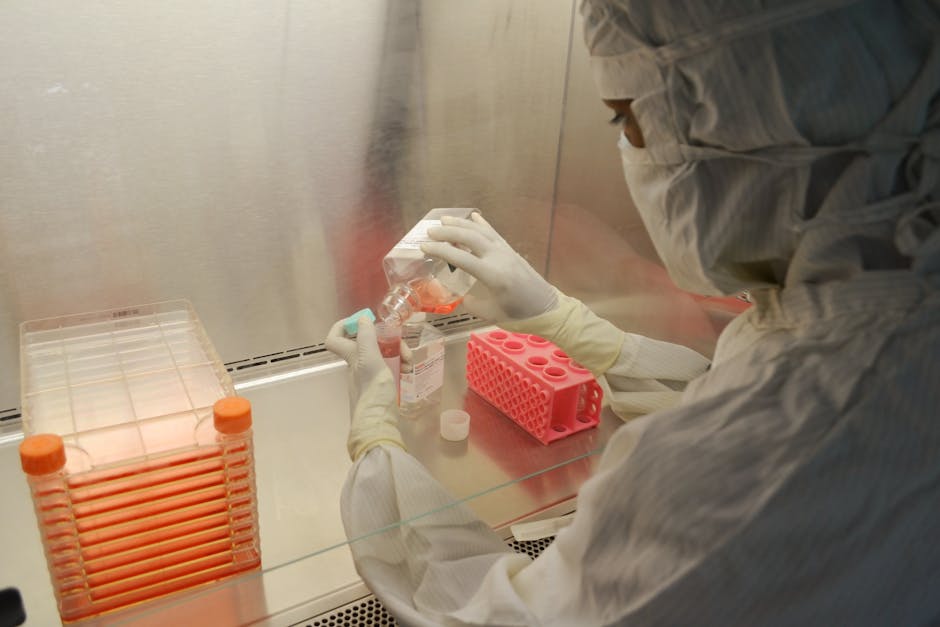
- A stem cell transplant from an HIV-resistant donor may lead to long-term HIV remission in rare cases.
- The Norwegian patient’s case suggests a potential functional cure for HIV without ongoing medication.
- This outcome is linked to a specific genetic mutation (CCR5-delta32) that prevents HIV entry into immune cells.
- A stem cell transplant can be a viable option for HIV-positive individuals with a dual diagnosis of HIV and blood cancer.
- More research is needed to understand the potential of stem cell transplants in achieving HIV remission.
Can HIV be cured? For decades, the answer was a firm no. While antiretroviral therapy (ART) has transformed HIV from a fatal diagnosis into a manageable chronic condition, a true cure has remained elusive. But recent developments in Norway are reigniting cautious optimism. A man diagnosed with both HIV and acute myeloid leukemia received a stem cell transplant from his HIV-resistant brother in 2017, and has since stopped ART while maintaining undetectable viral levels for over six years. His case, documented in a 2024 report published in The Lancet HIV, suggests he may be one of the few people in the world to achieve long-term HIV remission without ongoing medication—a so-called functional cure. What does this mean for the millions living with HIV globally?
Can a Stem Cell Transplant Cure HIV?

Yes, in extremely rare and specific circumstances, a stem cell transplant can lead to long-term HIV remission. The Norwegian patient’s case builds on a small but pivotal group of individuals—including the so-called “Berlin,” “London,” “Düsseldorf,” and “New York” patients—who have achieved similar outcomes. What unites them is a dual diagnosis: HIV and a blood cancer requiring a stem cell transplant. Crucially, each received donor cells with a rare genetic mutation known as CCR5-delta32, which prevents HIV from entering immune cells. In this Norwegian case, the donor was the man’s own brother, who naturally carried the mutation. After the transplant and cessation of antiretroviral therapy in 2019, the patient’s HIV remained undetectable by all standard and ultrasensitive assays, with no rebound after more than five years. This makes him a strong candidate for what researchers call a “functional cure”—not a complete eradication of every viral fragment, but sustained remission without treatment.
What Evidence Supports This Remission?

The evidence comes from years of rigorous post-transplant monitoring. A team from Oslo University Hospital tracked the patient’s viral load, immune reconstitution, and reservoir markers. Despite using tests capable of detecting fewer than one HIV RNA copy per milliliter of blood, no active virus was found. Furthermore, deep sequencing of the man’s immune cells revealed no replication-competent HIV, and his CD4 T-cell count normalized. “We’ve looked extensively for any sign of the virus, and it’s simply not there,” Dr. Aslaug Vik, lead researcher on the case, told Reuters. The CCR5-delta32 mutation is key: only about 1% of people of Northern European descent carry two copies of this gene, making them naturally resistant to the most common strain of HIV. The transplant effectively replaced the patient’s HIV-susceptible immune system with one genetically shielded from the virus.
Are There Limitations and Skeptical Views?

Despite the promising results, experts urge caution. Stem cell transplants are high-risk procedures with significant mortality—up to 20% even in optimal conditions—due to graft-versus-host disease, infections, and organ damage. They are not a viable option for otherwise healthy people with HIV who can manage the virus through ART. Moreover, not all HIV strains rely on the CCR5 receptor; some use the CXCR4 co-receptor, rendering the mutation ineffective. There’s also the question of residual viral reservoirs: while undetectable, fragments of HIV DNA may persist in tissues, posing a potential, albeit remote, risk of rebound. Some scientists argue that calling this a “cure” may create false hope. “This is a functional cure in a highly selected context,” said Dr. Sharon Lewin, director of the Peter Doherty Institute for Infection and Immunity. “It’s not scalable, but it teaches us what’s possible.”
What Are the Real-World Implications?

While stem cell transplants won’t become a standard HIV treatment, this case has profound implications for cure research. It reinforces the importance of the CCR5 pathway as a target for gene-editing therapies, such as CRISPR-based approaches currently in early trials. Scientists are exploring ways to modify a patient’s own cells to mimic the CCR5-delta32 mutation, avoiding the need for donors and reducing transplant risks. The Norwegian case also highlights the value of long-term monitoring in HIV remission studies. For public health, it underscores the potential of combining oncology and infectious disease research to unlock new therapies. Though applicable only to a tiny fraction of people with HIV, this breakthrough offers a roadmap for future interventions that could one day lead to widespread, accessible cures.
What This Means For You
If you’re living with HIV, this case is a sign of progress, not an immediate solution. Antiretroviral therapy remains the gold standard, offering a near-normal life expectancy and preventing transmission. But research like this fuels hope that one day, a cure may be possible without lifelong medication. It also emphasizes the importance of genetic and immunological research in tackling chronic diseases. For now, the focus remains on improving access to treatment, reducing stigma, and supporting ongoing clinical trials that could translate these rare successes into broader therapies.
Can we replicate the success of stem cell transplants in a safer, scalable way? Scientists are now pursuing gene therapies, latency-reversing agents, and therapeutic vaccines to mimic the conditions that led to remission in these exceptional patients. The Norwegian case adds another data point in the quest for an HIV cure—but the ultimate challenge remains: how to make such outcomes accessible beyond the few who face life-threatening cancers and have genetically matched donors.
Source: Healthline