- Researchers at the University of Maryland, Baltimore County, have identified a potential universal weakness in enteroviruses.
- The weakness lies in a molecular switch within the virus’s RNA that controls its life cycle.
- This switch is highly conserved across different enteroviruses, including poliovirus and rhinovirus.
- The discovery may lead to the development of a single broad-spectrum therapy for dozens of stubborn infections.
- The researchers’ findings could potentially provide a new avenue for treating life-threatening neurological conditions caused by enteroviruses.
What if the common cold and polio—diseases separated by decades of medical progress and public fear—shared a hidden vulnerability? Researchers have long struggled to develop treatments for enteroviruses, a large family of pathogens responsible for everything from mild sniffles to life-threatening neurological conditions. Despite their differences in severity, these viruses have eluded broad-spectrum therapies. But now, a team at the University of Maryland, Baltimore County, claims to have caught a critical moment in viral replication—one that may expose a universal Achilles’ heel. By visualizing how these viruses hijack human cells at the molecular level, they’ve identified a precise mechanism that controls whether the virus makes more of itself or simply builds proteins. Could this be the key to stopping dozens of stubborn infections with a single drug?
What Is the Shared Weakness in Enteroviruses?

Scientists have discovered that enteroviruses, including poliovirus and rhinovirus (the primary cause of the common cold), rely on a sophisticated RNA-based switch to toggle between two essential phases of their life cycle: protein production and genome replication. This molecular switch, embedded within the virus’s own RNA, acts like a traffic director inside infected cells. When activated, it recruits both viral and human proteins to form a replication complex—the virus’s copying machine. Crucially, the structure of this RNA element is highly conserved across many enteroviruses, meaning it appears nearly identical in different strains. This conservation suggests that a drug targeting this switch could work against multiple viruses in the family, potentially offering a broad-spectrum antiviral strategy. The discovery, published in Nature, marks a leap in understanding how small RNA structures can dictate large-scale biological outcomes in infection.
What Evidence Supports This Molecular Switch Theory?

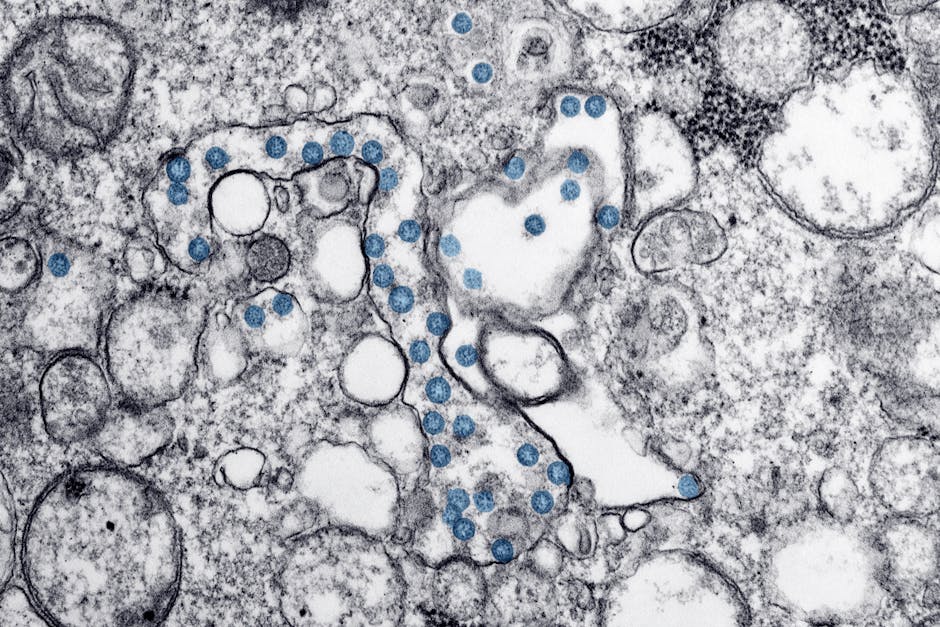
Using cryo-electron microscopy and advanced RNA mapping techniques, the UMBC team captured high-resolution images of the replication complex as it assembles on the viral RNA. They observed that a specific stem-loop structure in the 5′ untranslated region (UTR) of the genome changes shape to expose binding sites for both the viral protein 3CD and key human proteins like PCBP2 and GEMIN5. Once these proteins assemble, they trigger a cascade that shuts down protein translation and redirects the cell’s resources toward copying the viral genome. Studies have previously hinted at the role of these RNA structures, but this is the first time scientists have seen the full switch in action. “It’s like watching a lock turn,” said Dr. Casey Kruse, lead researcher on the study. “The RNA structure opens up, proteins rush in, and suddenly the virus goes from stealth mode to full replication.” This level of detail provides a blueprint for designing molecules that could jam the switch in the ‘off’ position.
Are There Skeptics or Alternative Views on This Discovery?

While the findings are promising, some virologists caution that turning a structural insight into an effective drug remains a formidable challenge. “Viruses evolve quickly, and RNA structures, even conserved ones, can develop resistance with just a few mutations,” said Dr. Angela Rasmussen, a virologist at the University of Saskatchewan not involved in the study. Others point out that human cells depend on similar RNA-protein interactions for normal function, raising concerns about off-target effects. Additionally, delivering a drug to the precise location inside cells where replication occurs—often within membrane-bound vesicles—has historically been difficult. Previous attempts to target viral proteases or polymerases have yielded mixed results, with some drugs failing due to toxicity or limited efficacy. There’s also debate over whether rhinoviruses, which circulate in the upper respiratory tract and cause mild disease, justify the same level of therapeutic urgency as poliovirus or enterovirus D68, which can cause paralysis. These factors suggest that while the discovery is scientifically significant, its medical impact may take years to materialize.
What Are the Real-World Implications of This Discovery?

If researchers can develop a compound that stabilizes the RNA switch in its inactive state, it could lead to the first broad-spectrum antiviral for enteroviruses. For polio-endemic regions still battling rare outbreaks—such as parts of Afghanistan and Pakistan—this could supplement vaccination efforts, especially in immunocompromised individuals who can shed the virus for months. For the common cold, a drug targeting this mechanism might shorten illness duration or reduce transmission, offering relief to millions and cutting healthcare costs. More urgently, it could help treat severe enteroviral infections in children, such as those causing viral meningitis or acute flaccid myelitis, which currently have no specific therapies. Pharmaceutical companies are already exploring RNA-targeted drugs, inspired by the success of mRNA vaccines and antisense therapies, making this discovery well-timed for translation into clinical research.
What This Means For You
This discovery doesn’t mean a cure for the common cold is imminent, but it represents a major step toward understanding—and potentially disrupting—how many viruses reproduce. For patients, especially those at risk of severe enteroviral disease, it opens the door to future treatments that go beyond symptom management. For scientists, it validates RNA structures as viable drug targets, expanding the toolbox for antiviral development. While any new medication is likely years away, the insight gained could accelerate research across related viruses, including coronaviruses and flaviviruses, which also rely on RNA switches.
But critical questions remain: Can a drug be designed to block this switch without harming human RNA function? And will viruses quickly evolve resistance, as they have with other antivirals? The path from molecular insight to medicine is long, but for the first time, scientists may be targeting a weakness that polio, the common cold, and their viral cousins can’t easily live without.
Source: ScienceDaily