- Ukraine has surpassed the US Army in battlefield integration, according to Army Secretary Christine Wormuth.
- Ukraine’s military achieves a fully networked, adaptive battlefield ecosystem using commercial drones, open-source software, and decentralized command structures.
- Ukrainian units can identify, track, and destroy Russian targets in under 10 minutes, a process that takes the US military up to 20 times longer.
- Ukraine’s battlefield integration is a result of using commercial off-the-shelf drones and open-source software, which are more agile and adaptable than traditional military systems.
- The US military has struggled to implement a fully networked, adaptive battlefield ecosystem, a concept that Ukraine has successfully achieved.
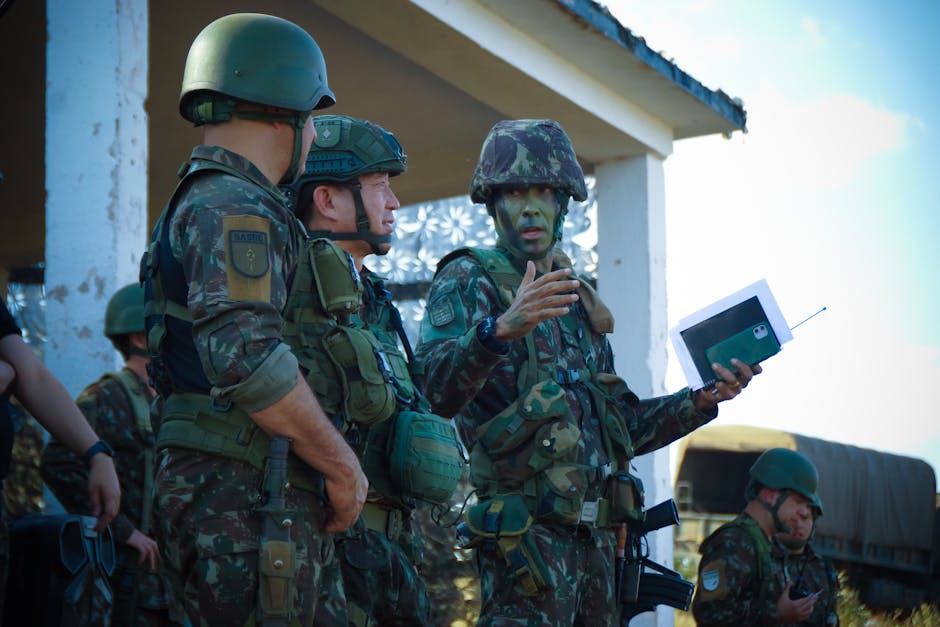
Smoke curls from a shattered bridge outside Bakhmut, where drones hum like metallic bees above a landscape of scarred earth and splintered trees. Ukrainian soldiers, their faces streaked with grime, crouch behind an armored Humvee, relaying target coordinates through encrypted tablets linked to artillery units miles away. In real time, satellite feeds update on handheld devices, while AI-assisted software filters enemy radio chatter. This is not the future of war—it is happening now. And according to the highest levels of the U.S. military, it is a future in which Ukraine, not America, is leading the way. In a quiet but seismic acknowledgment, Army Secretary Christine Wormuth recently stated that Ukraine has surpassed the U.S. Army in battlefield integration—the seamless fusion of sensors, shooters, communications, and data across units in combat.
Integration in Real Time, Under Fire

Ukraine’s military has achieved what Pentagon strategists have long theorized but struggled to implement: a fully networked, adaptive battlefield ecosystem. Using commercial off-the-shelf drones, open-source software, and decentralized command structures, Ukrainian units can identify, track, and destroy Russian targets in under 10 minutes—a cycle that can take the U.S. military up to 20 times longer. Secretary Wormuth confirmed this disparity in a closed-door briefing with defense officials, later reported by Reuters. The integration extends beyond drones; it includes real-time data sharing between infantry, artillery, electronic warfare units, and intelligence analysts, all operating on interoperable platforms. Unlike the U.S. military’s legacy systems, which often require extensive integration protocols, Ukraine’s ad hoc networks prioritize speed and flexibility, allowing for rapid adaptation in the face of Russian countermeasures.
How War Forced Innovation

The roots of Ukraine’s battlefield edge lie in necessity. When Russia launched its full-scale invasion in February 2022, Ukraine’s military was equipped with Soviet-era hardware and outdated communication systems. Cut off from traditional supply chains and facing a numerically superior enemy, Ukrainian engineers and soldiers turned to innovation. They retrofitted commercial drones with grenade launchers, used Starlink terminals to maintain communication during electronic warfare blackouts, and developed apps like Delta to consolidate situational awareness across units. The U.S. had spent decades developing similar capabilities through programs like the Army’s Integrated Tactical Network, but bureaucratic inertia, procurement delays, and risk-averse testing slowed deployment. Ukraine, by contrast, operates under existential pressure—each delay costs lives, so decisions are made in days, not years. This urgency has created a battlefield laboratory where rapid prototyping and frontline feedback drive development.
The Engineers, Soldiers, and Hackers Behind the Front Lines

The transformation has been driven not by generals in bunkers but by a decentralized coalition of soldiers, civilian tech volunteers, and startup founders. Groups like the IT Army of Ukraine—a volunteer cyber force—have coordinated drone strikes and jammed enemy signals using open-source tools. Young engineers in Kyiv, many with backgrounds in gaming and software development, have built battlefield applications that rival Pentagon-funded systems. One such tool, the Brave1 defense tech platform, has attracted over 500 Ukrainian tech firms to develop AI-powered targeting systems, counter-drone defenses, and autonomous ground vehicles. These innovators work in tandem with frontline units, testing prototypes within hours of design. As one Ukrainian platoon commander told BBC News, “We don’t wait for perfect. We need it now, and we make it work.” This culture of improvisation and trust between soldiers and technologists has outpaced the U.S. military’s top-down development model.
Strategic Consequences for Global Defense

The implications of Ukraine’s lead are profound. For NATO, it underscores the vulnerability of traditional military hierarchies in the face of agile, networked warfare. For the U.S., it raises uncomfortable questions about procurement, innovation, and readiness. If a nation under siege can out-integrate the world’s most funded military, what does that say about American defense spending? The Department of Defense has begun to respond, launching initiatives like the Replicator program to field thousands of autonomous systems by 2025. But cultural change lags behind. Ukraine’s success demonstrates that battlefield integration is not just about technology—it’s about doctrine, trust, and speed. As peer conflicts loom with China and Russia, the U.S. may find itself playing catch-up in a domain it once assumed dominance.
The Bigger Picture
This shift marks a broader transformation in modern warfare: the democratization of military innovation. No longer confined to billion-dollar defense contracts, cutting-edge tactics are emerging from garages, startups, and frontlines. Ukraine’s battlefield integration is a testament to how necessity, decentralized collaboration, and digital tools can outmaneuver even the most resourced militaries. It also signals a pivot from hardware dominance to software-driven agility. In this new paradigm, the ability to adapt quickly—faster than the enemy can respond—becomes the decisive advantage. The U.S. military, long accustomed to technological superiority, must now confront the reality that superiority alone is not enough without speed and integration.
What comes next may redefine military power. The Pentagon is reportedly dispatching innovation teams to Ukraine to study battlefield networks firsthand. Meanwhile, Ukraine continues to evolve, testing AI-assisted artillery targeting and swarm drone tactics. The war is far from over, but one outcome is already clear: the future of warfare is being written not in Pentagon boardrooms, but in the trenches of Donbas—by soldiers with smartphones, hackers with laptops, and a nation fighting for survival.
Source: Militarytimes