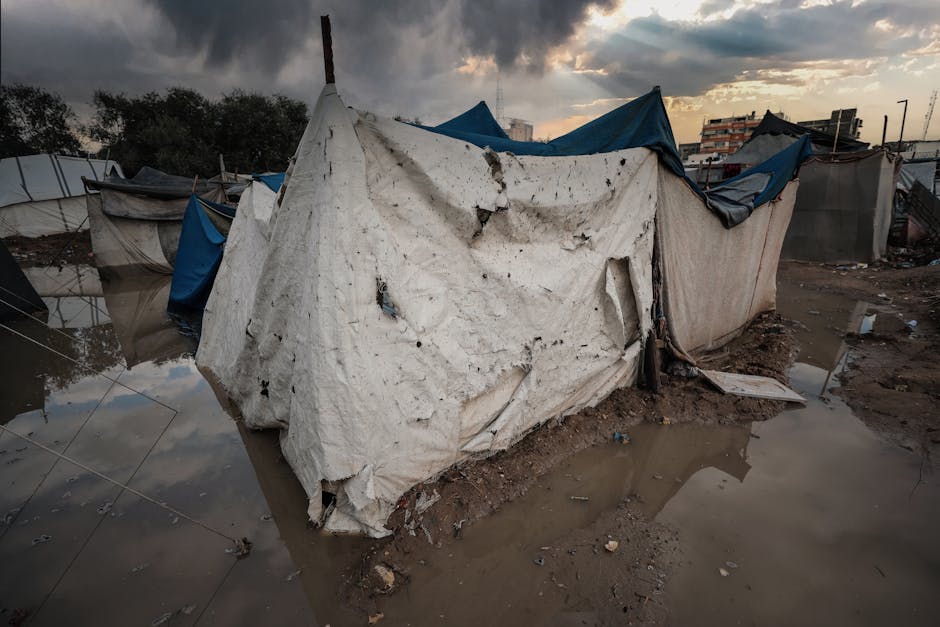
- 70% of Rafah’s infrastructure has been damaged or destroyed, hindering reconstruction efforts.
- Hamas’ access restrictions prevent local construction crews from repairing vital infrastructure.
- The city’s water and sanitation systems are only at 20% functionality.
- Only 12 of Rafah’s 28 primary health clinics remain partially operational.
- The humanitarian crisis in Rafah is deepening, with over 800,000 internally displaced people in need of assistance.
Reconstruction in Rafah remains stalled as Hamas enforces strict access controls that prevent local construction crews from crossing the Yellow Line into southern sectors of the city. Despite widespread destruction from months of conflict and pledges of international aid, Hamas security forces have denied passage to contractors claiming coordination risks with Israeli military operations. This internal blockade undermines grassroots recovery and raises concerns about governance priorities amid a deepening humanitarian crisis. Without immediate access, vital infrastructure—homes, clinics, water systems—will remain in ruins, prolonging displacement for hundreds of thousands of Palestinians.
Rafah’s Destruction by the Numbers

According to satellite analysis conducted by the United Nations Institute for Training and Research (UNITAR), over 70% of Rafah’s buildings have been severely damaged or completely destroyed since the escalation of hostilities in early 2024. The World Bank estimates $1.2 billion in infrastructure damage across the Gaza Strip, with Rafah accounting for nearly 40% of that total due to its dense urban fabric and prolonged exposure to military activity. Water and sanitation systems are at just 20% functionality, and only 12 of Rafah’s 28 primary health clinics remain partially operational. Humanitarian agencies, including the UN Office for the Coordination of Humanitarian Affairs (OCHA), report that more than 800,000 internally displaced persons are now sheltering in overcrowded zones near the Egyptian border, many living in makeshift tents without reliable access to clean water or electricity. These conditions underscore the urgency of reconstruction, yet movement restrictions continue to paralyze recovery.
Key Players and Their Stakes in Rafah

Hamas’s Interior Ministry and its military wing, the Qassam Brigades, are the primary actors controlling access to Rafah’s eastern and central zones. They have established checkpoints along the so-called Yellow Line—a de facto boundary within the city that separates areas under Israeli military surveillance from those nominally under Palestinian control. While Hamas officials claim these restrictions are necessary to prevent infiltration and maintain operational security, critics argue the measures consolidate political control and delay civilian-led rebuilding. On the other side, Israeli Defense Forces (IDF) maintain aerial surveillance and intermittent ground patrols near the Philadelphi Corridor, citing concerns over tunnel networks. Meanwhile, the Palestinian Authority, though sidelined in Gaza, has called for a unified reconstruction authority, a proposal Hamas has not endorsed. International actors, including Egypt and the United Nations, have urged both sides to facilitate safe passage for aid and labor, but with limited success.
Trade-Offs Between Security and Reconstruction

The decision to restrict contractor access reflects a broader tension between immediate security imperatives and long-term recovery needs. Hamas justifies its stance by pointing to past incidents where movement across contested zones led to Israeli airstrikes, including one in May 2024 that killed six civilians near a construction site. However, analysts warn that prioritizing military caution over reconstruction risks deepening public disillusionment. Delays in rebuilding erode trust in governance, fuel economic despair, and create fertile ground for renewed instability. Conversely, opening access carries risks: uncoordinated construction could interfere with demining operations or inadvertently expose workers to unexploded ordnance. Yet the cost of inaction may be higher—UNRWA reports that youth unemployment in Gaza now exceeds 85%, and without visible progress, recruitment into armed factions could surge. Balancing these concerns requires a neutral coordination mechanism, which currently does not exist.
Why the Timing Is Critical Now

The current stalemate comes at a pivotal moment: a fragile ceasefire extension was secured in late June 2024 through Qatari and Egyptian mediation, creating a narrow window for reconstruction to begin. With donor nations, including Germany and Japan, pledging over $500 million for Gaza recovery at the recent UN pledging conference, the availability of funds has temporarily outpaced the capacity to spend them. But without secure access for local labor, aid risks being stockpiled or diverted. Moreover, the onset of autumn threatens to turn damaged urban areas into health hazards, as stagnant water and debris become breeding grounds for disease. The delay in mobilizing Gazan contractors—many of whom possess essential knowledge of local infrastructure—means that even if access is granted later, the recovery timeline will face irreversible setbacks.
Where We Go From Here
Three plausible scenarios could unfold over the next six to twelve months. In the first, a breakthrough in intra-Palestinian talks leads to the creation of a joint civilian-led reconstruction committee, backed by the UN, allowing monitored passage of contractors and materials. This would accelerate rebuilding but requires Hamas to cede some control. In the second, the status quo persists: sporadic repairs occur in accessible zones, but large swaths of Rafah remain frozen in ruin, fueling social unrest and increasing dependency on emergency aid. In the third, a new escalation reignites hostilities, rendering reconstruction impossible and triggering another wave of displacement. Each path hinges on whether local and international actors can establish trust and neutral oversight mechanisms before the window for recovery closes.
Bottom line — the blocking of Gazan contractors from rebuilding Rafah is not merely a logistical hurdle but a critical test of governance, sovereignty, and the viability of post-conflict recovery in one of the world’s most fragile environments.
Source: Jpost