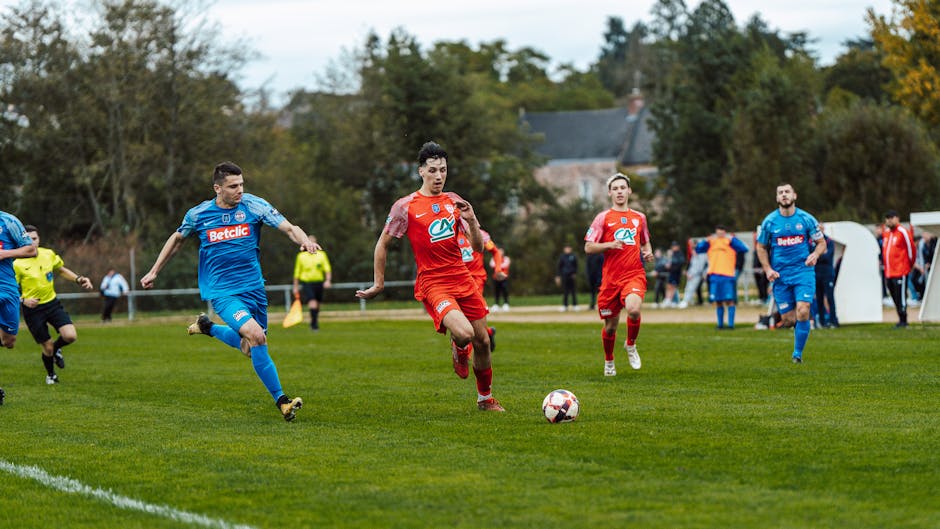
- Athletes speaking out on social issues can face backlash from those who oppose their views.
- Kylian Mbappé’s comments on immigration and national identity sparked controversy in France.
- Mbappé emphasized that being French is defined by shared values and civic participation, not ethnicity or religion.
- The debate surrounding Mbappé’s comments highlights the tension between representing a nation and speaking out on politics.
- Athletes from diverse backgrounds can be symbols of their countries, but may face increased scrutiny for their views.
Why should a footballer’s voice be silenced just because he excels on the pitch? That’s the question reverberating across France after Kylian Mbappé, the nation’s most prominent athlete, was targeted by far-right politicians for his comments on immigration and national identity. While Mbappé did not explicitly name any political party, his remarks—delivered in a pre-Euro 2024 interview—called for a more inclusive vision of French society, warning against the dangers of exclusionary nationalism. In response, figures from Marine Le Pen’s National Rally and Éric Zemmour’s Reconquête accused him of disrespecting French values and told him, in essence, to “shut up and dribble.” But Mbappé’s intervention has reignited a broader debate: Can a Black, Franco-Moroccan-Muslim athlete be a true symbol of France, or only if he stays silent on politics?
What Did Mbappé Say That Sparked the Backlash?

Mbappé’s comments came during a wide-ranging interview with France Bleu, where he discussed the pressures of representing France on the global stage. He emphasized that being French isn’t defined by ethnicity or religion, but by shared values and civic participation. “France is a country of immigrants,” he said. “We have to remember where we come from to know where we’re going.” These remarks were widely interpreted as a rebuke to rising anti-immigrant sentiment, particularly from the far right. While measured and apolitical in tone, the statement carried clear subtext. For many on the nationalist right, Mbappé—whose father is Cameroonian and mother Algerian, and who practices Islam—represents a demographic they often portray as a threat to French identity. His assertion of belonging, therefore, was seen not as patriotic but as provocative.
How Are Far-Right Leaders Responding to Mbappé?

The reaction from France’s far-right leaders was swift and scathing. Éric Zemmour, a former presidential candidate known for his anti-immigration platform, dismissed Mbappé’s comments as “ungrateful” and suggested the player should focus on football instead of politics. “He’s a great striker, not a philosopher,” Zemmour said on his YouTube channel. Marine Le Pen, in a more restrained but similarly pointed critique, argued that national pride shouldn’t be diluted by “identity politics.” These responses echo a long-standing pattern in global sports: when athletes of color speak on social issues, they are often told to “stay in their lane.” Critics argue this silencing tactic aims to preserve a narrow, exclusionary definition of national identity. According to a 2023 report by BBC Sport, athletes from minority backgrounds in Europe face disproportionate scrutiny when engaging in political discourse, particularly on issues of race and belonging.
Are There Counterarguments to the Criticism of Mbappé?

Some commentators argue that Mbappé, as a public figure, should expect political commentary—both positive and negative. They contend that democratic societies must allow debate, even when it’s uncomfortable. Moreover, they note that politicians frequently use athletes as symbols of national pride during victories, yet criticize them when they express personal views. This double standard, critics say, reveals deeper tensions about who gets to define Frenchness. Others point to Mbappé’s consistent efforts off the pitch: his foundation supports youth education and sports access in underprivileged areas, including the Paris suburbs where he grew up. Rather than being detached from French values, they argue, his actions embody civic responsibility. Still, the debate isn’t just about Mbappé—it reflects France’s unresolved struggle with its colonial past, secularism, and integration.
What Is the Real-World Impact of This Controversy?

The Mbappé debate has spilled beyond sports columns into classrooms, dinner tables, and political rallies. In suburbs like Bondy, where Mbappé began his career, young fans see him as a role model who proves success is possible despite systemic barriers. Conversely, far-right rallies have used his image to stoke fears about “replacement theory” and cultural decline. The timing is critical: France faces a growing far-right influence ahead of the 2027 presidential election. By targeting a beloved athlete, nationalist leaders are testing the boundaries of acceptable discourse. Meanwhile, French media outlets like Le Monde and Libération have editorialized in Mbappé’s defense, warning that silencing public figures for promoting inclusion undermines democratic values. The episode underscores how sports figures, especially those from marginalized backgrounds, become symbols in broader ideological battles.
What This Means For You
This controversy isn’t just about one footballer—it’s about who gets to speak in public life and under what conditions. If society only celebrates athletes when they remain silent on injustice, it limits the diversity of voices in democratic discourse. Mbappé’s case reminds us that identity and patriotism are not mutually exclusive, especially in multicultural nations. As global politics grow more polarized, the expectation for public figures to “stick to sports” becomes a tool to suppress dissent. Recognizing this dynamic helps us engage more critically with media narratives and political rhetoric.
Will future generations of athletes be freer to speak on social issues, or will the pressure to remain apolitical intensify? And as nationalist movements gain ground in democracies worldwide, how will societies reconcile the role of minority voices in defining national identity? The answer may depend not just on what athletes say—but on whether we’re willing to listen.
Source: Reddit