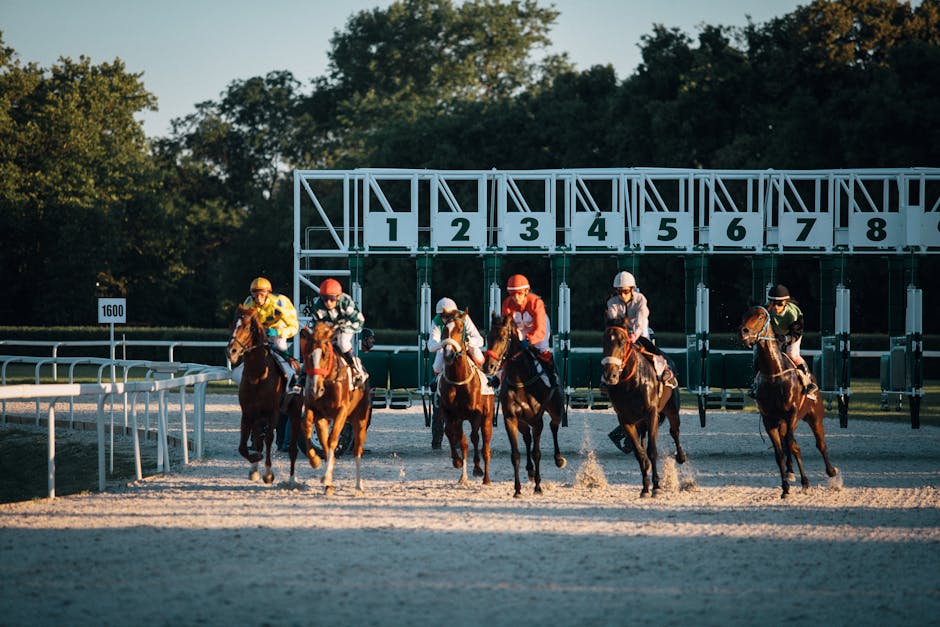
- Taj Mahal, a three-year-old colt, has rapidly risen to prominence in horse racing after a surprising win in the Blue Grass Stakes and a close second in the Kentucky Derby.
- The dark bay thoroughbred has become a legitimate contender for the Preakness Stakes, with a 5-1 favorite status in early odds.
- Taj Mahal’s team, led by trainer Chad Brown and jockey Irad Ortiz Jr., will face the challenge of navigating pressure, pace, and competition in the demanding Preakness event.
- The colt’s proven stamina and tactical speed have made him a strong candidate for the 1 3/16-mile test.
- Taj Mahal’s ownership partnership, including Qatar Racing and Starlight Racing, has fueled his rise to prominence in the horse racing world.
Can Taj Mahal, the three-year-old colt who burst onto the scene in early 2026, maintain his momentum and claim victory in the Preakness Stakes? As the second jewel of the Triple Crown approaches at Pimlico Race Course, all eyes are turning to this dark bay thoroughbred with a name that evokes grandeur and endurance. After a surprising win in the Blue Grass Stakes and a close second in the Kentucky Derby, Taj Mahal has gone from longshot to legitimate contender. Fans and bettors alike are asking: Is this horse built for the grueling 1 3/16-mile test? And can his team navigate the pressure, pace, and competition that define one of horse racing’s most demanding events?
Who Is Taj Mahal and Why Is He a Preakness Favorite?

Taj Mahal, trained by Hall of Famer Chad Brown and ridden by two-time Eclipse Award-winning jockey Irad Ortiz Jr., has rapidly climbed the ranks of elite three-year-olds. Bred in Kentucky by WinStar Farm and owned by a partnership including Qatar Racing and Starlight Racing, the colt entered 2026 with modest expectations. But after a dominant 4-length victory in the Grade 2 Blue Grass Stakes at Keeneland, his profile surged. In the Kentucky Derby, he tracked the pace before launching a powerful stretch run, ultimately finishing just a neck behind the winner. That performance, combined with his proven stamina and tactical speed, has made him a 5-1 favorite in early Preakness odds. His post position for the 149th running of the race is expected to be announced one week prior to post time, but analysts believe his ideal running style—close to the lead without overexerting—can adapt to any draw.
What Do the Numbers Say About Taj Mahal’s Chances?

Statistically, Taj Mahal checks several boxes associated with past Preakness winners. According to data from The Associated Press, horses finishing in the top three in the Kentucky Derby have won the Preakness 68% of the time over the last two decades. Taj Mahal’s strong Derby effort, coupled with a well-timed five-day recovery window—shorter than the traditional two-week break—plays to his advantage, as shorter layoffs have historically favored horses with efficient running styles. His Brisnet speed figures have improved in each of his last three starts, peaking at 102 in the Derby, which is competitive with recent Triple Crown contenders. Furthermore, Ortiz and Brown have combined for multiple Grade 1 victories in 2026 alone, including the Santa Anita Derby. “He handles different tracks, different paces, and he’s mentally tough,” Brown told The New York Times in a recent interview. “That’s rare in a three-year-old this early in the season.”
What Are the Counterarguments to Taj Mahal’s Preakness Success?

Despite his momentum, Taj Mahal faces legitimate challenges. Some analysts question whether his late-closing style can overcome a potentially fast early pace at Pimlico, where the track often favors front-runners. Additionally, the compressed recovery period between the Derby and Preakness—only five days in 2026 due to scheduling changes—raises concerns about fatigue, especially for a horse that ran such a hard race in Louisville. Historically, horses shipping in from Churchill Downs have faced adjustment issues with Pimlico’s unique dirt surface, which is deeper and less resilient. Rivals like West Coast Rebel and Classic Empire II are also expected to start, both of whom have shown superior early speed and could force Taj Mahal to chase from behind. Preakness veteran handicapper Jimenez noted in a recent podcast that “horses peaking too early often fade here—timing is everything.” Moreover, Taj Mahal has yet to win beyond 1 1/4 miles, while the Preakness, though slightly shorter, demands explosive acceleration in the final stretch.
How Could Taj Mahal’s Performance Impact the Triple Crown Landscape?

A win by Taj Mahal would not only solidify his status as a top-tier thoroughbred but also reshape the narrative of the 2026 Triple Crown. It would mark Chad Brown’s first Preakness victory, a notable milestone for a trainer otherwise dominant in turf racing. For owner Qatar Racing, it would be a historic achievement in American classic racing. More broadly, a strong showing could influence breeding markets, with stallion prospects rising sharply for colts who prove durable across multiple high-stakes races in a short window. Pimlico itself, undergoing renovations ahead of the 2027 Preakness, would gain momentum from a star-driven event. And if Taj Mahal goes on to compete in the Belmont Stakes, the possibility of a rare Triple Crown bid—or at least a season-long rivalry—could re-energize fan interest in horse racing, a sport that has seen fluctuating engagement in recent years.
What This Means For You
If you’re following the 2026 Triple Crown trail, Taj Mahal represents both a compelling story and a sound betting consideration. His combination of pedigree, team expertise, and proven performance under pressure makes him a horse to watch, even if risks remain. Casual fans can appreciate his resilience and dramatic running style, while seasoned bettors should monitor morning-line odds and track conditions in the days leading up to May 16. Whether he wins or not, Taj Mahal exemplifies the excitement of thoroughbred racing—unpredictable, emotional, and deeply human.
But can any horse truly withstand the physical and mental toll of three grueling races in five weeks? And in an era where horse welfare is increasingly scrutinized, does the compressed Triple Crown schedule serve the animals—or just the spectacle? The answer may shape the future of racing as much as the outcome of a single race.
Source: CBS Sports