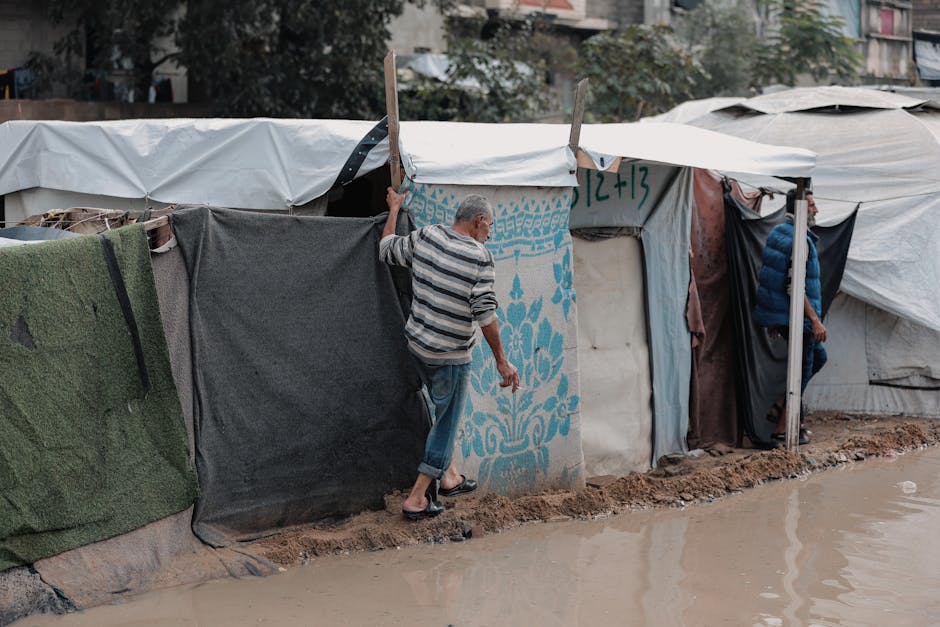
- The Nakba marks the displacement of hundreds of thousands of Palestinians in 1948, following the establishment of the State of Israel.
- Palestinians observe Nakba Day to commemorate the ongoing struggles of their community, including displacement and statelessness.
- The Nakba is a living memory that continues to shape the identity and experience of Palestinians worldwide.
- The event marked the beginning of a long and complex conflict that continues to this day.
- The Nakba is a crucial part of Palestinian history and identity, remembered by Palestinians around the world.
The question on everyone’s mind is: what is the significance of Nakba Day, and why do Palestinians continue to observe it 78 years after the fact? Nakba, which translates to “catastrophe” in Arabic, refers to the displacement of hundreds of thousands of Palestinians in 1948, following the establishment of the State of Israel. As Palestinians around the world mark this somber anniversary, they are reminded of the ongoing struggles of their community, including displacement, statelessness, and the quest for self-determination.
Understanding the Nakba: A Historical Perspective

The direct answer to the question of Nakba’s significance lies in its historical context. In 1948, the State of Israel was established, leading to the displacement of an estimated 700,000 Palestinians, who were forced to flee their homes or were expelled by Jewish forces. This event marked the beginning of a long and complex conflict, which continues to this day. The Nakba is not just a historical event, but a living memory that continues to shape the identity and experience of Palestinians worldwide. As Wikipedia notes, the Nakba is a crucial part of Palestinian history and identity.
Supporting Evidence: Data and Testimonies

Data and testimonies from various sources, including the United Nations Relief and Works Agency for Palestine Refugees in the Near East (UNRWA), support the fact that the Nakba’s impact is still felt today. According to UNRWA, there are currently over 5 million registered Palestinian refugees, many of whom live in poverty and uncertainty. Quotes from Palestinian leaders and ordinary citizens also underscore the significance of the Nakba, highlighting the need for a just and lasting solution to the conflict. As reported by Reuters, Palestinian leaders have repeatedly called for the right of return for refugees, a key demand that remains unfulfilled.
Counter-Perspectives: Alternative Views and Skeptics

Not everyone agrees on the significance or interpretation of the Nakba. Some skeptics argue that the event is often exaggerated or distorted for political purposes, while others claim that it is a necessary step towards the creation of a Jewish state. Alternative views also exist within the Palestinian community, with some advocating for a more pragmatic approach to negotiations with Israel, while others insist on the importance of resisting occupation and advocating for Palestinian rights. As BBC notes, the Israeli government has traditionally viewed the Nakba as a necessary step towards the creation of a Jewish state, while Palestinians see it as a catastrophic event that has shaped their history and identity.
Real-World Impact: Concrete Examples and Consequences

The Nakba’s impact is not limited to history books or theoretical debates. Its consequences are felt in the daily lives of Palestinians, from the refugee camps in Lebanon and Jordan to the occupied territories in the West Bank and Gaza. Concrete examples include the struggles of Palestinian refugees to access basic services, such as healthcare and education, as well as the difficulties faced by those living under occupation, including checkpoints, settlements, and home demolitions. As reported by AP News, the ongoing conflict has resulted in significant humanitarian needs, with many Palestinians relying on international aid to survive.
What This Means For You
The practical takeaway from the Nakba’s anniversary is that the conflict is far from resolved, and that the rights and dignity of Palestinians remain a pressing concern. As readers, we can engage with this issue by educating ourselves about the history and complexities of the conflict, and by supporting organizations that work towards a just and lasting solution. By doing so, we can help to raise awareness about the Nakba and its ongoing impact, and contribute to a more nuanced and informed public discourse.
As we mark the 78th anniversary of the Nakba, we are left with a lingering question: what does the future hold for Palestinians and Israelis, and how can a lasting peace be achieved? The answer to this question will depend on the actions of leaders, the engagement of civil society, and the commitment of individuals to promoting justice, equality, and human rights. As we look to the future, it is essential that we remember the past, and work towards a brighter future for all.
Source: Al Jazeera