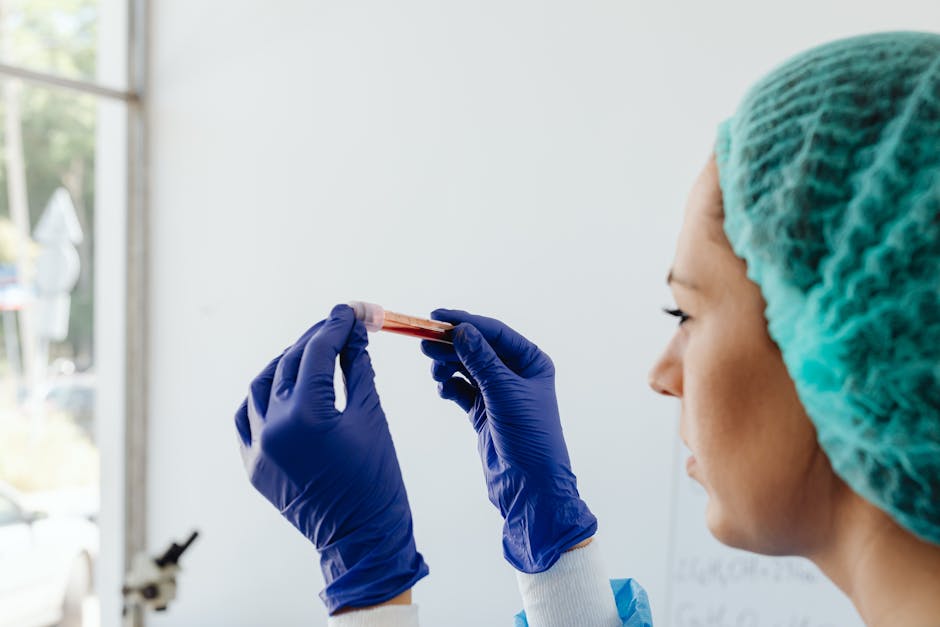
- A UK-led clinical trial has shown that immunotherapy before surgery can eliminate the need for chemotherapy in some colon cancer patients.
- The trial used pembrolizumab, an immune checkpoint inhibitor, which was administered for nine weeks before surgery.
- Patients with mismatch repair-deficient (dMMR) stage II or III colorectal cancer were included in the trial and showed promising results.
- The new approach has challenged long-standing treatment paradigms for locally advanced colorectal cancer.
- The findings raise hopes for a more effective and less toxic path to remission for a subset of patients.
Can a short course of immunotherapy before surgery eliminate the need for chemotherapy and keep certain colon cancer patients cancer-free for years? This is the question reverberating through oncology wards and research labs after groundbreaking results from a UK-led clinical trial. For decades, the standard of care for locally advanced colorectal cancer has been surgical removal of the tumor followed by months of chemotherapy—a grueling regimen that doesn’t always prevent recurrence. But a new approach using pembrolizumab, an immune checkpoint inhibitor, administered for just nine weeks before surgery, has left patients not only cancer-free but seemingly cured nearly three years later. The findings challenge long-standing treatment paradigms and raise hopes for a more effective, less toxic path to remission in a subset of patients.
How Does Pre-Surgery Immunotherapy Work in Colon Cancer?

The answer lies in harnessing the body’s own immune system to target cancer cells before they can spread. In the trial, led by researchers from the Royal Marsden NHS Foundation Trust and the Institute of Cancer Research, London, patients with mismatch repair-deficient (dMMR) stage II or III colorectal cancer received pembrolizumab—brand name Keytruda—over nine weeks prior to scheduled surgery. Unlike traditional chemotherapy, which attacks all rapidly dividing cells, pembrolizumab blocks the PD-1 receptor on T-cells, preventing cancer cells from evading immune detection. Remarkably, after surgery, many patients showed no viable tumor cells in the resected tissue—a pathological complete response. Of the 15 patients who completed treatment and were followed for a median of 34 months, all remained cancer-free. These results, published in Nature Medicine, suggest that early immunotherapy can trigger a durable immune memory capable of preventing recurrence, potentially making chemotherapy obsolete for this subgroup.
What Evidence Supports This Dramatic Outcome?

The evidence comes from the NICHE-2 trial, an extension of earlier NICHE studies that first demonstrated the promise of neoadjuvant (pre-surgery) immunotherapy in dMMR colorectal cancer. In NICHE-2, 112 patients received pembrolizumab and another immunotherapy agent, ipilimumab, but the pembrolizumab-alone arm showed similarly high response rates with fewer side effects. The near 100% disease-free survival rate at three years is unprecedented in this setting. Dr. Scott Kopetz, a gastrointestinal oncologist at MD Anderson Cancer Center not involved in the trial, called the data “practice-changing” in an interview with Reuters. He noted that historical controls receiving standard chemo-surgery sequences show recurrence rates of 30% or more within five years. The trial’s strength lies in its focus on dMMR tumors, which make up about 5% of colorectal cancers but are known to be highly immunogenic—responsive to immune attack due to their high mutational burden. This biological vulnerability makes them ideal targets for checkpoint inhibitors.
Are There Skeptics or Limitations to the Findings?

Despite the excitement, some experts urge caution. The trial population was relatively small and highly selected—only patients with dMMR tumors were included, limiting generalizability. Additionally, long-term follow-up beyond three years is still needed to confirm whether remission is truly permanent or if late recurrences might emerge. Dr. Jenny Seligmann, trial co-lead from the University of Leeds, acknowledged that while the results are “remarkable,” they apply to a narrow subset of colorectal cancer patients. There are also concerns about access and cost: pembrolizumab is expensive, and not all healthcare systems routinely test tumors for dMMR status. Furthermore, while side effects were milder than with chemotherapy, immune-related adverse events such as colitis or hepatitis can still occur. Some oncologists worry that enthusiasm for immunotherapy might lead to off-label use in patients without the biomarker, potentially exposing them to risks without benefit.
What Are the Real-World Implications of This Discovery?

The implications are already unfolding in clinical practice. Hospitals in the UK and US are beginning to adopt preoperative immunotherapy for dMMR colorectal cancer patients, and guidelines from organizations like the National Comprehensive Cancer Network (NCCN) are under review. For patients, this could mean avoiding months of debilitating chemotherapy, preserving quality of life, and reducing long-term side effects like neuropathy and secondary cancers. Beyond colorectal cancer, the success of neoadjuvant immunotherapy is inspiring similar trials in dMMR endometrial, gastric, and pancreatic cancers. If proven effective, this strategy could become a blueprint for treating immunogenic tumors across cancer types. In the UK, NHS England has started funding pembrolizumab for this indication in select cases, signaling a shift toward biomarker-driven, personalized oncology care.
What This Means For You
If you or a loved one is diagnosed with colorectal cancer, especially at an earlier stage, it’s critical to ask whether the tumor has been tested for mismatch repair deficiency. A simple biomarker test could determine eligibility for this potentially curative immunotherapy approach. While not a panacea for all colon cancers, this treatment represents a major leap forward for a subset of patients who now have a shot at long-term remission without chemotherapy. As precision oncology advances, such targeted strategies will likely become more common, emphasizing the importance of genetic and molecular profiling in cancer care.
But questions remain: Will these patients stay cancer-free for five, ten, or even twenty years? And can this approach be safely expanded to other cancer types or combined with emerging therapies like cancer vaccines? As researchers continue to follow these patients, the oncology community watches closely—because what’s happening in this small trial may be the beginning of a much larger revolution in how we treat cancer.
Source: ScienceDaily