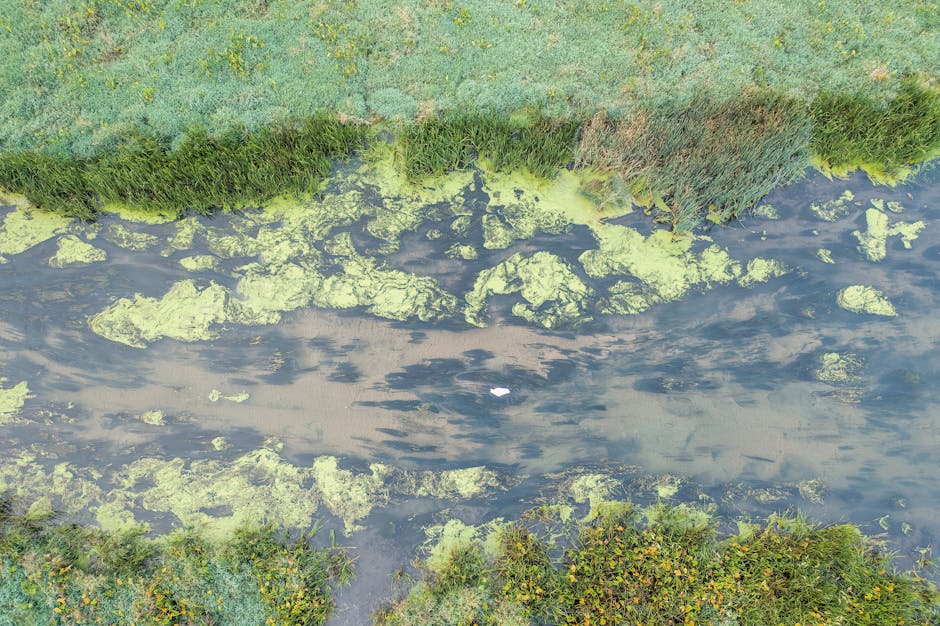
- Brittany, France has experienced severe green tides due to agricultural runoff, causing a public health emergency.
- The decomposition of algae releases hydrogen sulfide (H₂S), a colorless gas that can be lethal in enclosed areas.
- At least seven human deaths have been linked to green tides in Brittany since 2009.
- Exposed individuals, such as joggers and cyclists, are at risk of hydrogen sulfide poisoning.
- Official recognition of H₂S as a health threat remains limited in Brittany.
On a quiet September afternoon, the windswept coast of Brittany held its breath. The tide had receded, leaving behind a thick, glistening carpet of green—blooms of Ulva lactuca, commonly known as sea lettuce, rotting under the sun. The air was thick with the stench of hydrogen sulfide, a gas asphyxiating in high concentrations, smelling of rotten eggs. Dogs collapsed. Children gagged. And on that day in 2016, Jean-René Auffray, a 62-year-old retired firefighter, never returned from his seaside jog. His dog, found trembling beneath a bush, fur matted with slime and reeking of decay, became the only witness to what may have been a silent, invisible killer.
The Deadly Bloom on Brittany’s Shores

What began as a localized environmental nuisance has evolved into a public health emergency. Brittany, France’s northwestern peninsula, now hosts some of the world’s most severe green tides—massive accumulations of macroalgae fueled by agricultural runoff rich in nitrogen and phosphorus. When these algae decompose, they release hydrogen sulfide (H₂S), a colorless gas that, in enclosed or low-lying areas, can reach lethal levels in minutes. Since 2009, at least seven human deaths have been linked to these blooms, including cyclists, joggers, and sanitation workers. In 2019, a horse trainer died after his horse suddenly collapsed in a field near a decomposing algae pile; he fell too, unconscious, and never woke up. Despite mounting evidence, official recognition of H₂S toxicity from algal decay remains inconsistent, leaving families like the Auffrays in legal and emotional limbo.
The Roots of a Toxic Tide

The origins of Brittany’s algae crisis stretch back to the postwar agricultural boom, when the region transformed into Europe’s pork and dairy powerhouse. Intensive livestock farming led to excessive use of chemical fertilizers and manure, much of which washed into rivers like the Vilaine and Loire, eventually reaching the sea. By the 1970s, scientists began documenting abnormal algal growth along the coast. In 1979, the first massive green tide was recorded near Saint-Michel-en-Grève. Decades of delayed action followed. A 1995 report by France’s National Agency for Health Security identified the link between nitrates and algal blooms, yet regulations on fertilizer use remained weak. Even after the European Union’s Nitrates Directive was adopted in 1991, enforcement in Brittany lagged. Today, some river basins in the region exceed nitrate safety limits by over 600%, creating a perfect storm for recurring algal explosions every summer.
A Family’s Crusade for Answers

After Jean-René Auffray’s death, his wife Rosy and their daughters refused to accept the official silence. They launched their own investigation, collecting testimonies, scouring medical reports, and collaborating with environmental scientists. With the support of the group Bretagne Vivante, a regional conservation NGO, they uncovered a pattern: emergency calls spiked on days when algae decomposition was at its peak. They also obtained autopsy results showing elevated sulfide levels in Jean-René’s bloodstream. Despite this, French authorities initially attributed his death to cardiac arrest. It wasn’t until 2021 that a court in Saint-Brieuc ruled the death was “linked to exposure to hydrogen sulfide from decomposing seaweed,” marking a legal turning point. The Auffrays’ persistence forced a reckoning not just with one man’s death, but with systemic environmental neglect.
Consequences of Inaction

The implications of Brittany’s algae crisis extend far beyond one family’s tragedy. Local economies dependent on tourism face seasonal decline as beaches are cordoned off. Municipalities spend millions annually clearing algae—over 500,000 tons were removed in 2022 alone—often without protective gear for workers. Children in coastal schools report respiratory issues during algal season. Farmers, meanwhile, resist stricter regulations, fearing economic ruin. Yet the cost of inaction may be higher: a 2023 study published in Nature Sustainability estimated that the annual environmental and health toll of eutrophication in Europe exceeds €15 billion. Without binding reforms, experts warn, such events could become more frequent and severe with climate change amplifying coastal nutrient imbalances.
The Bigger Picture
The story of Brittany’s killer seaweed is not unique—it’s a harbinger. Coastal regions worldwide, from the Gulf of Mexico to the Yellow Sea, face similar threats from nutrient pollution. What makes Brittany’s case emblematic is the collision of industrial agriculture, delayed policy response, and the raw power of citizen-led science. The Auffrays did not have lab credentials, but they had determination, records, and a simple demand: accountability. Their fight underscores a growing global reality—communities are often the first to notice ecological distress, long before institutions respond. When ecosystems speak, they do so in symptoms: stench, sickness, silence.
What comes next may hinge on whether France acts decisively. Proposed reforms include stricter manure storage laws, nitrogen reduction targets, and real-time H₂S monitoring on beaches. But for Rosy Auffray, justice remains incomplete. “They recognized it was the algae,” she said in a 2023 interview, “but no one has said sorry.” As summer returns and the tides bring new waves of green, the question lingers: how many more must fall before prevention becomes priority?
Source: The Guardian