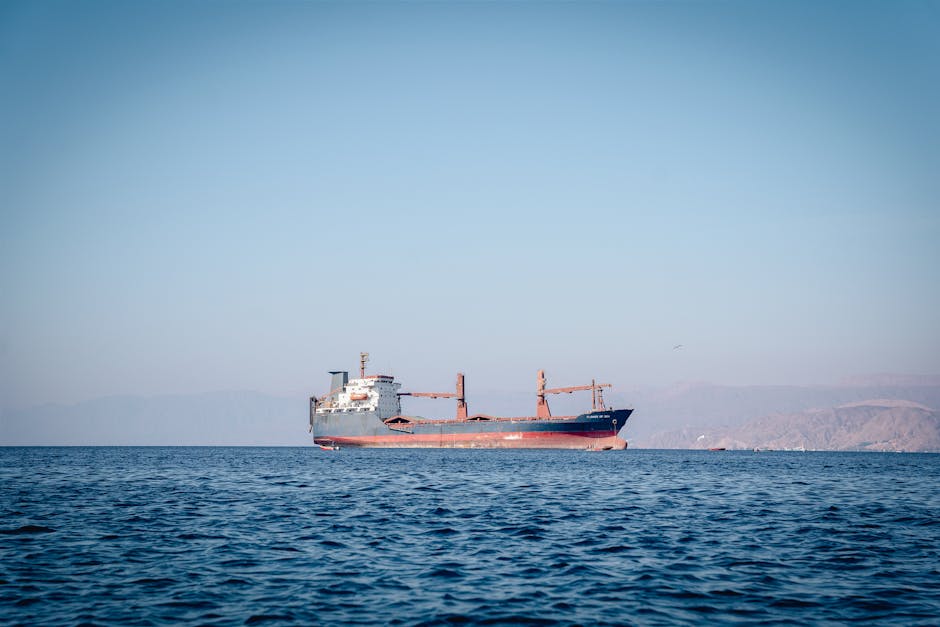
What happens when a regional conflict begins to strangle global trade and pull in world powers? That’s the question reverberating from the Red Sea, where a surge in attacks on commercial shipping has transformed a long-simmering Yemeni insurgency into an international crisis. Since November 2023, hundreds of vessels have been rerouted around Africa, insurance costs have spiked, and the U.S. and U.K. have launched repeated airstrikes against Houthi targets in Yemen. The root of the turmoil lies in the Houthis’ claim that their attacks are in solidarity with Gaza amid the Israel-Hamas war. But the consequences are being felt in ports from Singapore to Rotterdam. As naval forces increase patrols and diplomatic efforts stall, the world is watching to see whether a localized rebellion spirals into a full-blown regional war with global consequences.
Is the Red Sea Becoming a New Global Conflict Zone?

Yes — and rapidly. What began as a series of symbolic Houthi drone and missile launches has evolved into a sustained campaign targeting commercial shipping in one of the world’s busiest maritime chokepoints. The Bab el-Mandeb strait, which connects the Red Sea to the Gulf of Aden, sees about 12% of global trade pass through it annually, including oil, consumer goods, and food supplies. The Iran-backed Houthi movement, officially known as Ansar Allah, declared in November 2023 that it would target any ship linked to Israel or operating under British or American flags in response to the war in Gaza. Since then, over 40 attacks have been documented by the U.S. Naval Forces Central Command, including hijackings, drone strikes, and anti-ship missile launches. In response, the U.S. and U.K. launched coordinated air and missile strikes in January 2024, marking the first direct military confrontation between Western powers and the Houthis in years.
What Evidence Shows the Conflict Is Worsening?

Data from maritime security firms like Ambrey and UKMTO confirm a sharp rise in attack frequency and sophistication. In January 2024 alone, more than 20 attempted strikes were recorded, with several vessels sustaining damage. The Maersk Hangzhou, a container ship operated by the world’s largest shipping company, was struck by a drone after repelling an initial attack — an incident that prompted Maersk and other major firms to suspend Red Sea transits entirely. According to Reuters reporting, rerouting vessels around the Cape of Good Hope adds 10 to 14 days to journey times and increases fuel costs by up to $3 million per trip. The U.S.-led Operation Prosperity Guardian, involving over a dozen nations, has intercepted numerous drones and missiles, but has failed to deter the Houthis. Meanwhile, Iran’s role remains ambiguous, though U.S. officials assert that Tehran provides technical and material support. A January 2024 report from the United Nations Panel of Experts on Yemen detailed shipments of drone components and missile guidance systems traced to Iranian suppliers.
Are There Other Perspectives on the Houthi Campaign?

Skeptics argue that framing the Red Sea attacks solely as an Iran-backed proxy conflict oversimplifies a complex civil war context. The Houthi movement has governed much of northern Yemen since 2014 and views its campaign as both a defense of Palestinian civilians and a resistance to Western intervention. Some analysts warn that military retaliation risks fueling Houthi recruitment and entrenching anti-Western sentiment across the region. The Guardian noted in January 2024 that previous U.S. strikes in Yemen have had limited long-term impact on Houthi capabilities. Others caution against conflating all attacks: while some vessels have clear Western links, others appear to be targeted based on incomplete or inaccurate data. Critics also point out that humanitarian conditions in Yemen remain dire after nearly a decade of war, and that renewed airstrikes could worsen a crisis that has already displaced millions.
What Are the Real-World Consequences of the Crisis?

The ripple effects are already being felt across global supply chains. Major logistics firms like Hapag-Lloyd and MSC have suspended Red Sea operations, while CMA CGM has shifted 60% of its Asia-Europe capacity. Freight rates on key routes have more than doubled, according to the Freightos Baltic Index. European retailers are warning of delayed holiday shipments, and energy markets are monitoring the situation closely — about 5% of global oil supply moves through the Red Sea. In Yemen, civilian infrastructure has been damaged by coalition strikes, raising concerns from humanitarian groups. The World Food Programme warned that disruptions to port operations in Hodeidah could threaten food deliveries to 17 million Yemenis who rely on aid. Meanwhile, regional actors like Saudi Arabia, which previously led a coalition against the Houthis, are quietly pushing for renewed peace talks, fearing escalation could reignite a broader war.
What This Means For You
If you buy imported goods, fill your car with gasoline, or rely on just-in-time delivery systems, the Red Sea crisis could affect you. Longer shipping routes mean higher costs, potential shortages, and inflationary pressure on everyday items. Geopolitical instability in critical trade corridors also underscores how interconnected — and vulnerable — the global economy is. While direct military escalation remains limited for now, the situation is fluid and could worsen rapidly depending on developments in Gaza and Yemen.
As naval patrols continue and diplomatic channels remain strained, one question lingers: can a military response de-escalate a conflict rooted in regional grievances, or will it only deepen the cycle of retaliation? The answer may determine whether the Red Sea becomes a permanent flashpoint or a cautionary tale of how quickly localized unrest can disrupt the world.
Source: The New York Times