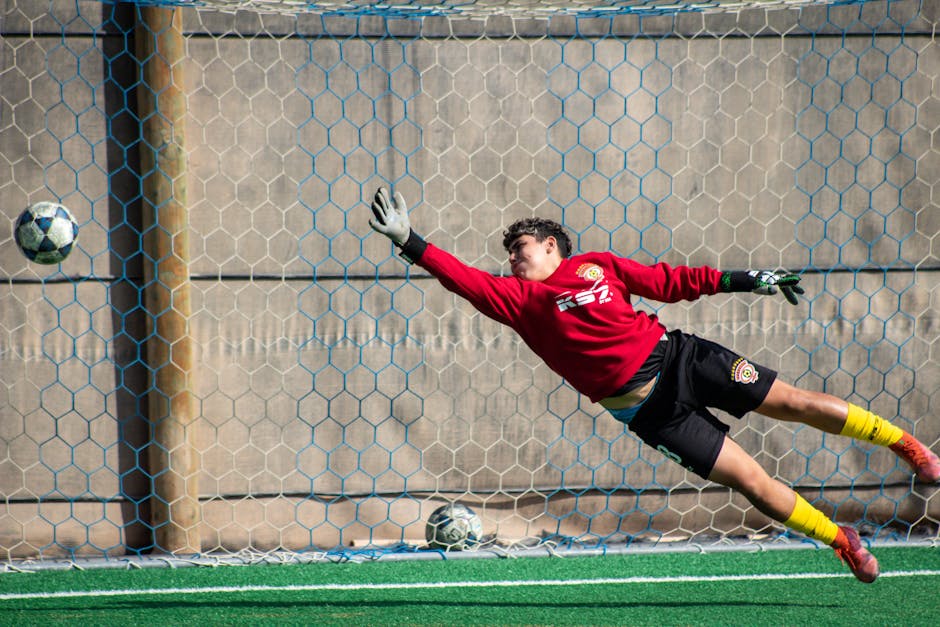
- Former Manchester United goalkeeper Peter Schmeichel claims Arsenal’s goalkeepers obstruct opposing keepers during set pieces.
- This alleged tactic may have influenced the outcome of key matches, raising questions about fair play.
- Arsenal’s Premier League title bid is under scrutiny, with some fans debating the legitimacy of their goal-scoring methods.
- The Gunners’ actions have sparked a debate about the fine line between smart play and gamesmanship in competitive football.
- The controversy has implications for refereeing decisions and marginal calls, especially as the season enters its decisive phase.
In a stunning revelation that has sent shockwaves through the football world, Peter Schmeichel has claimed that Arsenal’s climb to the top of the Premier League table has been aided by systematic obstruction of opposing goalkeepers. The former Manchester United and Denmark legend asserted that the Gunners have been repeatedly blocking rival keepers during set pieces, preventing them from making saves — actions that, if disallowed, could have altered the outcome of key matches. Schmeichel did not mince words, stating, “They would NEVER be on top of the league if we disallow these goals.” His comments have quickly gone viral on platforms like Reddit’s r/soccer, where fans are dissecting match footage and debating whether Arsenal’s actions cross the line between smart play and outright gamesmanship.
Why This Controversy Matters Now

With Arsenal locked in a tense title race with Manchester City, every point and every goal has monumental implications. The Premier League title has not resided in North London since 2004, and Arsenal’s current campaign under Mikel Arteta has rekindled hope among fans. However, Schmeichel’s intervention shifts focus from on-field brilliance to ethical boundaries in competitive play. The timing is critical: as the season enters its decisive phase, scrutiny over refereeing decisions and marginal calls intensifies. While teams routinely contest near the opposition goal during corners and free kicks, the fine line between legal challenge and illegal obstruction is often blurred. Schmeichel’s accusation suggests that Arsenal may be exploiting this ambiguity, raising broader concerns about consistency in officiating and the integrity of the competition.
What Schmeichel Is Alleging — And Why It’s Resonating

Schmeichel pointed to multiple instances this season where Arsenal attackers appeared to impede or block opposing goalkeepers during set pieces, particularly in matches against Liverpool, Chelsea, and Brighton. In one widely circulated clip, an Arsenal forward made contact with the goalkeeper just as a cross entered the box, leading to a goal that was allowed to stand. While such incidents are often deemed incidental by match officials, Schmeichel argues they are part of a deliberate and repeated pattern. “It’s not just one moment — it’s happening week after week,” he said in a Sky Sports interview. “Other teams do it too, but Arsenal have been more effective at getting away with it.” His stance has drawn support from pundits and former players, with some calling for video review protocols to specifically address goalkeeper obstruction, a category currently less defined than handballs or offside.
The Rules and the Reality of Set-Piece Play

According to Law 12 of the International Football Association Board (IFAB) regulations, it is an offense to prevent a goalkeeper from releasing the ball with their hands or to impede their movement. However, enforcement during crowded set-piece situations remains inconsistent. Referees often rely on split-second judgments in chaotic environments, and VAR (Video Assistant Referee) has been criticized for inconsistently intervening in obstruction cases. A 2022 study published in Scientific Reports analyzed 120 Premier League matches and found that only 38% of clear goalkeeper obstructions were penalized, suggesting a significant gap in enforcement. Schmeichel’s critique taps into this wider frustration: if rules exist but aren’t applied uniformly, does that give an unfair advantage to teams willing to test the limits? Arsenal’s tactical discipline under Arteta includes coordinated pressing and zonal marking, but it also extends to well-rehearsed routines in the opponent’s box — routines that may now face greater scrutiny.
Who’s Affected — And What’s at Stake

The implications extend beyond Arsenal. Other top clubs, including Manchester City and Liverpool, have raised concerns in private meetings with the Premier League about the consistency of officiating. If Arsenal’s goals are perceived as benefiting from questionable contact, it could undermine the legitimacy of the title race. Managers, players, and fans alike worry that such tactics, if unpunished, could become normalized across the league. Additionally, younger players may begin to emulate what they see as a winning formula, regardless of its ethical standing. The controversy also puts pressure on referees and the VAR system, which are already under fire for inconsistent decision-making. With the Premier League’s global reputation on the line, the governing bodies may need to clarify or tighten guidelines around goalkeeper obstruction to ensure fair competition.
Expert Perspectives
Opinions are divided. Gary Neville, a vocal critic of tactical fouling, backed Schmeichel, stating, “Some of these challenges are deliberate — you can see the intent.” In contrast, former Arsenal defender Martin Keown defended the team, arguing, “It’s part of the game. You compete in the box. If the ref allows it, it’s legal.” Sports ethicist Dr. Jamie Cleland from Ulster University noted that “the lack of clear sanctions encourages risk-taking behavior,” suggesting that unless governing bodies define and enforce boundaries more strictly, such debates will continue to surface during high-stakes moments.
As the season reaches its climax, all eyes will be on how officials handle similar incidents in upcoming fixtures. Will referees start penalizing these actions more consistently? Could the Premier League introduce new guidelines before next season? And most importantly, will Arsenal’s title challenge withstand both on-pitch battles and off-field scrutiny? One thing is certain: Schmeichel’s comments have opened a Pandora’s box that may reshape how football confronts the gray areas of competitive advantage.
Source: V