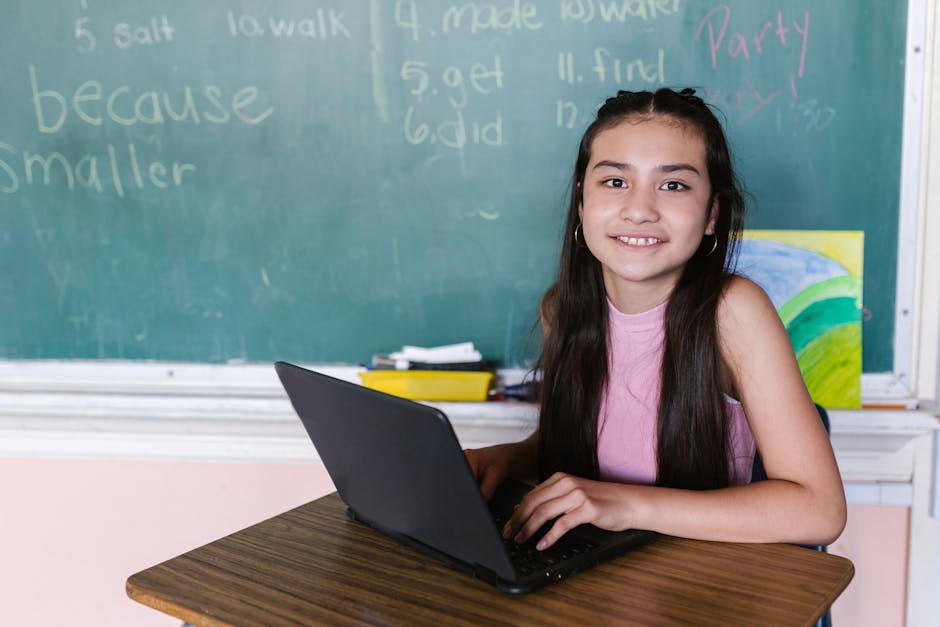
- A recent study found that 78% of writing students at MIT used AI tools last semester, raising concerns about the erosion of self-trust in writing.
- Many students used AI to overcome writer’s block, mimic ‘professional’ prose, or to generate submissions entirely, highlighting the pressure to conform to expectations.
- The use of AI in writing is not limited to cheating, but also reflects the students’ loss of confidence in their own abilities and creative potential.
- The irony is that students at MIT, a hub for innovation, are outsourcing their writing to machines, undermining the values of original thought and self-expression.
- The incident highlights the need for educators to address the role of AI in writing and to help students develop their critical thinking and creative skills.
On a rainy Tuesday in Cambridge, the fluorescent lights of Building 34 hummed above a semicircle of students, their laptops glowing like altars. I stood at the front of the room, holding a printed story titled ‘The Last Transmission,’ a piece so polished it felt sterile—sentences balanced like equations, metaphors precise but lifeless. It read like something generated, not lived. When I asked the author to read it aloud, their voice wavered, unsure. That’s when I knew. This wasn’t just another draft from a talented engineer dipping into fiction. This was crafted by an algorithm. And yet, the room was full of such stories—impeccable, impersonal, and utterly devoid of struggle. The silence that followed the reading wasn’t contemplative; it was guilty.
The Classroom Confession

When I confronted the class—not with accusation, but curiosity—hands rose like saplings after a storm. Over half admitted to using AI to draft, revise, or even fully generate their submissions. Some used it to overcome writer’s block; others to mimic ‘professional’ prose they believed I expected. One student confessed they no longer knew how to start without prompting a machine. What alarmed me wasn’t the cheating, but the erosion of self-trust. These weren’t lazy students—they were accomplished coders, biologists, physicists—yet when it came to writing, they felt like imposters in their own minds. The irony wasn’t lost on me: at MIT, where innovation is celebrated, they were outsourcing the most human form of creation. As AI literacy becomes a battleground in education, my classroom became a microcosm of a far larger crisis.
How We Got Here

The seeds were planted long before ChatGPT went viral. For over a decade, education has prioritized output over process, grades over growth. My students grew up in a world of autocorrect, predictive text, and algorithmic curation—language shaped by machines before it’s even spoken. By the time they reached college, the act of writing had been reduced to a performative task: produce something clean, fast, and error-free. In high school, they were rewarded for five-paragraph essays and ‘college-ready’ prose, not raw voice or emotional honesty. When I began teaching fiction at MIT in 2017, I assumed the challenge would be reigniting imaginative courage. I didn’t anticipate that many would arrive already convinced their thoughts weren’t worth expressing unless polished by AI. The tools evolved, but the deeper issue—fear of imperfection—had been cultivated by a system that confuses fluency with authenticity.
The Students Behind the Screens

These aren’t digital dilettantes. One student, a third-year in aerospace engineering, told me she used GPT-4 to draft her first short story because ‘my ideas feel jumbled, and the AI helps me sound like a real writer.’ Another, a Rhodes Scholar candidate, admitted relying on AI to ‘elevate’ his diction, fearing his natural voice was ‘too plain.’ Their motivations weren’t malice or laziness—they were shame and pressure. They believed good writing meant sounding like someone else: someone published, someone acclaimed, someone not them. I began to see AI not as a villain, but as a mirror reflecting a generation taught to optimize, not explore. When I asked one student why he didn’t just write the story himself, he looked stunned. ‘But why struggle when the machine can do it better?’ he replied. That question haunted me—not for its cynicism, but for its sincerity.
What’s Lost in the Translation

What’s at stake isn’t academic integrity alone, but the very skill of becoming oneself through language. Writing is not transcription—it’s excavation. The clunky sentence, the false start, the crossed-out paragraph: these aren’t failures, but the friction that generates insight. When we outsource that struggle, we lose the chance to shape our thoughts into form, to discover what we truly believe. In workshops, I’ve watched students light up when a peer says, ‘This awkward line? It’s the most honest thing in the story.’ That moment of recognition—the beauty in the blemish—is impossible if every draft emerges pre-sanitized. Employers, too, are noticing. As Reuters has reported, companies are now screening for ‘AI fingerprints’ in job applications, not just to catch deception, but because they crave authentic voice. In a world of synthetic content, human imperfection has become a competitive advantage.
The Bigger Picture
This isn’t just about essays or fiction—it’s about agency. Every time a student lets AI write for them, they reinforce the belief that their unassisted mind isn’t enough. And if we normalize that, we risk raising a generation fluent in interfaces but illiterate in introspection. The classroom must become a sanctuary for productive struggle, not a factory for flawless outputs. We need to teach students not how to use AI to write better, but how to write so well that no machine could replicate the texture of their thought. That means rewarding process over polish, questions over answers, and voice above all.
Today, my syllabus begins with a new directive: ‘Write badly. Write fearfully. Write like no one’s watching—because the first reader who matters is you.’ Some still turn to AI. But now, when they do, we talk. We dissect not just the prose, but the impulse behind it. And in those conversations—honest, uneasy, alive—I see the flicker of something no algorithm can generate: the courage to be imperfectly, irreplaceably human.
Source: The Guardian