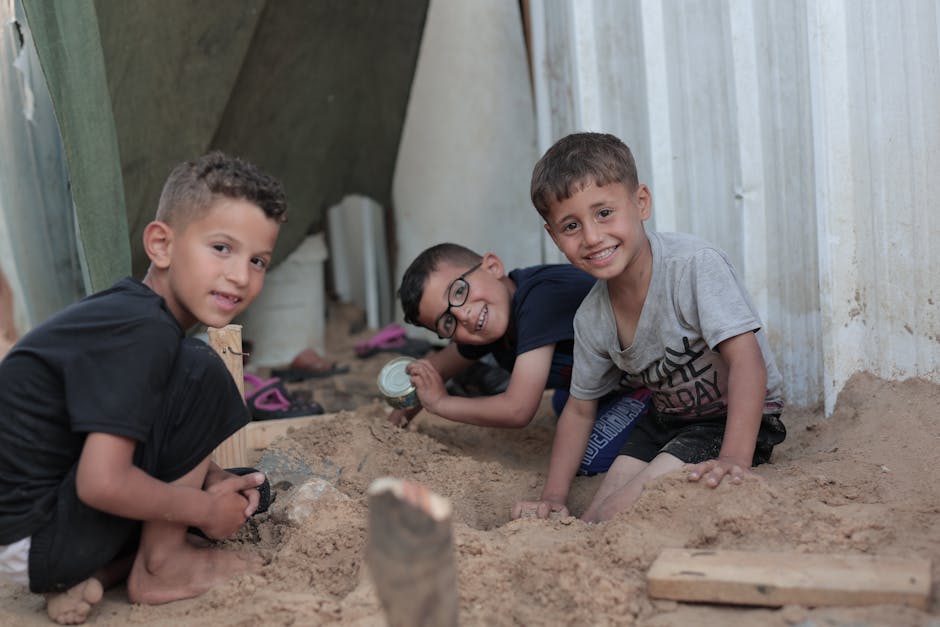
- Over 10,000 children have been orphaned in the ongoing Israeli-Palestinian conflict in Gaza.
- Football serves as a rare space for orphaned youth to escape trauma, hunger, and grief in Gaza’s war-torn alleys.
- Decimated sports infrastructure in Gaza has made football the most accessible form of recreation in the region.
- Orphaned children in Gaza often turn to football for psychological refuge and structured play.
- Local coaches and volunteers have transformed rubble-strewn lots into makeshift football pitches to restore hope in the community.
In the shattered alleys of Gaza City, where 70% of homes have been damaged or destroyed since October 2023, a makeshift football pitch carved from rubble hosts a daily ritual of resilience. Over 10,000 children have been orphaned in the ongoing Israeli-Palestinian conflict, many of them turning to football not for fame or fortune, but for survival. On cracked concrete fields ringed by bombed-out buildings, boys as young as nine kick worn balls with fierce determination—a momentary escape from trauma, hunger, and grief. For these youth, football is more than a game; it is a lifeline, a rare space where laughter pierces the silence of artillery and where identity isn’t defined by loss.
Why Football Matters in Gaza’s Trauma

Gaza’s sports infrastructure has been decimated: 86% of stadiums and training facilities have been damaged or destroyed since 2008, according to the Palestinian Ministry of Youth and Sports. Yet, football remains the most accessible form of recreation in the densely populated enclave, where open space is scarce and movement restricted. For orphaned children—many of whom lost entire families in airstrikes—structured play offers psychological refuge. The United Nations Relief and Works Agency (UNRWA) reports that over 60% of Gaza’s youth exhibit symptoms of severe post-traumatic stress. In this context, local coaches and volunteers have transformed rubble-strewn lots into impromptu pitches, organizing leagues and training sessions to restore a sense of routine. Efforts by grassroots organizations have emphasized sport as psychosocial support, helping children process grief through teamwork and physical exertion.
A Teen’s Journey from Loss to Leadership

One such story is that of 16-year-old Mahmoud Al-Sayed, who lost both parents and three siblings in an Israeli airstrike on Gaza City’s Shuja’iyya neighborhood in December 2023. With nowhere to live and no extended family, Mahmoud found shelter in a UN-run camp where a local football initiative, Kick for Life Gaza, offered daily training. Within weeks, he became a team captain, his leadership on the field earning him respect and purpose. “When I play, I forget the bombs,” Mahmoud said in a local radio interview. “I feel alive again.” Coaches describe similar transformations across dozens of informal leagues, where children who once refused to speak now communicate through passes, shouts, and shared goals. The sport, they say, rebuilds not just bodies but fractured social bonds.
The Systemic Collapse Behind the Game

The rise of football as psychological refuge underscores the catastrophic breakdown of Gaza’s social systems. Years of blockade, repeated military operations, and chronic underfunding have left mental health services nearly nonexistent. There are fewer than 20 licensed psychiatrists for a population of over 2.3 million, most of them concentrated in urban centers. With schools destroyed and unemployment at 47%, especially among youth, football provides more than therapy—it offers structure, discipline, and a rare sense of achievement. Data from the Palestinian Central Bureau of Statistics shows that youth participation in sports dropped by 40% between 2014 and 2022 due to infrastructure loss, but has seen a grassroots resurgence amid the latest conflict. This revival, however, occurs without institutional support, relying on donated kits, volunteer coaching, and international aid that often fails to reach those in need.
The Human Cost of a Hollowed-Out System

The consequences of this systemic neglect extend far beyond the pitch. Children without access to structured activities face higher risks of recruitment by armed groups, substance abuse, and long-term psychological disorders. For orphans like Mahmoud, football may delay these outcomes, but it cannot replace education, healthcare, or stable housing. Human rights groups warn that the absence of long-term investment in youth programs risks creating a “lost generation” in Gaza. A 2024 Reuters investigation highlighted how trauma, if untreated, compounds across generations, perpetuating cycles of violence and despair. While football provides immediate relief, experts stress it must be integrated into broader recovery efforts to have lasting impact.
Expert Perspectives
Dr. Lina Wahbeh, a Gaza-based clinical psychologist, views football as “a necessary but insufficient intervention.” She argues that while sport can reduce acute anxiety, it does not address deep trauma without professional therapy. In contrast, Ahmed Majdalani, head of the Palestinian Federation of NGOs, sees football as a form of resistance: “When children play under siege, they assert their right to exist, to be children.” International bodies like FIFA have pledged support, but access restrictions and funding delays limit tangible aid. The debate centers on whether grassroots initiatives can scale without political resolution—and whether the world will recognize youth recovery as central to Gaza’s future.
Looking ahead, the sustainability of football programs in Gaza hinges on both security and investment. Without a ceasefire and reconstruction plan, even the most resilient leagues could collapse. Yet, the persistence of youth on these makeshift pitches suggests an unyielding will to rebuild. The world may measure Gaza’s devastation in buildings and casualties, but its recovery may be charted in passes, goals, and the quiet triumph of a child laughing mid-game—proof that even in ruins, hope can take form.
Source: Al Jazeera