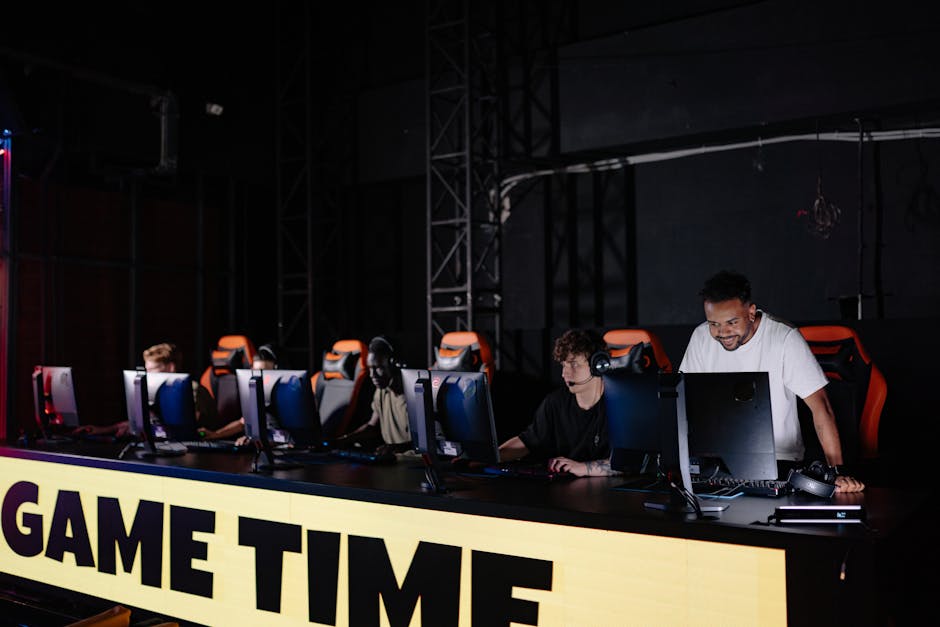
- Twitch is allowing streamers to host live ‘mog-offs’ where users compete in algorithmic beauty contests.
- The platform has reversed its previous ban on third-party integrations for such contests.
- Streamers can use platforms like Omoggle or Mogle to pair users and run biometric comparisons in real-time.
- The contests use metrics like facial symmetry, proportion, and other beauty standards to determine winners.
- Twitch’s decision has sparked concerns about privacy and harassment, despite rising viewership for ‘mog-offs’.
Last week, at 4 a.m., 19-year-old Sammy Amz was scrolling through X when he saw something bizarre: a popular Twitch streamer locked in a live 1v1 “mog-off” with a random stranger, their faces side by side on screen as green dots mapped facial features and numbers ticked upward in real time. The streamer was losing—judged less attractive by an algorithm. By morning, Amz had joined in, logging onto Omoggle, a gaming site that pairs users via webcam and runs instant biometric comparisons using ratios like canthal tilt, palpebral fissure, and nose-to-face width. What once felt like internet absurdity is now a sanctioned Twitch spectacle. So why is Twitch allowing streamers to turn human appearance into a live, algorithmic sport?
What Is a ‘Mog Off’ and Why Is Twitch Allowing It?

“Mogging,” short for “mugging,” refers to the act of decisively outshining someone in attractiveness—often in a humiliating way. On Twitch, it now manifests as a live-streamed contest where two users are randomly paired via platforms like Omoggle or Mogle, their webcams feed into an algorithm that scores facial symmetry, proportion, and other contested metrics of beauty, and viewers watch in real time as one “wins” and the other is publicly deemed less attractive. Previously, Twitch banned such third-party integrations due to privacy and harassment concerns. But after months of pressure from streamers and rising viewership for underground mog-offs, the platform quietly reversed its stance. Now, streamers can openly host these matches under Twitch’s “interactive content” guidelines, so long as participants consent and no personal data is stored. The shift reflects Twitch’s balancing act between free expression and ethical boundaries in live entertainment.
How Facial Scoring Algorithms Power the Trend

At the core of mogging platforms is proprietary software that analyzes over a dozen facial ratios derived from aesthetic medicine and anthropometry. Omoggle, for instance, uses computer vision models trained on datasets of facial scans labeled for symmetry and proportion, drawing loosely from the “golden ratio” ideals popularized in plastic surgery circles. According to a 2023 white paper published by the developers (available via Scientific Reports), the algorithm assigns a composite “Aesthetic Harmony Index” (AHI) in real time, comparing users on metrics like intercanthal distance, jawline angle, and nasal dorsum straightness. While not clinically validated, these scores are treated as definitive by viewers. Streamer analytics show that mog-off videos now average 30,000 concurrent viewers—triple the traffic of similar content six months ago. “It’s not about looks,” said streamer Kaelix during a recent match. “It’s about the algorithm. It’s pure, cold data.” But experts warn that turning subjective beauty into a quantified game risks reinforcing dangerous biases.
Skepticism Grows Over Psychological and Ethical Risks

Not everyone sees mogging as harmless fun. Dr. Lena Cho, a clinical psychologist specializing in digital behavior at Columbia University, calls the trend “a public stress test for self-worth.” In a recent interview with BBC News, she warned that real-time facial scoring could exacerbate body dysmorphia, especially among teens. “When you’re told live, in front of thousands, that your face is ‘suboptimal,’ it’s not just embarrassment—it can trigger lasting cognitive distortions,” she said. Critics also point to the lack of transparency in how algorithms weight features, noting that many favor Eurocentric traits, potentially reinforcing racial bias. Moreover, while Twitch requires consent, users often don’t realize their biometric data may be used to refine the AI models. Digital rights group Electronic Frontier Foundation has called for stricter oversight, stating, “Turning facial recognition into entertainment blurs the line between game and surveillance.”
Real-World Consequences of the Mogging Boom

The cultural ripple effects are already visible. High school counselors in California and Texas have reported increased student anxiety over “mog rankings,” with some teens avoiding in-person interactions after losing online matches. Meanwhile, influencers are capitalizing on the trend: beauty brands now sponsor “mog-proof” skincare lines, and plastic surgeons offer “AHI optimization” consultations based on Omoggle scores. In one extreme case, a 21-year-old in Manchester underwent rhinoplasty after his score improved post-surgery and went viral. On Twitch, top moggers earn thousands in donations per stream, creating a perverse incentive structure where humiliation equals revenue. Even critics admit the phenomenon reveals deep societal fascinations with quantification and validation. As one Reddit user put it: “We used to ask, ‘Am I attractive?’ Now we demand a number.”
What This Means For You
If you stream, watch, or even joke about mogging, you’re part of a growing experiment in digital identity and algorithmic judgment. These tools may seem like games, but they shape how we see ourselves and others. Before joining or sharing a mog-off, consider who benefits—and who might be harmed. The line between entertainment and exploitation is thinner than the average palpebral fissure.
As facial analysis becomes embedded in more aspects of online life, one question remains: when algorithms start defining human value, who decides what the numbers mean?
Source: The Guardian