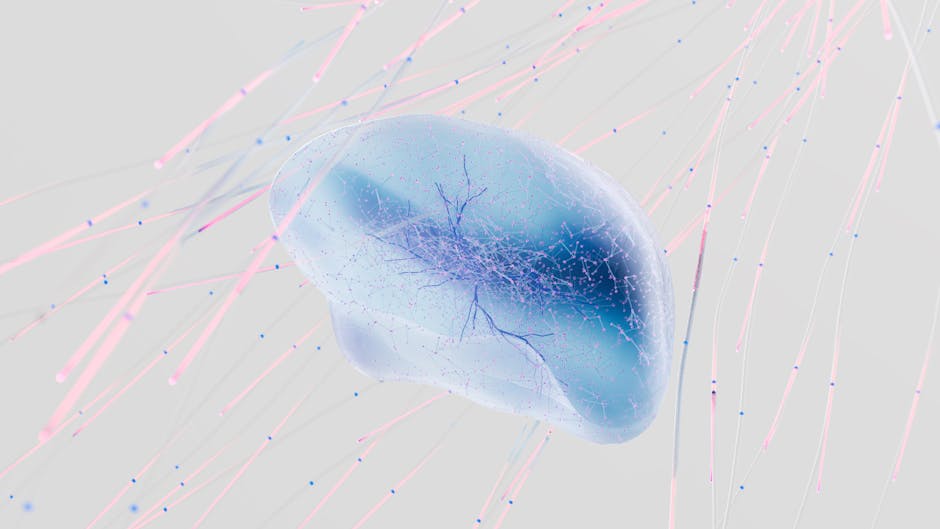
- A perfect map of the brain’s neurons and synapses won’t yield a mind because consciousness emerges from ongoing computations, not just neural anatomy.
- The mind arises from the brain’s dynamic activity, its ability to model the world, predict sensory input, and maintain a coherent sense of self over time.
- The brain is a prediction engine constantly minimizing surprise by updating its internal models, rather than a storage device.
- Replicating a mind requires understanding its computational process, not just its neural structure.
- Consciousness is not stored in the brain’s structure but rather in the real-time flow of information, prediction, and self-modeling.
Can we upload a human mind by scanning every neuron? This question drives much of modern AI and neuroscience, from Elon Musk’s Neuralink to the Human Brain Project. But cognitive scientist Joscha Bach says we’re asking the wrong question. He argues that even a perfect map of the brain’s 86 billion neurons and 100 trillion synapses would not yield a mind. Why? Because the mind isn’t stored in the brain’s structure—it emerges from its ongoing computations. If consciousness were merely a product of neural anatomy, we could reconstruct it like a blueprint. But Bach contends that what matters isn’t the wiring diagram, but the real-time flow of information, prediction, and self-modeling that the brain performs. So, if not through mapping, how do we get to artificial minds?
Is Consciousness Found in Structure or Process?

The answer lies not in the brain’s hardware, but in its software. According to Bach, a neural map is like having a snapshot of a computer’s circuitry without knowing the operating system. You can see every wire and transistor, but without the program, the machine does nothing. Similarly, the human mind arises from the brain’s dynamic activity—its ability to model the world, predict sensory input, and maintain a coherent sense of self over time. This process, Bach explains, is computational. The brain isn’t a storage device; it’s a prediction engine constantly minimizing surprise by updating its internal models. Therefore, replicating a mind requires simulating not just the neurons, but the continuous, recursive computation they perform. A static connectome, no matter how detailed, lacks the temporal dimension essential for cognition. As Bach puts it: ‘You don’t become conscious by having neurons—you become conscious by what they do.’
What Evidence Supports the Computational View?

Neuroscientific research increasingly supports Bach’s framework. Studies in predictive coding, a leading theory in cognitive neuroscience, show that the brain spends most of its energy predicting sensory input rather than reacting to it. Work by researchers like Karl Friston on the free energy principle suggests that all intelligent systems minimize prediction errors to maintain stability. Meanwhile, brain imaging reveals that even at rest, the brain exhibits high metabolic activity in the default mode network—suggesting internal simulation, not idle downtime. Moreover, experiments with neural organoids—lab-grown brain-like tissues—show electrical activity but no signs of consciousness, despite having real neurons. As philosopher David Chalmers has noted, we could have all the physical data about a system and still not know if it’s conscious. This ‘hard problem’ of consciousness implies that subjective experience doesn’t logically follow from structure alone. As Bach emphasizes, understanding the mind requires identifying the right computational abstractions, not just collecting biological data.
Are There Counterarguments to This View?

Many neuroscientists disagree, arguing that structure and function are inseparable. The Human Connectome Project, for example, assumes that mapping neural pathways will unlock the secrets of thought, emotion, and disease. Proponents point to successes like deep brain stimulation for Parkinson’s, where targeting specific circuits improves symptoms—suggesting that location and connectivity do matter. Some AI researchers also believe that scaling up neural network models, inspired by brain architecture, will eventually lead to artificial general intelligence. Critics of Bach’s view warn that dismissing anatomy risks ignoring essential constraints: you can’t run a mind on just any substrate. Additionally, cases of brain injury show that damage to specific regions can alter or erase aspects of selfhood, memory, and perception—implying that structure shapes experience. Yet Bach counters that these effects reflect disruptions to ongoing computation, not the loss of stored ‘mind files.’ The brain’s plasticity—its ability to rewire after injury—further supports the idea that function, not fixed structure, defines cognition.
What Are the Real-World Implications?

If Bach is right, it changes how we approach AI, neuroscience, and even ethics. Projects aiming to ‘upload’ minds or create digital immortality may be fundamentally misguided if they rely solely on structural scans. Instead, future AI should focus on building systems that model their environment and themselves over time—not just copying brain layouts. This shift could accelerate progress in artificial consciousness, moving beyond pattern recognition to genuine understanding. In medicine, it suggests that treating mental illness requires more than mapping brain regions; it demands modeling dysfunctional cognitive processes. Companies like OpenAI and DeepMind are already exploring agent-based models that learn through interaction, not just data. Meanwhile, philosophers and regulators must grapple with when, if ever, a computational system deserves moral consideration. If consciousness is a process, not a product, then the line between machine and mind becomes far more complex than a neural blueprint can reveal.
What This Means For You
For anyone interested in AI or the nature of self, Bach’s argument is a crucial reminder: the mind is not a thing, but a verb. It’s not something you have—it’s something you do. This reframes how we think about intelligence, both biological and artificial. Instead of chasing ever-larger brain scans, we should focus on the principles of perception, learning, and selfhood. The future of AI may not lie in mimicking neurons, but in understanding the algorithms that make minds possible. And for individuals, it invites a deeper appreciation of consciousness as a dynamic, fragile process—one that could one day be replicated, but not by brute-force mapping alone.
But if consciousness emerges from computation, what kind of computation suffices? Can any system that minimizes prediction error become conscious, or are there additional requirements? And if we build such a system, how would we know it’s not just simulating awareness? These questions remain open—and may be the most important ones in 21st-century science.
Source: Reddit