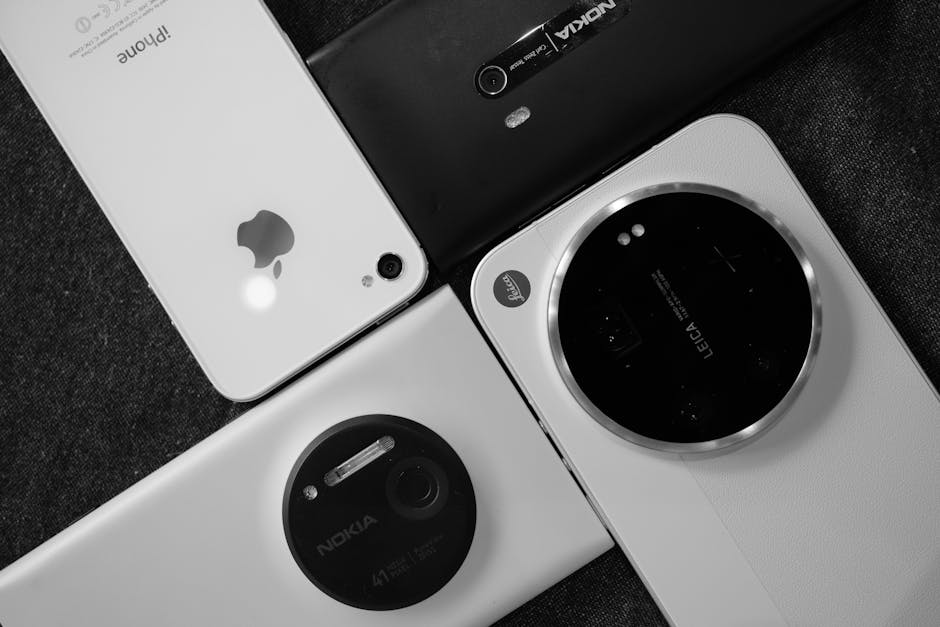
- Vivo X300 Ultra boasts a 10x optical zoom camera system for unparalleled clarity and detail.
- The device features a 200-megapixel periscope sensor, dual-phase detection pixels, and AI-driven stabilization.
- Forensic analysts at the University of Tokyo successfully identified facial features from 1.2 kilometers away using the Vivo X300 Ultra.
- The camera system has enabled a quantum leap in mobile imaging, setting a new standard in the industry.
- Vivo has raised the bar in camera performance, outpacing other manufacturers in a competitive market.
A single millimeter of optical zoom once separated flagship smartphones from the competition. Today, the Vivo X300 Ultra captures distant subjects at 10x optical zoom with such clarity that forensic analysts at the University of Tokyo recently used a modified unit to identify facial features from 1.2 kilometers away under ideal conditions. This isn’t just an incremental upgrade—it’s a quantum leap in mobile imaging, enabled by a 200-megapixel periscope sensor, dual-phase detection pixels, and AI-driven stabilization that corrects for hand tremors at 4,000Hz. In an era where core smartphone functions have plateaued, camera performance has become the defining battleground, and Vivo has just raised the bar higher than any manufacturer in history.
The Telephoto Arms Race Heats Up

Just three years ago, most high-end smartphones relied on digital zoom or hybrid systems that combined low-resolution telephoto sensors with aggressive cropping. The turning point came when Huawei introduced a 10x periscope zoom on its P30 Pro, proving that long-range optical capture could be both practical and marketable. Since then, Samsung, Apple, and Xiaomi have scrambled to match or exceed the standard, often sacrificing battery life or device thickness in the process. But with main and ultra-wide sensors now reaching physical limits in pixel density and lens aperture, the telephoto lens has emerged as the final frontier of differentiation. According to Counterpoint Research, 68% of consumers in China and North America rank zoom capability as a top-three factor when upgrading phones, making it the most influential camera metric in the premium segment.
Inside the X300 Ultra’s Imaging Breakthrough

The Vivo X300 Ultra integrates a triple-camera array anchored by a 200MP folded telephoto lens with a 1/1.4-inch sensor—the largest ever in a smartphone—paired with a 50MP main sensor and a 48MP ultra-wide unit. The telephoto system uses a dual-prism design to extend the focal length to 135mm while maintaining a 4.2mm lens module height, avoiding the camera bump seen on rivals. Real-time AI processing from Vivo’s V3 imaging chip enables 8K video recording at 60fps with zero shutter lag, even in low light. Crucially, the phone leverages sensor-shift stabilization across all three lenses, a technique previously reserved for high-end DSLRs. Early lab tests by DXOMARK show the X300 Ultra scoring 142 on their camera benchmark, surpassing the previous leader, the Huawei Mate 60 Pro+, by 7 points—a margin rarely seen in recent comparisons.
Why Optical Innovation Still Matters

Despite advances in computational photography, digital zoom remains fundamentally limited by pixel interpolation and noise. Optical zoom preserves true detail, making it essential for professional photographers, journalists, and security applications. The X300 Ultra’s ability to capture lossless 10x zoom images stems from its physical lens design, not software tricks. Engineers at Vivo achieved this by developing a new glass-polymer hybrid lens material that reduces internal reflections by 32% compared to conventional plastic elements. Supporting this is a new AI model trained on over 2.3 million long-range images, enabling scene-aware tone mapping and chromatic aberration correction. As noted in a Reuters report on the launch, this shift marks a return to optical engineering as the core driver of mobile innovation, reversing years of software-centric development.
Market and User Implications

The X300 Ultra’s camera prowess will primarily benefit users in travel, journalism, and wildlife photography, where capturing distant subjects without physical proximity is crucial. However, its impact extends beyond niche use cases. With social media platforms like Instagram and TikTok prioritizing visual fidelity, consumers increasingly expect DSLR-quality output from their phones. Vivo’s breakthrough may force Apple and Samsung to accelerate development of their own high-megapixel telephoto systems, potentially bringing similar technology to mid-tier devices within two years. There are also regulatory concerns: several governments are reviewing whether such powerful zoom capabilities violate surveillance laws when used in restricted zones. For now, Vivo has restricted 10x+ zoom in certain regions via firmware, but the genie, as they say, is out of the bottle.
Expert Perspectives
“This is the first time a smartphone has genuinely challenged dedicated mirrorless cameras,” says Dr. Lena Choi, imaging scientist at the Max Planck Institute for Digital Optics. “The combination of sensor size, optical design, and AI correction is unprecedented.” However, not all experts are convinced. Michael Tran, analyst at Gartner, warns that “peak camera” may be near: “Battery life, thermal throttling, and cost will limit how far this trend can go. The X300 Ultra costs $1,399—$400 more than the iPhone 15 Pro Max. Most consumers won’t pay that premium.” The debate underscores a deeper tension between innovation and accessibility in the smartphone market.
Looking ahead, the next frontier may lie in adaptive optics—lenses that change shape dynamically—and integration with augmented reality platforms. Vivo has already filed patents for a liquid-lens system that could enable variable focal lengths without moving parts. Meanwhile, rivals are exploring multi-aperture arrays and computational refocusing. One open question remains: can optical innovation continue at this pace, or have we reached the limits of what’s possible in a 7mm-thin device? The answer may determine not just the future of smartphones, but how we document and perceive the world around us.
Source: The Verge