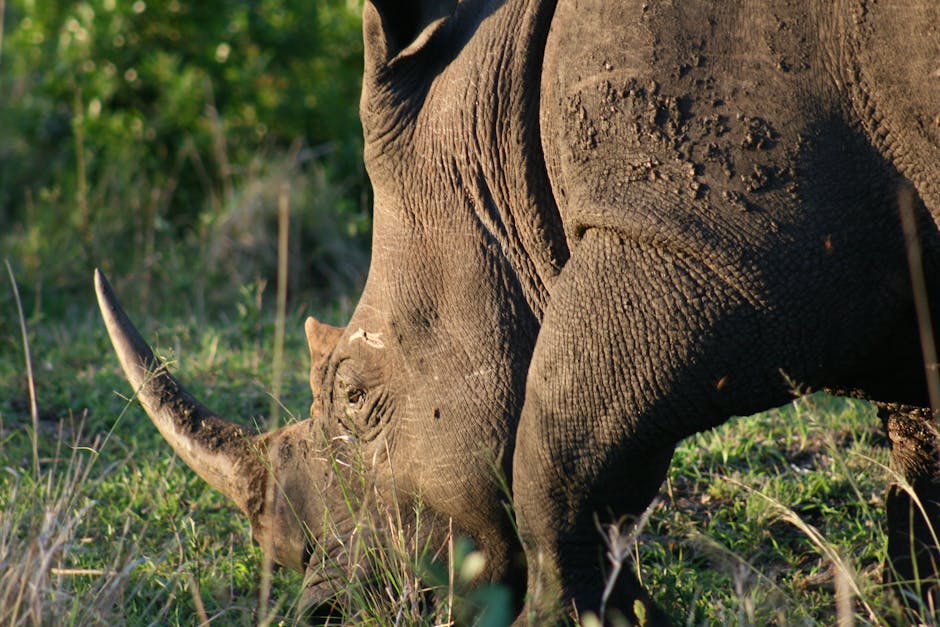
- South African police killed five suspected rhino poachers in Kruger National Park during an armed confrontation.
- The incident highlights the increasingly common use of lethal force by park rangers and police in the fight against wildlife crime.
- Rhino populations are under pressure from illegal hunting driven by demand for horns, leading to a high-stakes conflict between conservation authorities and organized poaching networks.
- The use of lethal force by law enforcement has become a contentious tactic in South Africa’s conservation efforts.
- The incident reflects a broader strategy in South Africa, where wildlife protection has merged with paramilitary operations.
Why did South African police kill five suspected rhino poachers in Kruger National Park, and what does this say about the country’s fight against wildlife crime? The incident, which unfolded in one of Africa’s most iconic protected areas, has drawn global attention to the high-stakes conflict between conservation authorities and organized poaching networks. With rhino populations under relentless pressure from illegal hunting driven by demand for horns, the use of lethal force by park rangers and police has become a controversial but increasingly common tactic. As the world watches, the question is no longer just about how to save rhinos, but at what cost.
The Escalation of Force in Conservation

South African authorities confirmed that the five men were killed during an armed confrontation in Kruger National Park, Africa’s largest game reserve, after they opened fire on an anti-poaching unit. According to statements from the South African Police Service (SAPS), the suspects were part of an organized poaching syndicate attempting to infiltrate the park under cover of darkness, equipped with high-powered rifles and night-vision gear. The police unit returned fire in self-defense, resulting in the deaths of all five suspects. This incident reflects a broader strategy in South Africa, where wildlife protection has increasingly merged with paramilitary operations, blurring the lines between conservation and law enforcement. With over 10,000 rhinos poached across Africa in the past decade, South Africa—the home to 80% of the continent’s rhino population—has taken an aggressive stance to deter illegal hunting.
Supporting Evidence from Conservation and Security Reports

Data from TRAFFIC, the wildlife trade monitoring network, shows that rhino poaching in South Africa peaked in 2014 with 1,215 animals killed but has since declined due to intensified anti-poaching measures, including aerial surveillance, sniffer dogs, and rapid-response units. In 2023, 451 rhinos were poached nationwide, a significant decrease yet still a critical threat to the species’ survival. Kruger National Park remains the epicenter of the crisis, accounting for more than 70% of all poaching incidents. According to BBC News reporting, the park has seen a resurgence in poaching activity linked to transnational criminal networks exploiting economic instability and porous borders. Park officials assert that many poachers are armed and dangerous, often affiliated with larger syndicates that traffic horns to Asian markets, where they are falsely believed to have medicinal properties. SAPS has defended its actions, stating that officers are trained to use force only when their lives are in danger.
Counter-Perspectives on Lethal Conservation Tactics

While authorities defend the use of lethal force as necessary for protecting both wildlife and rangers, human rights organizations have raised concerns about extrajudicial killings and the lack of transparency in such operations. Amnesty International and local watchdogs like the Centre for Environmental Rights have called for independent investigations into anti-poaching shootings, warning that suspects are often killed without arrest or trial. Critics argue that some poachers are impoverished local individuals recruited by criminal networks, rather than hardened militants, and that socio-economic interventions—such as community-based conservation programs and alternative livelihoods—could be more effective long-term solutions. There is also growing concern that militarizing conservation risks alienating nearby communities whose cooperation is essential for intelligence gathering and sustainable protection of biodiversity.
Real-World Impact on Wildlife and Local Communities

The killing of the five poachers underscores the high tension along the borders of Kruger National Park, where more than 50 rangers have died in the line of duty since 2003. On one hand, the incident may deter other poaching attempts, sending a strong message that infiltration will be met with deadly resistance. On the other hand, it could deepen mistrust between conservation authorities and rural populations who feel excluded from the benefits of wildlife tourism and land use. In surrounding areas, unemployment exceeds 40%, creating fertile ground for recruitment by poaching syndicates. Successful models in places like Namibia show that empowering local communities through conservancy programs can reduce poaching more sustainably than force alone. Yet, in South Africa, scaling such initiatives remains a challenge amid political and logistical hurdles.
What This Means For You
For global citizens, this event is a stark reminder that the survival of endangered species like the rhino is entangled with complex issues of crime, poverty, and governance. Supporting conservation doesn’t just mean donating to wildlife funds—it also means advocating for ethical policies that balance ecological protection with human rights. As consumers, being aware of illegal wildlife products and opposing demand is crucial. This incident in Kruger reflects a global dilemma: how to protect nature without compromising justice. There are no easy answers, but informed public discourse can push for more humane and effective solutions.
As South Africa continues its battle against poaching, a critical question remains: Can wildlife conservation succeed through force alone, or does long-term protection require addressing the root causes of poaching—poverty, inequality, and transnational crime? The fate of the rhino may ultimately depend not just on bullets and borders, but on whether societies choose inclusion over confrontation.
Source: Citizen