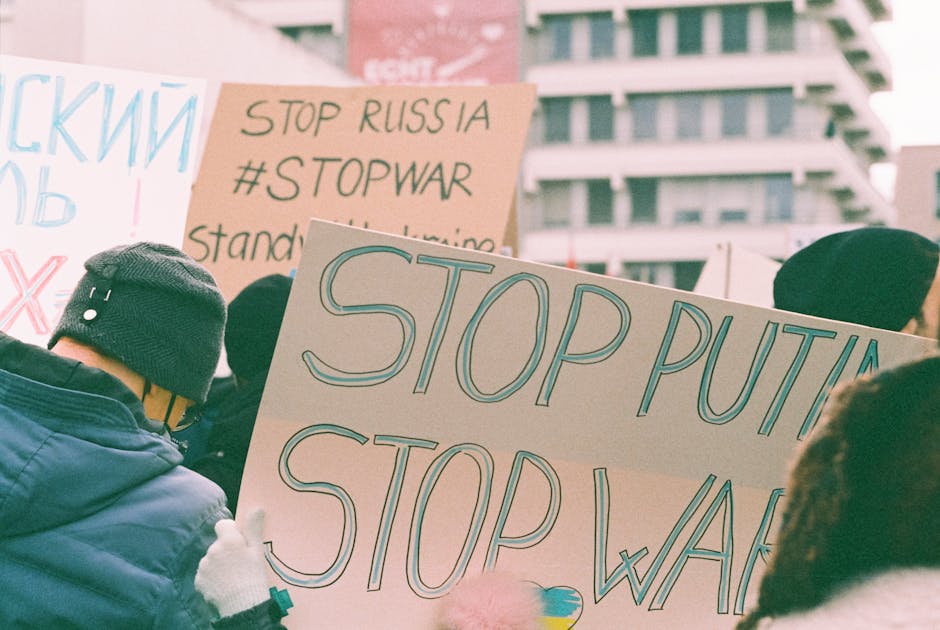
- Russian President Vladimir Putin claims the Ukraine conflict is nearing its end, sparking debate and scrutiny.
- Putin’s statement doesn’t signal a ceasefire or defeat, but rather a strategic shift in perception and diplomacy.
- The war has seen continued violence and mobilization, contradicting Putin’s optimistic assessment.
- Putin’s remarks may be aimed at boosting domestic morale and testing Western unity.
- The Kremlin has historically used downplayed setbacks to influence global perception and fracture NATO’s support for Ukraine.
Is the war in Ukraine truly nearing its end, as Russian President Vladimir Putin recently claimed? That question has sparked fierce debate among policymakers, military analysts, and global observers. Speaking at a press conference following talks with visiting leaders from Africa, Putin stated that he believes the conflict is “coming to an end,” suggesting that negotiations may soon take precedence over combat. Yet, artillery fire still echoes in Donetsk, Ukrainian drones strike deep inside Russian territory, and both sides continue to mobilize troops. If an end is in sight, why does the violence persist? And what does Putin’s statement reveal about Moscow’s actual assessment of the war’s trajectory—strategic confidence, political posturing, or a signal for diplomatic maneuvering?
What Putin’s Statement Actually Means

When Putin says the conflict is “coming to an end,” he is not announcing a ceasefire or admitting defeat. Instead, his remarks appear calibrated to shape global perception amid a grinding war of attrition. Since the full-scale invasion began in February 2022, Russian leadership has consistently downplayed setbacks while projecting inevitability. By suggesting the war is nearing closure, Putin may be attempting to signal strength to domestic audiences while probing Western unity. The Kremlin has long sought to fracture NATO’s support for Ukraine by implying that continued aid is futile. At the same time, the statement could reflect a genuine, if optimistic, assessment that Ukraine’s military capacity is nearing its limit—especially as U.S. aid faced delays in Congress. However, no formal peace talks are imminent, and Kyiv has repeatedly stated it will not negotiate while Russian forces occupy Ukrainian territory.
Evidence from the Battlefield and Intelligence Reports

Despite Putin’s assertions, the reality on the ground tells a different story. According to the Institute for the Study of War (ISW), Russian and Ukrainian forces remain locked in intense combat across the eastern Donetsk and Zaporizhzhia regions, with incremental gains and losses on both sides. In recent weeks, Ukrainian forces have launched cross-border raids into Russia’s Kursk and Belgorod regions, signaling their ability to project force beyond their borders. Meanwhile, Western intelligence agencies, including the U.S. Department of Defense, assess that Russia has not achieved its core strategic objectives and continues to suffer high casualty rates—estimated at over 300,000 personnel, according to British officials. A Reuters report from April 2024 documented ongoing Russian bombardments of Kharkiv and Odesa, undermining claims of de-escalation. Satellite imagery also shows continued fortification and troop buildup along the front lines, hardly the behavior of a nation preparing to wind down a war.
Alternative Views: Is Putin Laying Groundwork for Negotiations?

Some analysts argue that Putin’s comment may not be mere bravado but a subtle opening for future diplomacy. As the war enters its third year, fatigue is palpable in both societies—Russia faces economic strain from sanctions and a shrinking workforce, while Ukraine contends with immense human and infrastructural costs. Charles Kupchan of the Council on Foreign Relations suggests that Putin could be testing the waters for a negotiated settlement that preserves Russian gains in Donbas and Crimea while allowing Moscow to save face. Others caution that any talks would likely exclude Ukraine’s core demands: the restoration of its territorial integrity and accountability for war crimes. Ukrainian President Volodymyr Zelenskyy has consistently rejected negotiations under current conditions. Moreover, Russia’s past use of ceasefires to regroup—such as during the 2023 pause in Bakhmut—casts doubt on the sincerity of any overtures toward peace.
Global and Regional Consequences of a Prolonged War

The continuation of the war, regardless of Putin’s rhetoric, has far-reaching implications. NATO has accelerated defense spending and expanded membership, with Sweden officially joining in March 2024. Meanwhile, Ukraine’s bid for EU membership has gained momentum, symbolizing a deeper geopolitical realignment. Economically, global energy and grain markets remain vulnerable to disruptions, particularly if Russia restricts Black Sea exports again. For ordinary Ukrainians, the human toll is staggering: over 30,000 civilian casualties documented by the UN, millions displaced, and cities like Mariupol still in ruins. On the Russian side, an exodus of skilled workers and a growing reliance on authoritarian control suggest internal fragility despite outward displays of unity. Any resolution—or frozen conflict—will shape European security for decades.
What This Means For You
Putin’s declaration should be understood not as a sign of peace but as a strategic message embedded in a broader information war. For global citizens, it underscores the importance of scrutinizing official narratives, especially in ongoing conflicts where truth is often weaponized. The war’s duration affects energy prices, inflation, and international stability—issues that touch everyday lives. Supporting fact-based reporting and diplomatic accountability remains crucial. While diplomacy is always preferable to war, peace built on coercion or territorial concession risks future instability.
As the world watches for signs of de-escalation, a critical question remains: What conditions would constitute a just and lasting peace in Ukraine? Is a negotiated settlement possible without addressing issues of sovereignty, justice, and reparations? And how can the international community ensure that any peace process includes the voices of those most affected—the Ukrainian people?
Source: CNBC