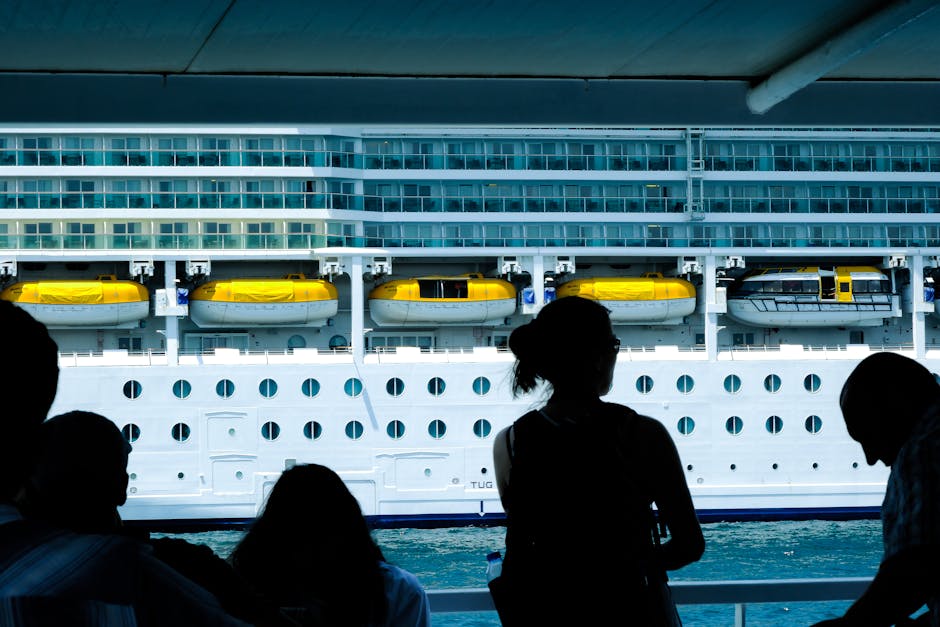
- A confirmed hantavirus case on a cruise ship has prompted emergency public health measures in Tenerife, Spain.
- The outbreak raises concerns about airborne transmission and secondary infections in confined maritime environments.
- Passengers and select crew are being screened under strict medical supervision before disembarkation.
- Contact tracing, isolation protocols, and environmental decontamination are being coordinated to prevent community spread.
- The hantavirus strain on the cruise ship is a variant of Puumala virus, typically spread by bank voles.
Executive summary — a confirmed case of hantavirus aboard a cruise ship carrying more than 140 people has triggered emergency public health measures after its arrival in Tenerife, part of Spain’s Canary Islands. The outbreak, though currently limited to one confirmed case, raises concerns about airborne transmission and secondary infections in confined maritime environments. With passengers and select crew preparing to disembark under strict medical supervision, Spanish and regional health authorities are coordinating contact tracing, isolation protocols, and environmental decontamination to prevent community spread on the popular tourist archipelago.
Confirmed Case and Passenger Exposure Levels

Spanish health officials confirmed a single active case of hantavirus infection in a 52-year-old male passenger who developed fever, muscle aches, and respiratory distress mid-voyage. The patient, originally from northern Germany, had no prior travel history to known rural hantavirus-endemic zones, suggesting onboard transmission. Of the 143 individuals aboard — including 118 passengers and 25 crew — 37 have reported mild flu-like symptoms, with 12 flagged for immediate isolation upon docking. Polymerase chain reaction (PCR) testing conducted by the Canary Island Epidemiology Service identified the pathogen as a strain of Puumala virus, a variant of hantavirus typically spread by bank voles and associated with nephropathia epidemica. While person-to-person transmission of hantavirus remains rare, the close quarters, shared ventilation, and prolonged exposure aboard the vessel elevate risks. The World Health Organization notes that hantaviruses have an incubation period of 1–8 weeks, meaning additional cases may emerge in the coming days, particularly among those sharing cabins or common areas with the index patient.
Key Health and Maritime Authorities Respond

Spain’s Ministry of Health, in coordination with the Canary Islands’ Department of Public Health and the European Centre for Disease Prevention and Control (ECDC), has mobilized a rapid response unit to manage the situation. The cruise vessel, identified as the MS *Ocean Whisper*, operated by Helsinki-based Nordica Cruises, was rerouted from its original itinerary in the eastern Atlantic after initial symptoms were reported near Madeira. Upon arrival at the Port of Santa Cruz de Tenerife, biohazard teams in personal protective equipment conducted thermal screenings and symptom assessments for all on board. The infected individual has been transferred to the University Hospital Nuestra Señora de Candelaria, which has activated its high-consequence infectious disease unit. Meanwhile, the cruise line has suspended all voyages for its three-vessel fleet pending an investigation into possible rodent infestation. According to the World Health Organization, hantavirus pulmonary syndrome has a fatality rate of up to 40% in severe cases, underscoring the urgency of containment.
Public Health Risks and Tourism Implications

The outbreak presents a complex interplay of epidemiological risk and economic consequence, particularly for the Canary Islands, which welcomed over 16 million tourists in 2023 and relies heavily on cruise tourism. While hantavirus is not typically transmitted through casual contact, its potential for airborne spread in enclosed spaces — especially via aerosolized rodent excreta — complicates mitigation efforts. Health officials must balance transparency with the risk of unwarranted panic that could damage regional tourism. Decontamination of the ship’s lower decks and ventilation systems is underway, supervised by Spain’s National Institute for Occupational Safety and Health. For passengers, the primary trade-off lies in quarantine duration versus risk of delayed symptom onset; currently, all disembarking individuals are required to submit daily health reports for 21 days. On the economic front, Nordica Cruises faces mounting liability concerns, including potential lawsuits and insurance claims, while local businesses in Tenerife brace for reputational fallout despite no community transmission being reported.
Why the Timing Raises Red Flags

This incident arrives at a sensitive moment for global health security, just months after the World Bank and WHO jointly warned of rising zoonotic spillover risks linked to climate change and increased human encroachment on wildlife habitats. The hantavirus case aboard the MS *Ocean Whisper* is unusual not only for its maritime setting but also because most prior outbreaks have occurred in rural or forested inland regions, not on commercial cruise ships. Experts speculate that warmer sea temperatures and altered migration patterns may have facilitated rodent stowaways in cargo or provisioning supplies. Additionally, post-pandemic travel surges have strained onboard health monitoring systems, with many cruise operators scaling back medical staffing. The timing underscores a broader vulnerability in global transport networks, where pathogens can exploit gaps in surveillance between international jurisdictions.
Where We Go From Here
In the next six to twelve months, three scenarios could unfold: first, containment succeeds, with no further cases emerging, allowing Tenerife to restore its tourism reputation with enhanced port health checks. Second, secondary infections appear among passengers or crew after disembarkation, triggering localized quarantines across multiple European countries and prompting the ECDC to issue new maritime biosecurity guidelines. Third, the incident catalyzes a regulatory overhaul, with the International Maritime Organization proposing mandatory rodent control audits and onboard PCR testing for all long-haul cruise vessels. Each scenario hinges on the effectiveness of current contact tracing and the genetic sequencing of the viral strain to confirm transmission pathways. Public trust in cruise travel remains fragile, and how authorities manage transparency will shape the industry’s recovery trajectory.
Bottom line — while the hantavirus outbreak aboard the MS *Ocean Whisper* remains limited, it exposes critical vulnerabilities in maritime public health infrastructure and demands coordinated, science-led responses to prevent future zoonotic crises in high-density travel environments.
Source: MedicalXpress