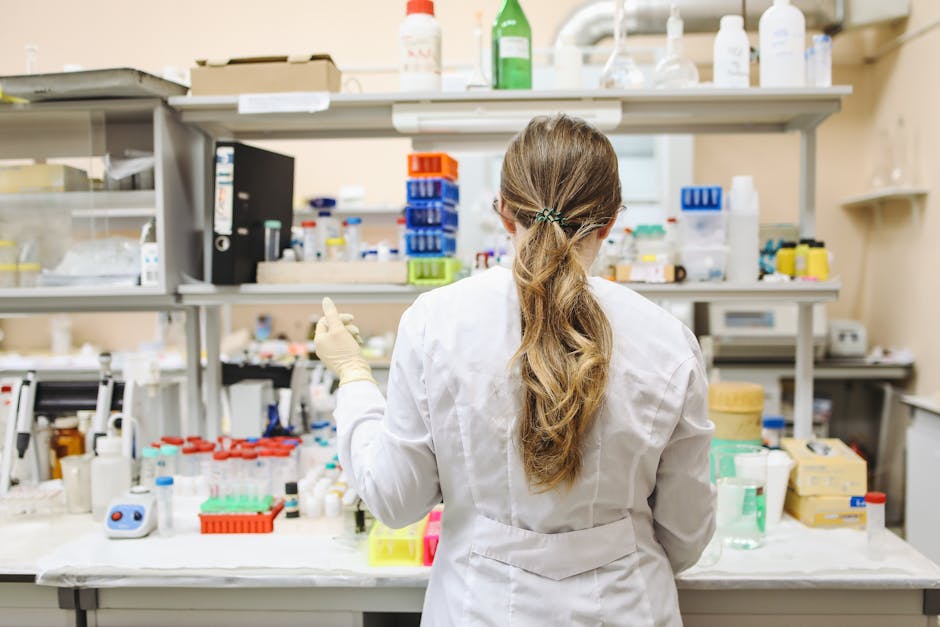
- The World Health Organization has launched the Global Forum of Collaborating Centres, a network of over 800 institutions from 80+ countries.
- This partnership represents one of the largest and most diverse scientific alliances in the world, focusing on various public health fields.
- The Global Forum aims to promote unified intelligence, shared standards, and renewed purpose in global public health.
- The network will address pressing issues like pandemic surveillance, antimicrobial resistance, mental health policy, and environmental toxicology.
- The WHO Collaborating Centres will work together to confront the next era of public health challenges.
In a sun-drenched auditorium at WHO headquarters in Geneva, the air hummed with quiet urgency. Scientists in lab coats mingled with public health officials in crisp suits, exchanging notes in half a dozen languages. Laptops flickered with data dashboards tracking disease outbreaks, vaccine equity metrics, and climate-health correlations. For the first time in its nearly 75-year history, the World Health Organization had summoned the full breadth of its most vital scientific network: the WHO Collaborating Centres. Over 800 institutions from more than 80 countries—ranging from tropical disease labs in Senegal to air quality research hubs in South Korea—had converged for the inaugural Global Forum of Collaborating Centres. This was not merely a meeting; it was the unveiling of a global brain trust, assembled to confront the next era of public health with unified intelligence, shared standards, and renewed purpose.
The Largest Public Health Scientific Network Unites

The Global Forum of Collaborating Centres marks a pivotal moment in international health coordination. With over 800 designated institutions involved, this network represents one of the most extensive and technically diverse scientific alliances in the world. These centres—officially designated by the WHO to support its mission—operate in fields ranging from pandemic surveillance and antimicrobial resistance to mental health policy and environmental toxicology. At the forum, participants agreed on a framework to standardize data reporting, enhance cross-border research protocols, and streamline technical assistance to low-resource countries. A central outcome was the Geneva Declaration on Collaborative Science, which commits centres to open-access publishing, equitable partnerships, and rapid knowledge sharing during health emergencies. According to WHO Director-General Dr. Tedros Adhanom Ghebreyesus, the event signals a “quantum leap” in the organization’s ability to translate science into action. The forum also launched a digital platform to map expertise and capacity across the network in real time, enabling faster deployment during crises such as disease outbreaks or natural disasters. More than 300 new collaborative projects were initiated during the three-day summit.
Decades of Fragmented Efforts, Now Aligned

The creation of this forum is the culmination of decades of incremental collaboration, often hindered by siloed funding, geopolitical competition, and inconsistent communication. The first WHO Collaborating Centre was established in 1949 at the Pasteur Institute in Paris, focused on influenza surveillance. Over time, the network grew organically, with institutions applying for designation based on regional needs and scientific excellence. By the early 2000s, over 600 centres existed, yet coordination remained ad hoc. During the 2014 Ebola crisis, for instance, multiple centres conducted parallel diagnostics research without shared protocols, delaying consensus on best practices. The shortcomings were further exposed during the early months of the COVID-19 pandemic, when disparities in testing standards and data transparency hampered global response efforts. These experiences underscored the need for a formal, inclusive governance structure. The idea for a global forum gained momentum in 2022 during the WHO’s Executive Board meetings, where member states repeatedly called for stronger integration of scientific assets. Two years of planning followed, culminating in the historic gathering in Geneva.
The Architects of Global Health Collaboration

Behind this landmark initiative are scientists, policymakers, and administrators who have long championed the power of collective knowledge. Dr. Maha El-Khayat, a Syrian epidemiologist and head of the WHO’s Office for Scientific Partnerships, played a central role in designing the forum’s agenda, emphasizing inclusivity and equity. “We cannot have global health driven only by institutions in high-income countries,” she stated during a panel on capacity building. Leaders from institutions such as the U.S. Centers for Disease Control and Prevention, the Kenya Medical Research Institute, and Japan’s National Institute of Infectious Diseases contributed to shaping the forum’s technical frameworks. Notably, young researchers from underrepresented regions were given prominent speaking roles, reflecting a deliberate shift toward intergenerational and geographically balanced leadership. Funders, including the European Commission and the Bill & Melinda Gates Foundation, have signaled increased support for joint proposals emerging from the network, recognizing that the forum could reduce duplication and amplify impact.
Implications for Global Health Governance

The unification of the WHO’s Collaborating Centres has far-reaching consequences for public health systems worldwide. Countries with limited research infrastructure will gain faster access to expertise, training, and diagnostic tools through structured north-south and south-south partnerships. The harmonization of lab standards and data formats promises to improve the reliability of global health metrics, from vaccine coverage to antibiotic resistance trends. In emergency scenarios, the network can now activate within hours, deploying mobile labs or digital modeling teams to hotspots. For global agencies, this forum strengthens legitimacy by demonstrating a functional, science-driven multilateral mechanism. Pharmaceutical regulators may also benefit, as synchronized clinical trial oversight could accelerate the approval of life-saving treatments. However, challenges remain—particularly in securing sustained funding and ensuring that intellectual property agreements do not disadvantage low-income partners.
The Bigger Picture
This forum is more than an administrative milestone; it reflects a fundamental reimagining of how global health knowledge is produced and shared. In an age of converging crises—pandemics, climate change, rising antimicrobial resistance—the old model of isolated research silos is untenable. The WHO’s move to integrate its scientific network signals a commitment to open, agile, and equitable science. It also positions the organization as a conductor of global expertise, rather than merely a coordinator of responses. As climate-related diseases spread and new pathogens emerge, the value of a unified, real-time scientific alliance cannot be overstated.
What comes next is implementation. The success of this forum will be measured not by declarations, but by the speed of outbreak responses, the equity of vaccine development, and the inclusion of marginalized voices in global health discourse. The machinery of collaboration is now in motion—but its true test lies in the crises yet to come.
Source: WHO