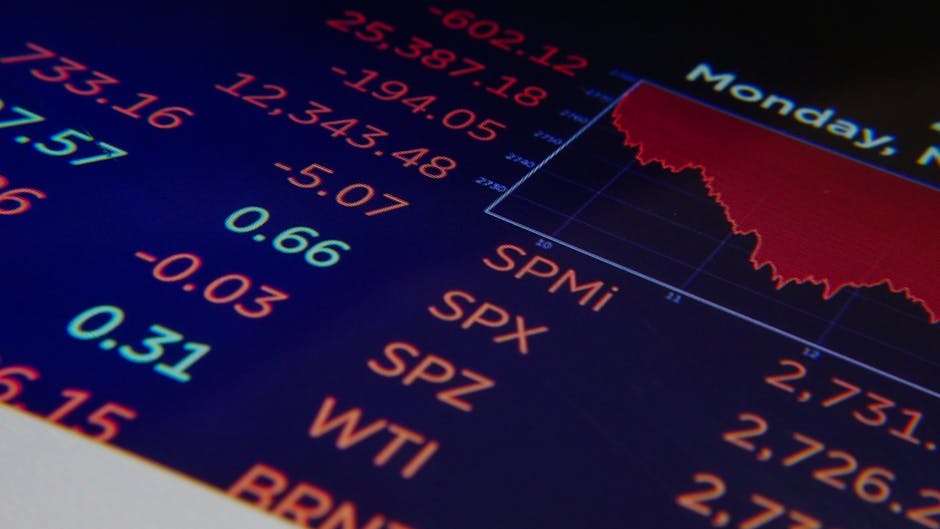
- Financial systems must process transactions worth millions in milliseconds to avoid massive losses.
- Production engineering plays a critical role in ensuring trading platforms remain available and consistent under extreme load.
- The rise of high-frequency trading has transformed the role of engineering in finance, demanding nanosecond advantages.
- Firms invest heavily in low-latency networks, in-memory databases, and custom hardware to gain competitive edges.
- The stakes are high, with a single outage or latency spike potentially costing over $100 million.
Every second, financial markets process transactions worth millions of dollars—systems must execute, verify, and settle trades in milliseconds. A single outage or latency spike can cost firms over $100 million in missed opportunities or erroneous trades. At the heart of this high-stakes environment lies production engineering: the discipline ensuring that trading platforms remain available, consistent, and scalable under extreme load. As global trading volume surpasses $6 trillion daily in foreign exchange alone, according to the Bank for International Settlements, the infrastructure supporting these operations must function like precision timepieces—operating flawlessly under relentless pressure and unanticipated market shocks.
The Rise of Real-Time Financial Infrastructure

The shift from floor-based trading to fully digital, algorithm-driven markets has fundamentally transformed the role of engineering in finance. Where speed once meant seconds or minutes, it now means microseconds. High-frequency trading (HFT) firms deploy algorithms that analyze market data and execute orders faster than humanly possible, often holding positions for less than a second. This evolution has elevated production engineering from a support function to a core strategic capability. Firms now invest heavily in low-latency networks, in-memory databases, and custom hardware such as FPGAs (field-programmable gate arrays) to gain nanosecond advantages. The stakes are not just performance—they are about survival in a market where milliseconds determine profitability.
Inside the Engine Room of a Trading Platform

The video presentation titled Production Engineering When Trading Billions of Dollars a Day offers a rare technical deep dive into the architecture powering such systems. Delivered by a senior engineer from a major proprietary trading firm, it outlines how distributed systems manage order routing, risk checks, and execution reporting across global exchanges. One key insight is the implementation of event-driven architecture to decouple services, enabling fault isolation and horizontal scaling. The system processes over 1.5 million messages per second across multiple data centers, using custom-built middleware optimized for minimal jitter. Redundancy, real-time monitoring, and automated failover are embedded at every layer, ensuring uptime exceeds 99.999%—a standard known as ‘five nines’ reliability.
Engineering for Failure, Not Just Performance

What separates elite trading systems is not just speed, but resilience under duress. The presentation emphasizes that production engineers design not for normal operations, but for failure scenarios: network partitions, hardware faults, software bugs, and even erroneous trades triggered by runaway algorithms. Techniques such as circuit breaking, rate limiting, and automated rollback mechanisms are standard. The team employs chaos engineering—intentionally injecting faults into production—to validate system robustness. One revealing example involved a simulated data center outage that triggered automatic rerouting of all trading activity to a backup site within 180 milliseconds, with no missed trades. These practices mirror those used by tech giants like Google and Amazon but are adapted to the unique demands of financial integrity and regulatory compliance.
Impact on Markets and Financial Stability

The sophistication of these systems has broad implications for market structure and stability. On one hand, high-speed infrastructure increases liquidity and reduces spreads, benefiting all participants. On the other, it introduces systemic risks—such as the 2010 Flash Crash, where automated trading exacerbated volatility in a matter of minutes. Regulatory bodies like the SEC and the CFTC have since introduced circuit breakers and stricter oversight of algorithmic trading. Yet, as firms continue to push the limits of speed and scale, regulators struggle to keep pace. The opacity of proprietary trading systems also raises concerns about fairness and transparency, particularly when co-location services allow certain firms to place servers physically closer to exchange matching engines, gaining a time advantage.
Expert Perspectives
Industry experts remain divided on the long-term impact of ultra-high-speed trading systems. Dr. Susan E. Athey, an economist at Stanford who studies digital markets, argues that ‘while automation improves efficiency, it also concentrates power in the hands of those who can afford the most advanced infrastructure.’ Conversely, engineering leaders at firms like Jump Trading and Citadel Securities emphasize that rigorous testing and risk controls prevent destabilizing behavior. As one engineer noted in the Hacker News discussion of the video, ‘the real bottleneck isn’t latency—it’s ensuring correctness under load.’ This philosophical tension between speed and safety continues to shape the evolution of financial technology.
Looking ahead, the convergence of artificial intelligence and real-time trading systems introduces a new frontier. Machine learning models are increasingly used to predict price movements and optimize execution strategies, but their integration into production environments poses fresh challenges in explainability and control. As quantum computing and next-gen networking loom on the horizon, the demands on production engineering will only intensify. The key question remains: can systems evolve fast enough to maintain both performance and trust in an era of unprecedented financial automation?
Source: Youtube