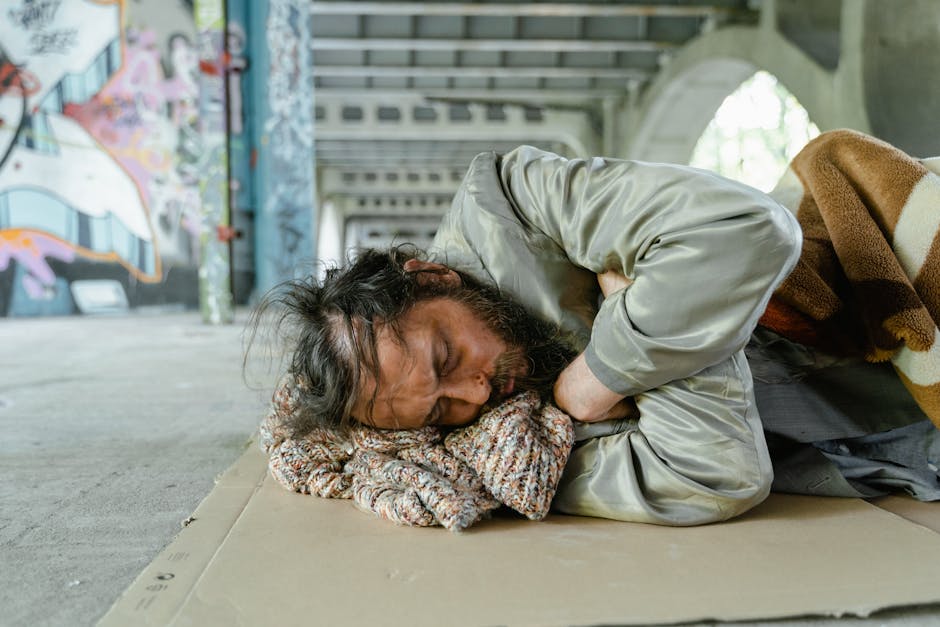
- Australia’s homelessness crisis worsens, with thousands of people forced to sleep rough due to lack of affordable housing.
- Indigenous communities are disproportionately affected, with a higher representation among the homeless population.
- The crisis is particularly pronounced among First Nations people, with inadequate access to safe and affordable housing.
- Homelessness has severe consequences for both physical and mental health, including increased risk of illness and disease.
- A two-year wait for public housing is common, leaving vulnerable individuals like Andrea with little hope for a safe future.
As the sun sets over the city, a sense of desperation settles over the streets, where countless individuals are forced to sleep rough, exposed to the elements and vulnerable to illness. One such person is Andrea, a First Nations woman who has been struggling with septicemia, a life-threatening condition that requires immediate medical attention. Despite her critical condition, Andrea was discharged from the hospital and left to fend for herself on the streets, with a two-year wait for public housing looming ahead.
The Alarming Rise of Homelessness in Australia

The situation is a stark reminder of the alarming rise of homelessness in Australia, where the lack of affordable housing has left thousands of people without a safe place to call home. According to recent statistics, the number of individuals experiencing homelessness has increased significantly over the past year, with many more at risk of falling into the same situation. The crisis is particularly pronounced among indigenous communities, who are disproportionately represented among the homeless population. Andrea’s story is a heartbreaking example of the human cost of this crisis, and the urgent need for safe and affordable housing.
Supporting Evidence: The Devastating Consequences of Homelessness

Studies have consistently shown that homelessness has devastating consequences for both physical and mental health. People experiencing homelessness are at a higher risk of developing chronic illnesses, such as diabetes and heart disease, and are more likely to die prematurely. The situation is further exacerbated by the lack of access to basic necessities like clean water, sanitation, and healthcare. As World Health Organization notes, housing is a fundamental determinant of health, and the absence of safe and affordable housing can have catastrophic consequences. In Andrea’s case, the lack of housing has left her at risk of dying from a treatable condition, a stark reminder of the need for urgent action.
Counter-Perspectives: The Complexity of the Issue

While the need for safe and affordable housing is undeniable, some argue that the issue is more complex than it seems. They point to the need for a comprehensive approach that addresses the root causes of homelessness, including poverty, lack of education, and unemployment. Others argue that the focus should be on providing temporary solutions, such as emergency shelters and outreach services, rather than investing in long-term housing solutions. However, advocates for the homeless argue that these approaches are inadequate and that the only way to truly address the crisis is to provide safe and affordable housing. As The Guardian notes, the lack of housing is a systemic failure that requires a systemic solution.
The Real-World Impact: A Humanitarian Crisis

The impact of homelessness is not limited to the individual; it has far-reaching consequences for the community as a whole. Homelessness can lead to increased crime rates, decreased economic productivity, and a strain on already overburdened healthcare systems. Moreover, the humanitarian crisis that is unfolding on the streets is a stain on the nation’s conscience, a reminder that we are failing our most vulnerable citizens. The story of Andrea, who is facing a two-year wait for public housing despite her life-threatening condition, is a stark reminder of the need for urgent action to address this crisis.
What This Means For You
The crisis of homelessness is not just a distant issue; it has implications for us all. As a society, we have a moral obligation to ensure that everyone has access to safe and affordable housing. The story of Andrea serves as a reminder of the need for compassion, empathy, and understanding. By supporting organizations that provide housing and services to the homeless, we can make a tangible difference in the lives of those who are struggling. Moreover, by advocating for policy changes that address the root causes of homelessness, we can work towards a more equitable and just society.
As we reflect on Andrea’s story, we are left with a haunting question: what will it take for us to prioritize the housing needs of our most vulnerable citizens? Will it take a tragedy, or a concerted effort to address the systemic failures that have led to this crisis? The answer is not clear, but one thing is certain: the time for action is now. We owe it to ourselves, our communities, and our humanity to ensure that everyone has a safe place to call home.
Source: The Guardian