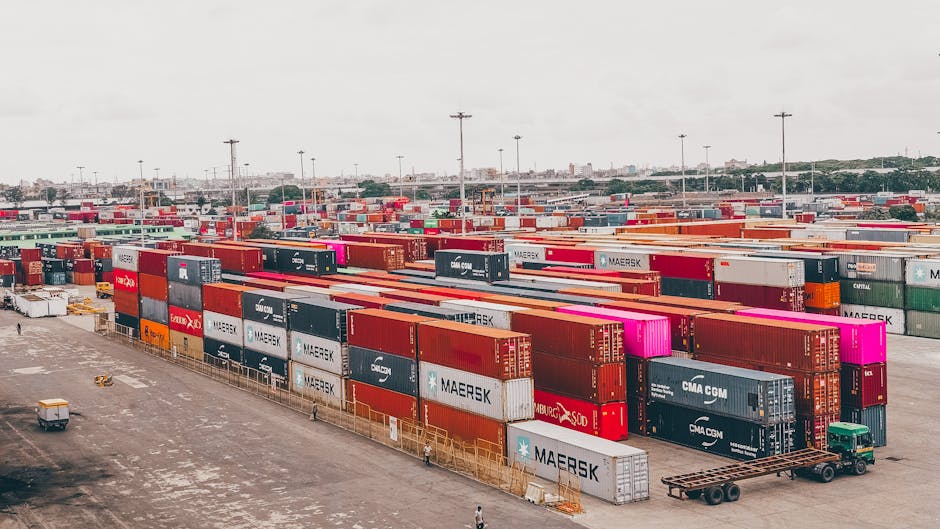
- China’s foreign trade surged 14.9% year-on-year in the first four months of 2026, driven by stronger external demand and renewed domestic industrial activity.
- Exports rose 17.2% and imports rose 11.7% year-on-year, exceeding market expectations and indicating a recovery in China’s trade engine.
- Electromechanical products led the export growth, with a 19.3% increase, driven by strong performances in electric vehicles, lithium-ion batteries, and solar panels.
- The ‘new triplet’ of electric vehicles, lithium-ion batteries, and solar panels has replaced traditional labor-intensive goods as leading export categories.
- China’s trade engine is regaining momentum despite ongoing geopolitical tensions, elevated shipping costs, and subdued demand in traditional Western markets.
China’s foreign trade has surged by 14.9% year-on-year in the first four months of 2026, reaching a total value of 14.16 trillion yuan ($1.98 trillion), according to data released by the General Administration of Customs. This robust growth, the strongest in over a decade for this period, was driven primarily by a 17.2% increase in exports, while imports rose 11.7%, indicating both stronger external demand and renewed domestic industrial activity. The performance exceeds market expectations and suggests that China’s trade engine, long considered a barometer of global manufacturing health, is regaining momentum despite persistent geopolitical tensions, elevated shipping costs, and subdued demand in traditional Western markets like the United States and the European Union.
Trade Data Shows Broad-Based Export Strength

The customs data reveals that China’s exports totaled 8.34 trillion yuan in January–April 2026, a significant acceleration from the 7.1% growth recorded during the same period last year. Electromechanical products led the charge, with exports rising 19.3%, including strong performances in electric vehicles (EVs), lithium-ion batteries, and solar panels—collectively known as the ‘new triplet’ replacing traditional labor-intensive goods. Exports of EVs alone surged by 38.6%, with over 420,000 units shipped, according to Reuters analysis. ASEAN remained China’s largest trading partner, with bilateral trade up 18.7% to 3.1 trillion yuan, while trade with the Belt and Road Initiative countries grew 15.8%. Meanwhile, trade with the U.S. edged up 4.1%, suggesting cautious stabilization despite ongoing tariffs and tech restrictions.
Key Players Reshape Trade Dynamics

Major contributors to the trade rebound include state-backed exporters in clean tech sectors and private champions like BYD, CATL, and Huawei, which have expanded aggressively into Southeast Asia, Latin America, and the Middle East. BYD, now the world’s largest EV maker by volume, opened a new assembly plant in Indonesia in March 2026, reducing reliance on European and North American markets. Simultaneously, China’s regional trading hubs—including Shanghai, Shenzhen, and the newly upgraded Kunming跨境 commerce zone—are streamlining customs clearance and leveraging digital trade platforms. The government has also intensified support through targeted export credits and expanded free trade agreements, including a recent upgrade to the China-ASEAN FTA. Meanwhile, Western importers, facing supply chain diversification pressures, are increasingly turning to Chinese intermediaries in Vietnam and Malaysia to maintain access to Chinese-made components without incurring tariff penalties.
Trade-Offs Between Growth and Geopolitical Risk

While the 14.9% trade growth signals strong economic resilience, it also exposes China to heightened geopolitical friction. Rapid export growth in strategic sectors has triggered fresh anti-dumping investigations in the EU and renewed calls in the U.S. Congress for tighter curbs on Chinese EV and battery imports. The European Commission is expected to finalize new tariffs on Chinese EVs by mid-2026, which could dampen near-term momentum. Domestically, the export push is straining energy resources and raising concerns about overcapacity in solar and battery manufacturing. On the other hand, increased trade with Global South nations strengthens China’s diplomatic leverage and creates long-term market dependencies. The challenge lies in balancing export-led growth with sustainable industrial policy and diplomatic risk mitigation, particularly as de-risking becomes a cornerstone of Western economic strategy.
Why the Rebound Is Happening Now

The timing of the upswing reflects a confluence of cyclical and structural factors. Globally, inventory restocking after two years of post-pandemic caution has boosted demand for Chinese intermediate goods. Domestically, the Chinese government’s 2026 ‘Stable Foreign Trade’ action plan, launched in January, provided direct incentives for exporters, including streamlined export tax rebates and expanded cross-border RMB settlements. Additionally, China’s investment in logistics infrastructure—such as the China-Laos Railway and upgraded port facilities in Guangxi—has reduced shipping times to ASEAN by up to 40%. These measures, combined with competitive pricing in high-tech manufacturing and weak currencies in key emerging markets, have made Chinese goods more attractive, catalysing the current trade surge.
Where We Go From Here
Looking ahead, three scenarios could unfold over the next six to twelve months. In an optimistic scenario, global demand remains stable, China successfully negotiates trade accommodations with the EU, and its Global South outreach deepens, sustaining trade growth near 12–14%. A moderate scenario anticipates partial EU tariffs and slower U.S. demand, capping growth at 7–9%. In a downside case, a global recession or new U.S.-China tech war escalation could trigger a sharp export contraction, potentially reversing gains. The trajectory will hinge not only on external demand but also on China’s ability to innovate domestically and manage trade tensions without retreating into self-reliance at the cost of openness.
Bottom line — China’s trade rebound reflects both strategic industrial upgrading and tactical policy support, but its sustainability depends on navigating an increasingly fragmented global trade order with agility and restraint.
Source: Reddit