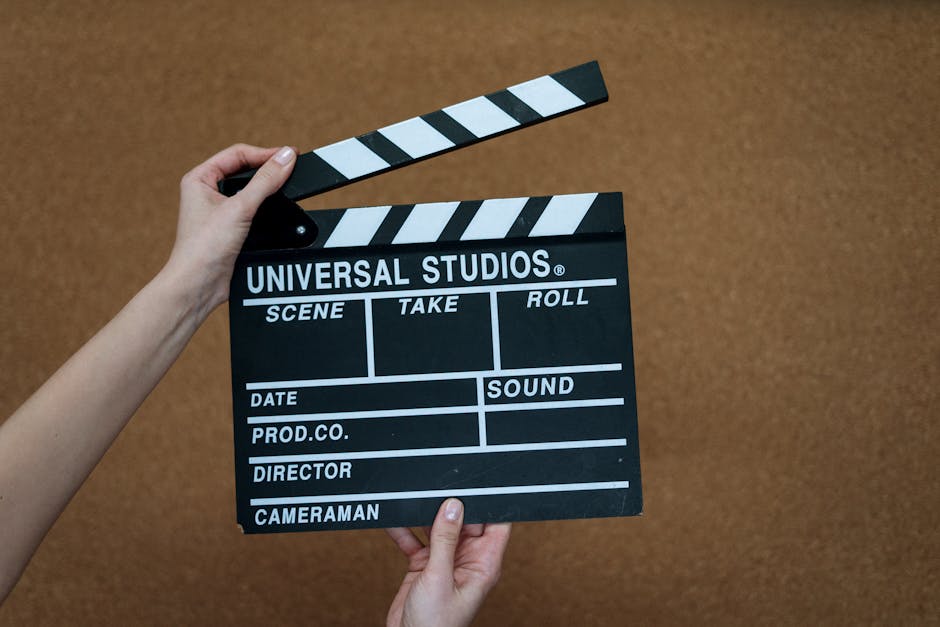
- Generative AI models can now produce Hollywood-grade visual effects at a consumer scale, democratizing storytelling.
- Tools like Runway ML and Pika enable users to generate high-fidelity clips from text prompts or rough sketches in a matter of hours.
- The time and expertise required to produce complex cinematography techniques have drastically reduced, making it accessible to anyone with a GPU.
- AI-generated clips may not yet match the quality of traditional productions, but they offer a new level of creative freedom and speed.
- This seismic shift in film production could lead to a creative revolution, with new voices and perspectives emerging in the industry.
In a dimly lit Los Angeles studio in 1999, a team of visual effects artists hunched over glowing monitors, rendering the now-iconic bullet-dodging sequence from The Matrix. Each frame of Neo’s gravity-defying leap took hours to compute, the result of motion-capture rigs, custom software, and a $40 million special effects budget. Fast-forward to 2024: a teenager in a suburban bedroom, armed with an AI video model like Runway’s Gen-3 or Pika Labs, uploads a script and reference footage. Within 48 hours, they generate a near-identical simulation of that same scene—complete with simulated camera sweeps and digital time dilation. The tools that once belonged exclusively to industrial studios now sit in the hands of anyone with internet access and a GPU, signaling a seismic shift in how stories are visualized and who gets to tell them.
AI Replicates Hollywood-Grade Effects at Consumer Scale

Today, generative AI models can synthesize photorealistic video sequences that mimic complex cinematography techniques such as bullet time, fluid simulations, and deep compositing. Tools like Runway ML, Pika, and OpenAI’s Sora allow users to generate high-fidelity clips from text prompts or rough sketches, drastically reducing the time and expertise traditionally required. A scene that took nearly a year and a $40 million investment to produce in 1999 can now be prototyped in a weekend with consumer-grade hardware. While these AI-generated clips may not yet match the polish of a blockbuster’s final cut, they demonstrate functional parity in motion dynamics and spatial coherence. According to a 2024 report by Reuters, major studios are already experimenting with AI to accelerate pre-visualization and reduce post-production costs.
The Evolution of Visual Effects From Practical to Procedural

The journey from practical effects to algorithmic generation has been decades in the making. In the 1970s, Star Wars pioneered motion control photography; in the 1990s, Terminator 2 and Jurassic Park introduced digital characters via pioneering CGI. The 1999 release of The Matrix fused practical stunts with digital manipulation, popularizing “bullet time” through a ring of still cameras and frame interpolation. Over the 2000s and 2010s, studios invested heavily in proprietary software and rendering farms, creating a high barrier to entry. But with the advent of deep learning and diffusion models, the underlying principles of visual effects—motion estimation, depth mapping, and frame blending—have become trainable functions. Open-source models and cloud-based platforms now enable decentralized creation, dismantling the centralized gatekeeping of cinematic technology.
The New Creators: Students, Hobbyists, and Disruptors

Behind this shift are not just corporations, but individual innovators and young creators leveraging AI to bypass traditional pipelines. University students use AI tools to produce thesis films with professional-grade effects; independent animators generate short films with minimal budgets; and online communities like AI Art on Reddit showcase recreations of iconic scenes as technical experiments. These creators are often motivated by access, expression, and experimentation—not profit. Yet their work challenges the economic models of studios that once relied on scarcity of tools and expertise. Figures like Patrick Paș, a Romanian developer who recreated bullet time using open-source AI, exemplify a new generation that treats Hollywood techniques not as sacred artifacts, but as open-source problems to solve.
Consequences for Labor, IP, and Creative Ownership

The democratization of visual effects poses urgent questions about intellectual property, artistic credit, and labor displacement. If an AI model trained on decades of film data can replicate a signature style, who owns the output? Current legal frameworks struggle to address this, especially as training data often includes copyrighted footage without explicit licensing. Moreover, visual effects artists—many of whom spent years mastering niche software—now face uncertain futures as studios explore AI-driven automation. The 2023 strike by the Writers Guild of America and SAG-AFTRA highlighted deep anxieties over AI replacing creative roles. While AI lowers entry barriers, it also risks devaluing human artistry unless new compensation and attribution models emerge.
The Bigger Picture
This transformation is not just about filmmaking—it reflects a broader cultural shift in how technology redefines creativity. Just as the printing press democratized writing and the internet decentralized publishing, AI is unlocking visual storytelling for billions. But with accessibility comes the need for ethical guardrails: transparency in training data, fair compensation for original creators, and preservation of artistic intent. The tools themselves are neutral; their impact depends on how society chooses to govern them. The Matrix, once a metaphor for illusion and control, now serves as an ironic benchmark for a new era of digital liberation.
What comes next may not be the end of Hollywood, but the rise of a parallel creative ecosystem—one where a single person can direct, edit, and render scenes that once required armies of specialists. The question is no longer who has the tools, but how we ensure that innovation doesn’t eclipse integrity. As AI reshapes the art of the possible, the human role may shift from technician to curator, from executor to visionary.
Source: Reddit