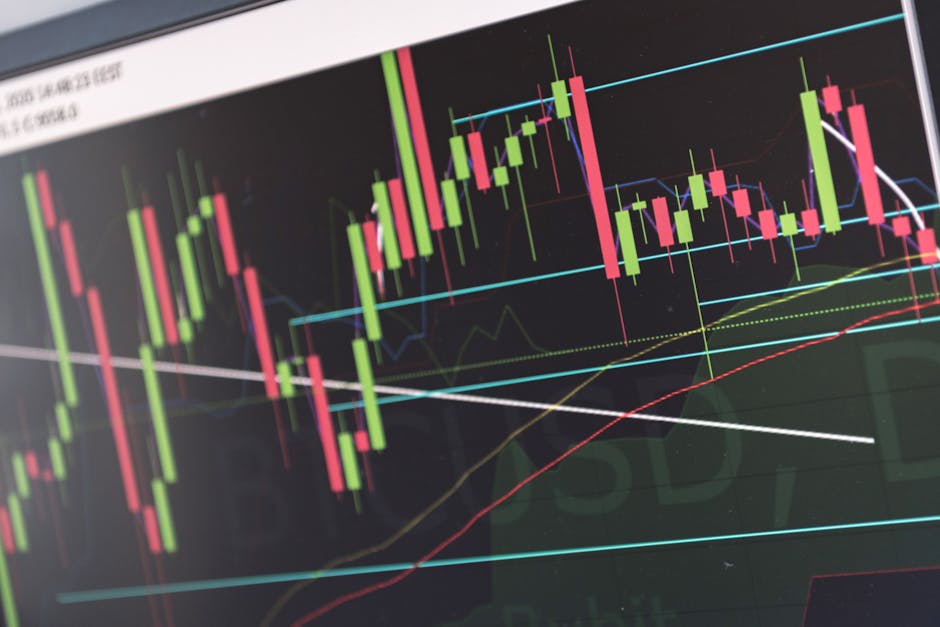
- Prediction markets have grown in popularity, processing millions in daily volume across platforms like Augur, Kalshi, and Polymarket.
- These markets operate in a legal gray zone due to regulatory ambiguity, allowing them to thrive without government control.
- Kalshi became the first federally regulated prediction market in the U.S. in 2023, approved by the CFTC to offer event contracts on economic indicators.
- Prediction markets rely on collective wisdom, incentivized by money, to produce more accurate forecasts than experts or polls.
- The growth of decentralized finance has eroded jurisdictional boundaries, making it harder for governments to regulate prediction markets.
On a quiet Tuesday evening in a Brooklyn co-living space, a group of software developers, policy wonks, and speculative traders gather around laptops, not for drinks or music, but to watch real-time odds shift on whether the FDA will approve a neural implant by 2025. The platform? Polymarket, a blockchain-based prediction market where users bet cryptocurrency on geopolitical events, corporate decisions, and scientific milestones. The scene repeats nightly across digital forums and Discord channels, where data-driven speculation has evolved into a parallel intelligence network—one that often outpaces official forecasts. As artificial intelligence accelerates information flow and decentralized finance erodes jurisdictional boundaries, these markets operate in a legal gray zone, thriving precisely because no single government has figured out how to control them.
Prediction Platforms Multiply Amid Regulatory Ambiguity

Prediction markets, once niche academic tools, now process millions in daily volume, with platforms like Augur, Kalshi, and Polymarket attracting users from San Francisco to Singapore. These markets function on a simple premise: collective wisdom, incentivized by money, produces more accurate forecasts than experts or polls. In 2023, Kalshi became the first federally regulated prediction market in the U.S., approved by the Commodity Futures Trading Commission (CFTC) to offer event contracts on economic indicators and climate outcomes. Yet most platforms operate offshore or on decentralized networks, beyond the reach of U.S. law. Contracts on everything from Supreme Court rulings to the release date of the next iPhone are traded openly, often using stablecoins. The CFTC has acknowledged the potential for manipulation and insider trading, with Chair Rostin Behnam warning that “these markets could become conduits for illegal information asymmetry.” Despite this, enforcement remains sparse, and legislative proposals to clarify jurisdiction have stalled in Congress.
The Evolution of Forecasting as a Financial Instrument

The roots of prediction markets stretch back to 19th-century betting pools on elections, but the modern form emerged in the 1990s with the Iowa Electronic Markets, a university-run platform used to forecast presidential outcomes with surprising accuracy. Economists like Robin Hanson championed the idea that markets could aggregate dispersed knowledge better than traditional polling. The advent of blockchain in the 2010s transformed the concept, enabling trustless, global participation. Platforms like Augur, built on Ethereum, allowed users to create and trade on custom events without intermediaries. By the early 2020s, machine learning models began integrating prediction market data to refine forecasts, creating a feedback loop where AI both informs and is informed by speculative behavior. As these systems grow more sophisticated, the line between forecasting and financial engineering blurs—raising questions about whether these markets are tools for transparency or new vectors for risk.
Key Players Shaping the Future of Speculative Intelligence

At the forefront is Emile Toukan, co-founder of Polymarket, who argues that decentralized prediction markets enhance democratic discourse by making information flows transparent. His platform, based in the Cayman Islands, emphasizes free speech and user autonomy, often clashing with regulators over content moderation and compliance. On the other side, Paul Peterson, founder of the now-defunct SciCast project, advocates for an academic model, where markets serve research, not profit. Meanwhile, regulators like Behnam and SEC Chair Gary Gensler debate whether these platforms fall under securities, commodities, or gambling laws—a classification that could determine their fate. Venture capital firms, including Andreessen Horowitz, have poured millions into prediction startups, betting that institutional demand for real-time foresight will only grow. These competing visions—libertarian, academic, regulatory, and commercial—are converging on a single question: who should control the future’s price tag?
Implications for Democracy, Finance, and Information Integrity

The rise of prediction markets poses risks to financial stability and democratic processes. If traders can profit from anticipating policy shifts or market-moving events, the incentive to leak or manipulate information intensifies. There are concerns that foreign actors could use these platforms to influence U.S. politics by seeding false narratives to skew odds. For businesses, the exposure is equally acute: employees might leak product plans to gain an edge, turning corporate strategy into tradable data. Conversely, proponents argue that transparent markets expose truths early—like the 2020 Polymarket contract that predicted the rapid spread of COVID-19 before official alerts. Financial institutions are beginning to monitor these platforms as leading indicators, suggesting a future where speculative consensus informs risk models and policy decisions alike.
The Bigger Picture
Prediction markets represent more than a financial innovation—they reflect a deeper shift in how society processes uncertainty. In an era of information overload and institutional distrust, people increasingly turn to decentralized systems for answers. When polls fail and experts disagree, the market’s price becomes a proxy for truth. But without oversight, this system risks rewarding secrecy over transparency, speculation over stewardship. The philosophical undercurrent—can the future be priced?—challenges foundational assumptions about governance, ethics, and knowledge itself.
What comes next may depend on whether regulators can adapt without stifling innovation. Proposals for a federal sandbox to test regulated prediction markets are under discussion, modeled on fintech initiatives in the UK and Singapore. As AI-generated forecasts and human betting converge, the need for a coherent framework grows urgent. The Brooklyn meetup may remain a fringe scene—or it could foreshadow a new infrastructure for collective decision-making, one where every event has a price, and every price tells a story.
Source: The New York Times