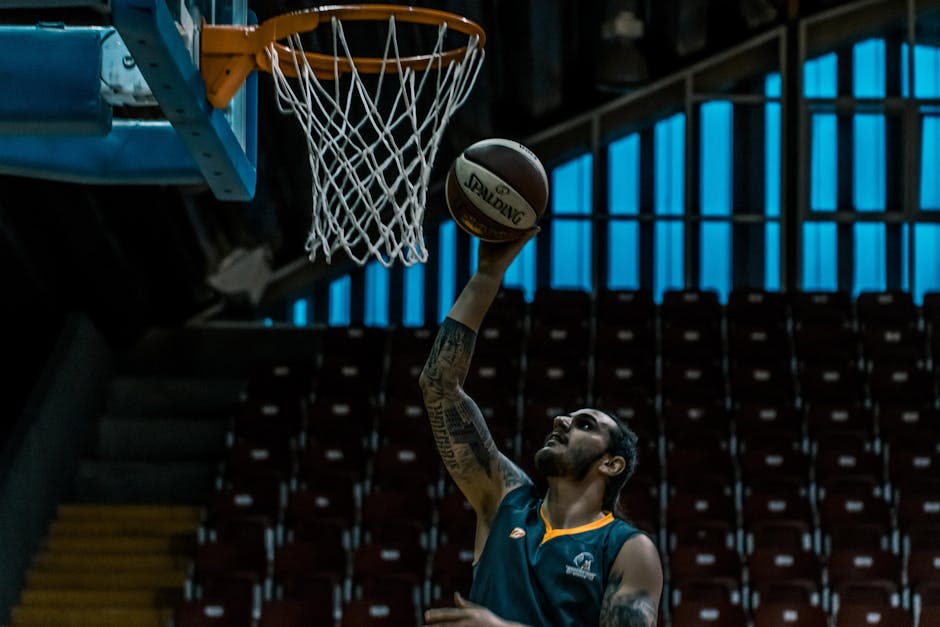
- Victor Wembanyama is thriving in high-pressure situations, averaging 26.8 points in games decided by five points or fewer.
- Wembanyama’s blend of physical dominance, emotional resilience, and tactical intelligence signals a seismic shift in the league’s competitive balance.
- The 7-foot-4 prodigy posted a Player Impact Estimate (PIE) of 18.7 in clutch time, second among all rookies aged 20 or younger since 1996.
- Wembanyama shot 48.6% from the field and 82.3% from the free-throw line in clutch situations, while recording 1.8 steals and 2.9 blocks per game.
- Wembanyama’s defensive rating drops to 102.4 in clutch minutes, anchoring a Spurs defense that ranks seventh in the league over the final stretch.
Victor Wembanyama is not just surviving his rookie NBA season—he is thriving in its most demanding moments. The 7-foot-4 prodigy has consistently elevated his play in high-pressure situations, averaging 26.8 points, 9.4 rebounds, and 3.2 blocks in games decided by five points or fewer. His recent performances in the Spurs’ late-season push for a play-in berth reveal a player uniquely equipped for the postseason grind. Wembanyama’s blend of physical dominance, emotional resilience, and tactical intelligence signals a seismic shift in the league’s competitive balance—his presence isn’t just promising for the future, it’s impactful now.
Rising to the Occasion: Wembanyama’s Clutch Performance Metrics

Statistically, Wembanyama’s effectiveness in high-leverage situations defies rookie norms. Over the last 25 games of the 2023–24 season, he posted a Player Impact Estimate (PIE) of 18.7 in clutch time (last five minutes, within five points), second among all rookies aged 20 or younger since 1996—trailing only LeBron James. He shot 48.6% from the field and 82.3% from the free-throw line in these situations, while recording 1.8 steals and 2.9 blocks per game. According to NBA.com/stats, his defensive rating drops to 102.4 in clutch minutes, anchoring a Spurs defense that ranks seventh in the league over the final stretch. His 40-point outburst against the Phoenix Suns in March—featuring a go-ahead block in the final minute—was the first 40-point, 5-block, 5-assist game by a rookie in league history, per ESPN analysis.
The Key Players: Spurs Staff and Rivals Respond to Wemby’s Ascent

San Antonio’s coaching staff, led by head coach Gregg Popovich, has deliberately structured late-game scenarios to leverage Wembanyama’s versatility. Assistant coach Mitch Johnson noted in a recent press briefing that they’ve increased Wembanyama’s offensive usage in isolation and pick-and-pop sets, recognizing his improved footwork and decision-making. Meanwhile, opposing teams are adjusting: the Denver Nuggets deployed double-teams with aggressive traps, while the Boston Celtics used smaller, quicker lineups to exploit perceived mobility issues—tactics Wembanyama has neutralized through improved passing and off-ball movement. Star players like Jayson Tatum and Nikola Jokić have publicly praised his maturity, with Tatum stating, ‘He doesn’t play like a rookie—he plays like someone who’s been through wars.’
Trade-Offs: Balancing Development and Winning

The Spurs’ emphasis on Wembanyama’s growth has come with strategic trade-offs. While they sacrificed short-term depth to preserve cap flexibility—opting not to pursue high-cost veterans—they risk overburdening a 20-year-old in a physically grueling league. Minutes management has been a concern: Wembanyama averaged 34.2 minutes per game, the most among all rookies, raising injury surveillance flags. Yet the benefits are evident: his on-court net rating of +5.8 in clutch situations underscores his two-way impact. Moreover, the organizational focus on him has accelerated the development of young teammates like Devin Vassell and Jeremy Sochan, who’ve improved their three-point shooting and defensive coordination in tandem with Wembanyama’s floor spacing and rim protection.
Why Now? The Timing of Wembanyama’s Breakout

The convergence of experience, health, and competitive urgency explains Wembanyama’s late-season ascension. After a cautious first half marred by minor lower-body soreness and adaptation challenges, he entered the new year fully acclimated to NBA speed and physicality. The Spurs’ unexpected competitiveness—fueled by an 18–8 record from February onward—thrust them into play-in contention, creating real stakes absent in past rebuilding years. This shift transformed theoretical development into tangible pressure, allowing Wembanyama to test his mental fortitude. His public comments reflect this evolution: ‘I’ve really been waiting since I’ve been in the league to live those moments, those high stakes games… the feeling I get before games, this heat in my heart, it’s even stronger, and it just gets stronger as the games go on.’
Where We Go From Here
Three plausible scenarios emerge for Wembanyama and the Spurs in the next 6–12 months. First, if they secure a top-ten draft pick again, they could add a high-upside wing, accelerating their contention timeline. Second, a deep play-in run could prompt aggressive free-agent pursuit in 2024, potentially leveraging cap space for a two-way guard. Third, if injuries or regression occur, San Antonio may prioritize another lottery finish to stack young assets. Regardless, Wembanyama’s trajectory suggests he will be a cornerstone for years—his performance under pressure confirming his capacity to lead in the league’s most intense moments.
Bottom line — Victor Wembanyama is not merely adapting to the NBA; he is redefining what’s possible for a rookie, combining statistical dominance with emotional resilience in high-stakes environments, and positioning himself as the league’s next transcendent star.
Source: Streamable