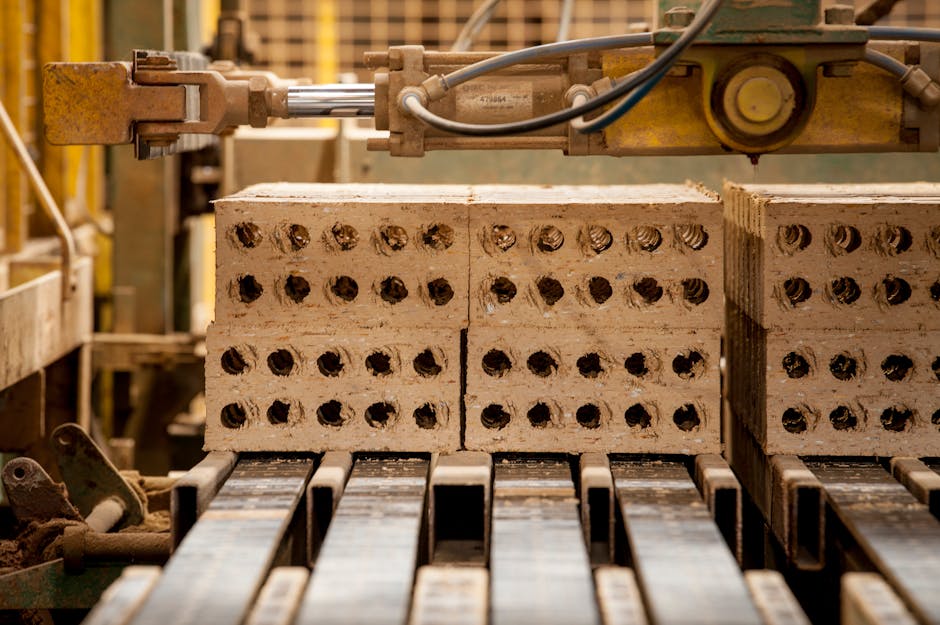
- Researchers have found a way to strengthen concrete by 30% using nanocellulose extracted from plant waste.
- Adding nanocellulose to traditional concrete production can drastically reduce carbon emissions.
- The construction industry’s reliance on Portland cement is responsible for 8% of global CO2 emissions.
- Plant-derived nanocellulose can replace some of the cement needed in concrete production, reducing waste and emissions.
- A new recipe for greener concrete is being developed using nanocellulose from agricultural waste like corn husks and sugarcane bagasse.
In a quiet laboratory tucked inside a university research park, a small vial of white, gel-like substance hums with transformative potential. Under the microscope, it reveals a dense network of microscopic fibers, each thousands of times thinner than a human hair. These are not synthetic polymers or rare earth compounds, but nanocellulose—extracted from discarded corn husks, sugarcane bagasse, and other agricultural waste. When mixed into concrete, this humble plant-derived material is quietly revolutionizing one of humanity’s oldest and most ubiquitous building substances. The result? A composite that is not only stronger and more crack-resistant but also drastically reduces the carbon emissions associated with traditional concrete production—a breakthrough at a moment when the construction industry faces mounting pressure to decarbonize.
A New Recipe for Stronger, Greener Concrete

Concrete is the second most consumed substance on Earth after water, with over 30 billion tons produced annually. Yet its primary ingredient, Portland cement, is responsible for roughly 8% of global CO₂ emissions—a staggering environmental cost. Now, researchers at institutions including MIT, the University of British Columbia, and Aalto University in Finland have demonstrated that adding nanocellulose—a biopolymer extracted from plant cell walls—can enhance concrete’s mechanical strength by up to 30% while reducing the amount of cement needed. In controlled trials, the nanocellulose acts as a reinforcing scaffold at the microscale, improving hydration and minimizing microcracks that lead to structural failure. Because less cement is required, the process slashes emissions without sacrificing durability. According to a 2023 study published in Nature Energy, integrating plant-based nanocellulose into standard concrete formulations could reduce the construction sector’s carbon output by hundreds of millions of tons per year if adopted at scale.
From Farm Waste to High-Tech Material

The journey of nanocellulose from crop residue to construction marvel began in the early 2010s, when materials scientists started exploring sustainable alternatives to synthetic additives like polypropylene fibers. Cellulose, the most abundant organic polymer on Earth, was a natural candidate—but extracting it in usable form was a challenge. Advances in mechanical fibrillation and chemical pretreatment techniques allowed researchers to break down plant fibers into nanoscale crystalline or fibrillar structures. These nano-reinforcements, when dispersed in water and mixed into cement slurry, bond seamlessly with calcium silicate hydrates—the glue that gives concrete its strength. The idea gained momentum as global interest in circular economies grew, and agricultural waste—often burned or left to decompose, releasing methane—was reimagined as a high-value resource. By 2020, pilot projects in Scandinavia and Canada had successfully poured nanocellulose-enhanced sidewalks and bridge supports, validating lab results in real-world conditions.
The Scientists Behind the Shift

Leading this innovation are interdisciplinary teams blending expertise in materials science, chemical engineering, and sustainable design. Dr. Emily Cranston, a biomaterials expert at the University of British Columbia, has spent over a decade refining methods to produce stable, scalable nanocellulose dispersions. Her work, supported by Canada’s Natural Sciences and Engineering Research Council, focuses on optimizing fiber length and surface chemistry to ensure uniform distribution in concrete. Meanwhile, MIT’s Laboratory for Advanced Architectural Prototypes has collaborated with construction firms to test structural performance under freeze-thaw cycles and heavy load stress. These researchers are driven not just by scientific curiosity but by urgency. “We’re not just making concrete stronger,” Cranston said in a recent interview. “We’re rethinking how we build—using waste as a starting point, not an endpoint.” Their motivation is deeply rooted in climate accountability, aiming to disrupt an industry historically resistant to change.
Impacts Across Industries and Ecosystems

The implications of nanocellulose-reinforced concrete extend far beyond improved compressive strength. For construction companies, the material offers longer-lasting infrastructure with lower maintenance costs. For farmers, it creates new revenue streams from waste biomass. For cities, it presents a path to meeting net-zero emissions targets in public works projects. Developing nations, where concrete demand is rising rapidly, could leapfrog high-emission construction methods altogether. However, challenges remain: scaling up nanocellulose production sustainably, ensuring consistent quality, and overcoming regulatory hurdles in building codes. Some experts caution that without proper lifecycle assessments, unintended consequences—such as increased land use for biomass crops—could offset environmental gains. Still, early adopters see promise. In Sweden, a housing developer recently announced plans to use the composite in 500 new apartment units, calling it “the first truly circular concrete solution.”
The Bigger Picture
This innovation is part of a broader scientific movement to reimagine materials from a cradle-to-cradle perspective. From self-healing concrete to carbon-sequestering bricks, researchers are redefining what it means to build sustainably. Nanocellulose in concrete exemplifies a growing trend: turning waste into high-performance resources using nanotechnology. It also reflects a shift in how science addresses climate change—not through single silver bullets, but through systemic redesigns of everyday materials. As urbanization accelerates and climate deadlines tighten, such innovations may no longer be optional. They could become the foundation—quite literally—of resilient, low-carbon cities.
What comes next is a test of will as much as engineering. Can the construction industry adopt these green alternatives at scale? Will policymakers incentivize sustainable materials in public procurement? And can researchers continue to refine the technology to make it cost-competitive with conventional concrete? The answers will shape not only the skylines of tomorrow but the stability of the planet beneath our feet. The concrete underfoot may soon be made from yesterday’s harvest—stronger, smarter, and silently fighting climate change with every slab poured.
Source: Lsu