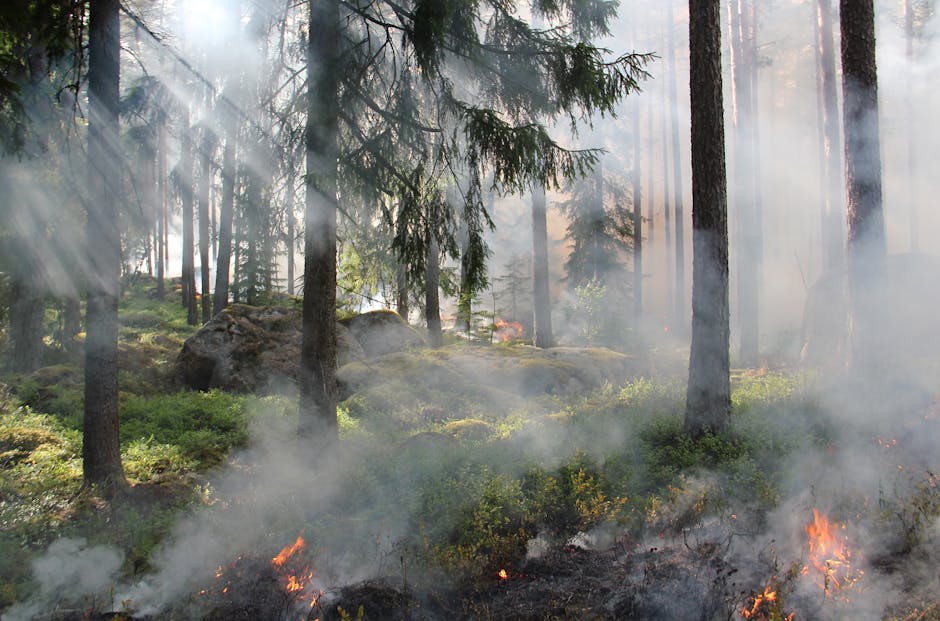
- A wildfire is burning through a highly radioactive area in the Chernobyl Exclusion Zone, threatening to release contaminated air and water.
- The fire was sparked by a drone crash and is spreading rapidly through dry underbrush in the Red Forest.
- Firefighters are deploying specialized radiological units to contain the blaze, but operations are hindered by radiation exposure risks.
- The wildfire has already consumed over 200 hectares of forest, with flames moving through areas known to retain high levels of radiation.
- The fire poses a significant threat to local ecosystems and could have long-term consequences for the environment and human health.
Smoke curls into the ashen sky above the Red Forest, once a pine grove, now a skeletal monument to the 1986 Chernobyl disaster. The air carries the acrid sting of burning biomass laced with cesium-137 and strontium-90. Amid the overgrown ruins of Pripyat, where nature has reclaimed crumbling schools and abandoned hospitals, a new crisis unfolds: flames race through dry underbrush, fanned by spring winds, turning decades of accumulated leaf litter into a volatile fuel bed. This is not just any wildfire. It is a fire burning through one of the most radioactively contaminated landscapes on Earth, ignited not by lightning or carelessness, but by a drone that crashed into the dry canopy and sparked a blaze that now threatens to release invisible poisons back into the atmosphere.
Fire Engulfs Hundreds of Hectares in Radioactive Zone

The wildfire, confirmed by Ukraine’s State Emergency Service, began near the abandoned village of Kopachi, just north of the Chernobyl Nuclear Power Plant. Satellite data and ground reports indicate that over 200 hectares (nearly 500 acres) of forest have been consumed, with flames moving rapidly through pine stands and peat bogs known to retain high levels of radiation. Firefighters from specialized radiological units have been deployed, using helicopters and ground crews to establish firebreaks and douse hotspots. However, operations are severely constrained by the risk of radiation exposure. Smoke plumes, visible from Kyiv, have raised public concern, though Ukrainian authorities say current wind patterns are carrying emissions away from populated areas. Still, experts warn that even short-term exposure to smoke carrying radionuclides can pose health risks, particularly for vulnerable populations.
How Decades of Neglect Fueled a Tinderbox

The Chernobyl exclusion zone, established after the world’s worst nuclear disaster, spans 2,600 square kilometers of Ukraine and Belarus. In the absence of human activity, forests have regrown thickly, accumulating vegetation that, combined with climate change-induced droughts, has turned the area into a high-risk fire zone. Previous fires in 2015 and 2020 already demonstrated how wildfires can remobilize radioactive particles trapped in soil and biomass. A 2021 study published in Nature Sustainability found that such fires can increase airborne radioactivity by up to 18 times background levels. With limited funding and infrastructure, Ukraine’s monitoring and firefighting capabilities remain stretched, even as fire seasons grow longer and more intense. The current blaze underscores how ecological recovery in post-disaster zones can paradoxically create new hazards.
Military Activity and Human Error in a Forbidden Zone

The drone that sparked the fire is believed to have been a military-grade UAV, possibly operating during ongoing defensive surveillance in the region amid Russia’s full-scale invasion of Ukraine. Since 2022, the Chernobyl area has seen renewed conflict, including a month-long Russian occupation in early 2022, during which soldiers dug trenches in highly contaminated zones, disturbing radioactive soil. While Ukrainian officials have not confirmed whether the drone was Ukrainian or Russian in origin, its crash suggests either technical failure or combat-related damage. Experts from the BBC have noted increased drone traffic over the zone, used for monitoring troop movements near the Belarus border. The presence of such technology in a fragile, contaminated environment introduces unpredictable risks—where a single malfunction can have cascading ecological consequences.
Radiation Risks and Regional Repercussions

The immediate danger lies in the inhalation of radioactive smoke particles, particularly cesium-137, which mimics potassium in the body and can accumulate in muscles and soft tissues. While current radiation levels outside the fire zone remain within safe limits, prolonged exposure or shifting winds could change that rapidly. Belarus, located upwind in many weather patterns, has already expressed concern. Agricultural regions near the border could face contamination if ash deposits settle on crops or water sources. Long-term, repeated fires degrade the soil’s ability to bind radionuclides, increasing the likelihood of groundwater contamination. For Ukraine, already burdened by war, the fire adds another layer of environmental insecurity, diverting emergency resources and complicating future reclamation efforts.
The Bigger Picture
This incident is not merely a local disaster—it is a symptom of a broader crisis where geopolitical conflict, environmental fragility, and neglected infrastructure collide. Chernobyl was meant to be a cautionary monument, a place sealed off from human interference. Instead, war has turned it into an active battlefield of risks, where drones, soldiers, and now wildfires threaten to undo decades of containment. As climate change intensifies fire seasons worldwide, other contaminated sites—from Fukushima to nuclear test zones in Kazakhstan—face similar vulnerabilities. The world has yet to develop coordinated strategies for managing radiological risks in conflict-affected, ecologically unstable regions.
What comes next is uncertain. The fire may be contained in days, but the radioactive legacy will persist for centuries. The real challenge lies in preventing the next spark—whether from war, error, or nature itself. As Ukraine fights on multiple fronts, both military and environmental, the smoldering woods of Chernobyl serve as a grim reminder: some wounds never fully heal, and some fires, once lit, can reignite the past.
Source: New Scientist