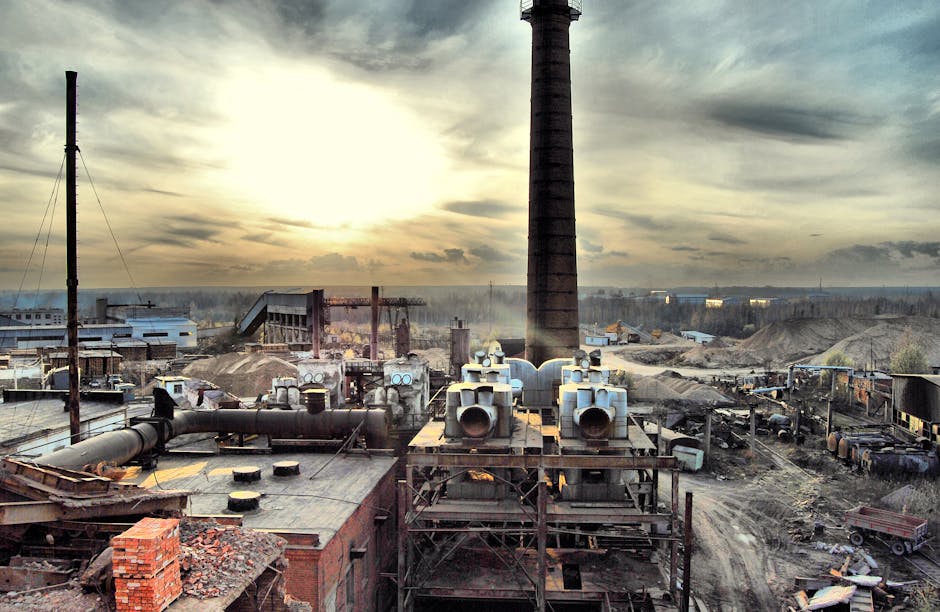
- Dalton, Georgia, was once the carpet capital of the world, producing more tufted flooring than anywhere else on Earth.
- The city’s factories used per- and polyfluoroalkyl substances (PFAS) to make carpets stain-resistant, but these chemicals are now recognized as toxic.
- PFAS have been linked to cancer, thyroid disease, and developmental harm, posing a public health crisis in Dalton.
- Dalton’s groundwater is contaminated with PFAS, with some levels exceeding the EPA’s proposed safety limits by up to 30 times.
- The contamination extends beyond water, with PFAS also found in soil around decommissioned mills in the area.
In the foothills of the Blue Ridge Mountains, where the Chattahoochee National Forest gives way to red clay and suburban sprawl, the city of Dalton, Georgia, once pulsed with the rhythmic hum of looms. Factories lined the streets like sentinels, their smokestacks puffing plumes into the humid Southern air. For over a century, this unassuming town earned its title as the carpet capital of the world, producing more tufted flooring than anywhere else on Earth. But beneath the soft textures and vibrant dyes lay a darker thread: a chemical legacy woven so tightly into the town’s fabric that it now lingers in the blood of its residents. Per- and polyfluoroalkyl substances—known as PFAS—were long prized for making carpets stain-resistant, but today, they are recognized as persistent environmental toxins, linked to cancer, thyroid disease, and developmental harm. What once fueled economic pride has become a slow-motion public health crisis.
\n
The Scope of the Contamination

\n
Dalton’s groundwater, long considered pristine, now bears the invisible mark of industrial chemistry. Multiple studies, including a 2023 investigation by the Environmental Working Group, have detected PFAS in nearly every water sample taken from private wells near former manufacturing sites. Some levels exceed the U.S. Environmental Protection Agency’s (EPA) newly proposed safety limits by as much as 30 times. The contamination extends beyond water: soil tests around decommissioned mills show elevated concentrations of PFOS and PFOA, two of the most harmful PFAS compounds. Even more alarming, blood testing conducted by Emory University researchers found detectable levels of PFAS in over 98% of local residents sampled—significantly higher than national averages. While major carpet producers like Shaw Industries, headquartered in Dalton, phased out the most toxic PFAS by the mid-2000s under EPA pressure, the chemicals do not degrade. They persist in the environment for decades, earning the nickname \\”forever chemicals.\”
\n
From Innovation to Inheritance

\n
The roots of Dalton’s PFAS problem stretch back to the 1950s, when chemical companies like 3M and DuPont began marketing fluoropolymer treatments to textile manufacturers. These compounds, particularly Scotchgard, revolutionized carpet production by repelling spills and stains—a selling point that fueled the American love affair with wall-to-wall carpeting. Dalton, already a hub of textile innovation, embraced the technology. By the 1980s, the city’s economy was deeply intertwined with stain-resistant finishes, which relied heavily on long-chain PFAS. Internal documents later revealed by The Associated Press show that some manufacturers were aware of health risks as early as the 1970s but continued using the chemicals without public disclosure. Regulatory oversight was minimal, and the EPA did not begin regulating PFAS until the 2000s. By then, the compounds had already infiltrated landfills, wastewater, and aquifers.
\n
The People Behind the Product

\n
For decades, carpet mill workers in Dalton handled PFAS-treated fabrics without protective gear, unknowingly absorbing the chemicals through skin contact and inhalation. Many former employees now suffer from autoimmune disorders, kidney disease, and elevated cancer rates. Linda McAllister, a retired textile worker who spent 34 years at a now-closed mill, recalls the \\”sweet, chemical smell\” in the air and the stained gloves they wore daily. \\”We were told it was safe,\” she says. \\”Now I’ve got thyroid issues, and so do half my coworkers.\” Meanwhile, corporate leaders, including executives at Shaw Industries—a subsidiary of Berkshire Hathaway—have maintained that they followed industry standards and complied with regulations. Yet internal emails suggest a pattern of delayed action and public relations management over proactive remediation. Community advocates, like those in the nonprofit Citizens for Clean Water, have pushed for transparency and accountability, demanding medical monitoring and environmental cleanup.
\n
Consequences for Health and Environment

\n
The long-term consequences of PFAS exposure in Dalton are only beginning to emerge. Beyond individual health risks, the contamination has strained public infrastructure. The city’s water treatment plant, upgraded in 2021, now uses granular activated carbon filtration to remove PFAS, but private wells remain vulnerable. Real estate values near known contamination zones have declined, and some families have relocated at great personal cost. Regulatory action has been piecemeal: while the EPA proposed a national maximum contaminant level for PFOA and PFOS in 2023, enforcement remains inconsistent. Critics argue that federal and state agencies have been too slow to respond, leaving communities to bear the burden. Legal battles have begun, with several class-action lawsuits filed against former chemical suppliers and carpet manufacturers.
\n
The Bigger Picture
\n
Dalton’s story is not unique. Across the United States, industrial towns that once symbolized American manufacturing prowess now grapple with toxic legacies—from Flint’s lead pipes to Libby’s asbestos mines. PFAS contamination has been detected in over 2,800 sites nationwide, according to EPA data. The Dalton case underscores a broader pattern: economic development often advances at the expense of environmental and public health, particularly in regions with limited political power. As researchers develop new methods to destroy PFAS molecules, the challenge remains one of scale, cost, and will. The chemistry that made carpets safer from spills may have made people far less safe in return.
\n
What comes next for Dalton depends on sustained pressure, scientific innovation, and moral reckoning. Cleanup technologies are emerging, but they are expensive and unproven at scale. Meanwhile, the people of Dalton—carpet weavers, retirees, parents—continue to live with a chemical inheritance they did not choose. Their blood, their water, their land all carry the marks of progress. The question is no longer how the contamination happened, but who will be held responsible for fixing it.
Source: AP News