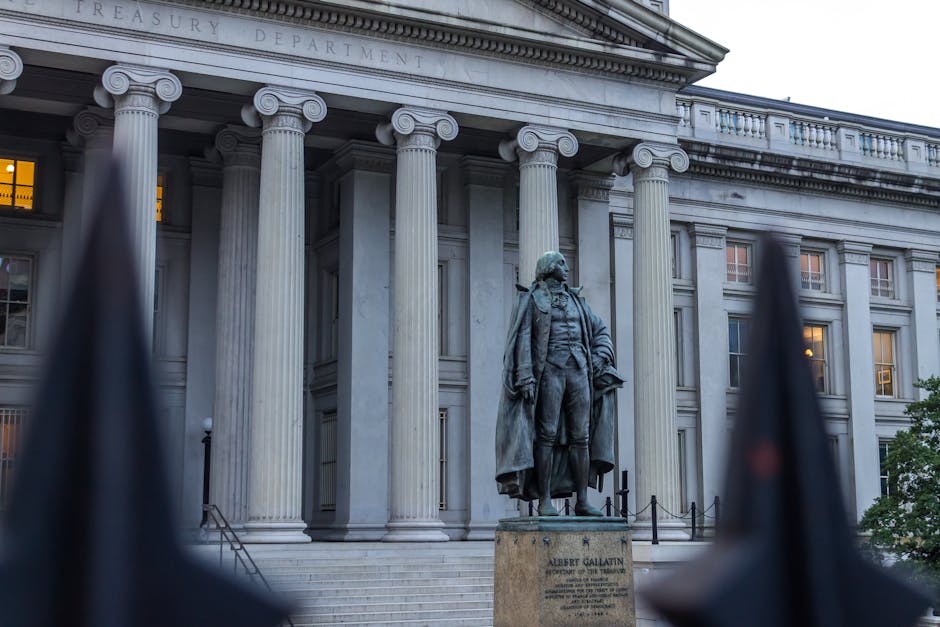
- US sanctions have led to a decline in the dollar’s use in international transactions, sparking concerns over its future dominance.
- US allies, including the EU, China, and Japan, are seeking alternative currencies to reduce their dependence on the dollar.
- The dollar’s status as the primary reserve currency is being threatened by countries looking for greater economic sovereignty.
- The US’s use of sanctions has created a paradox, where its actions are hurting the very currency it relies on.
- A shift away from the dollar could have far-reaching consequences for the global economy and the US’s position as a global leader.
The sun was setting over the bustling streets of Tokyo as financial leaders from around the world gathered to discuss the latest shift in the global economy. The topic on everyone’s mind was the growing trend of US allies moving away from the dollar, driven in part by American sanctions. This paradox, as some have called it, has left many wondering what the future holds for the dollar’s dominance.
The Current State of Affairs

The US has long been the global leader in economic affairs, with the dollar serving as the primary reserve currency. However, recent sanctions imposed by the US on countries like Iran, Russia, and Venezuela have had an unexpected consequence. Allies like the European Union, China, and Japan are increasingly looking for alternative currencies to reduce their dependence on the dollar. This shift is driven by concerns over the potential for future sanctions and the desire to maintain economic sovereignty. According to a report by the Reuters, the use of the dollar in international transactions has declined significantly over the past year.
A Historical Perspective

The story behind this trend is rooted in the history of the dollar’s rise to dominance. Following World War II, the US emerged as a global superpower, and the dollar became the standard unit of exchange for international trade. The Bretton Woods system, established in 1944, cemented the dollar’s position as the global reserve currency. However, over the years, the US has increasingly used its economic power to impose sanctions on countries that do not align with its interests. This has led to growing resentment among allies, who feel that the US is abusing its power. As noted by the Bretton Woods system on Wikipedia, the system was designed to promote international cooperation and stability, but it has also been used as a tool for US foreign policy.
The Key Players

The individuals shaping this trend are a diverse group of financial leaders, policymakers, and diplomats. They are motivated by a desire to reduce their countries’ dependence on the dollar and promote economic sovereignty. For example, the European Union’s Commissioner for Economic and Financial Affairs has been a vocal advocate for the use of alternative currencies. Similarly, China’s President Xi Jinping has promoted the use of the yuan in international transactions. These leaders are driven by a desire to protect their countries’ interests and promote economic stability in the face of growing uncertainty.
The Consequences

The consequences of this trend are far-reaching and have significant implications for stakeholders around the world. A decline in the dollar’s dominance could lead to increased volatility in global markets, making it more difficult for countries to manage their economies. Additionally, a shift away from the dollar could lead to a decline in US influence over global economic affairs. As noted by the New York Times, the US has long used its economic power to shape global policy, but this may be coming to an end.
The Bigger Picture
This trend is part of a larger shift in the global economy, driven by growing concerns over economic sovereignty and the desire for alternative currencies. The rise of emerging markets, particularly in Asia, has created new opportunities for countries to reduce their dependence on the dollar. As the global economy continues to evolve, it is likely that we will see a more multipolar system, with multiple currencies playing a significant role in international trade. This shift has significant implications for the future of the global economy and the role of the US in shaping economic policy.
In conclusion, the US sanctions have inadvertently driven allies away from the dollar, creating a paradox that has significant implications for the global economy. As the world continues to evolve, it is likely that we will see a more diverse range of currencies playing a significant role in international trade. The question on everyone’s mind is what comes next, and how the US will respond to this growing trend. One thing is certain, however: the future of the dollar’s dominance is far from certain, and the world is watching with bated breath.
Source: Yahoo