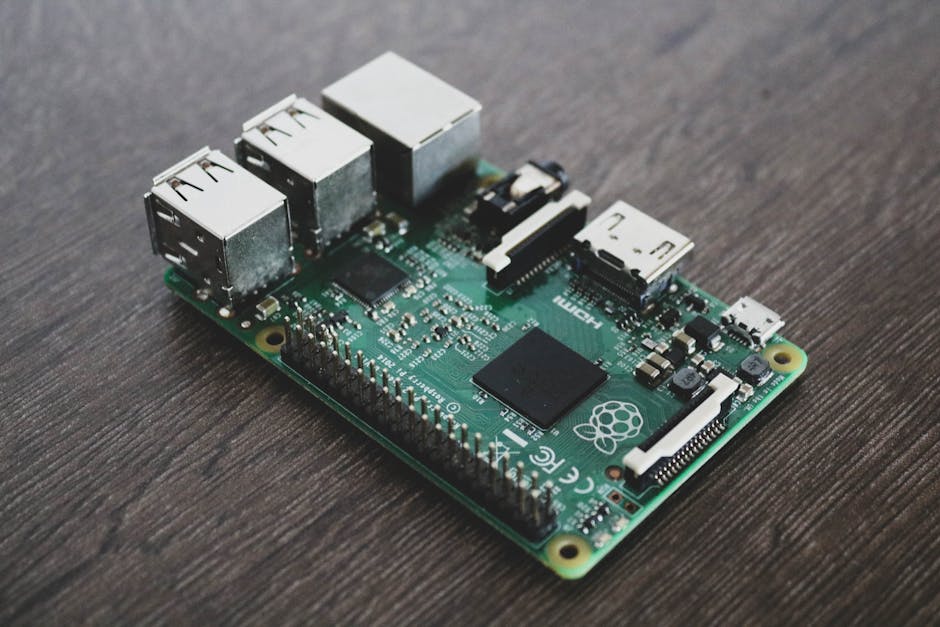
- Serving websites from RAM on Raspberry Pi Zero enhances security and speed by reducing the risk of data breaches and improving page loading times.
- The Raspberry Pi Zero’s small form factor and low power consumption make it an attractive option for building miniature web servers.
- This approach can significantly improve website performance and protect against data breaches, making it suitable for applications requiring high security and speed.
- The idea of serving websites from RAM is not new, but the Raspberry Pi Zero’s ability to do so has made it more accessible and affordable.
- By loading website data into RAM, developers can improve page loading times and reduce the risk of data breaches on the Raspberry Pi Zero.
The Raspberry Pi Zero, a tiny computer the size of a credit card, has been used to serve websites from RAM, a feat that enhances security and speed. This innovative approach has sparked interest among developers and tech enthusiasts, with many exploring the possibilities of RAM-based web serving. According to a recent discussion on Hacker News, this method can significantly improve website performance and protect against data breaches.
Background and Motivation

The idea of serving websites from RAM is not new, but the Raspberry Pi Zero’s ability to do so has made it more accessible and affordable. With the increasing demand for fast and secure web services, developers are looking for innovative solutions to improve website performance. The Raspberry Pi Zero, with its small form factor and low power consumption, has become an attractive option for building miniature web servers. By serving websites from RAM, developers can reduce the risk of data breaches and improve page loading times, making it an attractive option for applications that require high security and speed.
Key Components and Configuration

To serve a website from RAM on the Raspberry Pi Zero, several key components are required. These include a Raspberry Pi Zero board, a power source, and a memory card for storing the operating system and website data. The website data is loaded into RAM using a combination of scripts and configuration files, allowing the web server to serve pages directly from memory. This approach eliminates the need for disk I/O operations, resulting in faster page loading times and improved overall performance. The Raspberry Pi Zero’s hardware specifications make it an ideal candidate for this type of application.
Technical Details and Challenges

Serving a website from RAM on the Raspberry Pi Zero requires careful configuration and optimization. One of the main challenges is ensuring that the website data fits within the available RAM, which is limited to 512 MB on the Raspberry Pi Zero. This requires careful planning and optimization of website content, as well as the use of compression and caching techniques to minimize memory usage. Additionally, the Raspberry Pi Zero’s limited processing power and storage capacity require careful management to ensure smooth operation and prevent downtime. Despite these challenges, the benefits of serving websites from RAM make it an attractive option for developers looking to improve website performance and security.
Implications and Applications

The ability to serve websites from RAM on the Raspberry Pi Zero has significant implications for a range of applications, from IoT devices to miniature web servers. By improving website performance and security, this approach can help to protect against data breaches and improve user experience. Additionally, the low power consumption and small form factor of the Raspberry Pi Zero make it an attractive option for applications where space and power are limited. As the demand for fast and secure web services continues to grow, the Raspberry Pi Zero’s ability to serve websites from RAM is likely to become increasingly important.
Expert Perspectives
Experts in the field of web development and security have praised the Raspberry Pi Zero’s ability to serve websites from RAM, citing its potential to improve website performance and security. According to The New York Times, this approach can help to protect against data breaches and improve page loading times, making it an attractive option for applications that require high security and speed. However, others have noted that the limited processing power and storage capacity of the Raspberry Pi Zero may limit its suitability for large-scale applications.
As the Raspberry Pi Zero continues to evolve and improve, it is likely that we will see further innovations in RAM-based web serving. With the growing demand for fast and secure web services, the ability to serve websites from RAM is likely to become increasingly important. As developers and tech enthusiasts continue to explore the possibilities of the Raspberry Pi Zero, we can expect to see new and innovative applications of this tiny computer.
Source: Btxx